
Scientists are actively searching for meteorite fragments that may have landed in Ohio following a spectacular meteor fireball that blazed across the sky on March 17, 2026, creating a loud sonic boom heard across Ohio and Pennsylvania. Simultaneously, the Hubble Space Telescope has captured an unprecedented view of a comet fragmenting in real time—something that has never been observed this close to the actual moment of disintegration. Together, these two events represent rare opportunities for researchers to study extraterrestrial material and understand how objects in space break apart.
These aren’t isolated occurrences. Space events happen constantly, but fragment recovery efforts and direct observation of cosmic disintegration are exceptional. This article covers the specifics of both events, why scientists consider them scientifically valuable, and what the search efforts reveal about our place in the cosmos.
Table of Contents
- What Makes the Comet Fragmentation So Remarkable?
- The Meteor Search in Ohio and Pennsylvania
- Why These Events Matter for Scientific Understanding
- How Do Scientists Track and Search for Space Debris?
- The Challenge of Distinguishing Meteorites From Earth Rocks
- The Role of Technology in Observing and Tracking
- What’s Next for These Research Efforts?
- Conclusion
What Makes the Comet Fragmentation So Remarkable?
The Hubble space Telescope recently captured images of comet C/2025 K1 (ATLAS) breaking apart in the constellation Pisces, located approximately 250 million miles from Earth. What makes this observation extraordinary is the timing—researchers typically photograph fragmenting comets weeks or even a month after they’ve actually disintegrated. In this case, Hubble caught the process as it was actively happening, observing the comet’s demise over a three-day period.
The comet was already relatively close to Earth’s perspective in space, which made detailed observation possible. However, the comet is now heading out of the solar system and will never return to our part of space. This means the window for studying this particular fragmentation event is closing, making the current observations invaluable for understanding how and why comets break apart.
The Meteor Search in Ohio and Pennsylvania
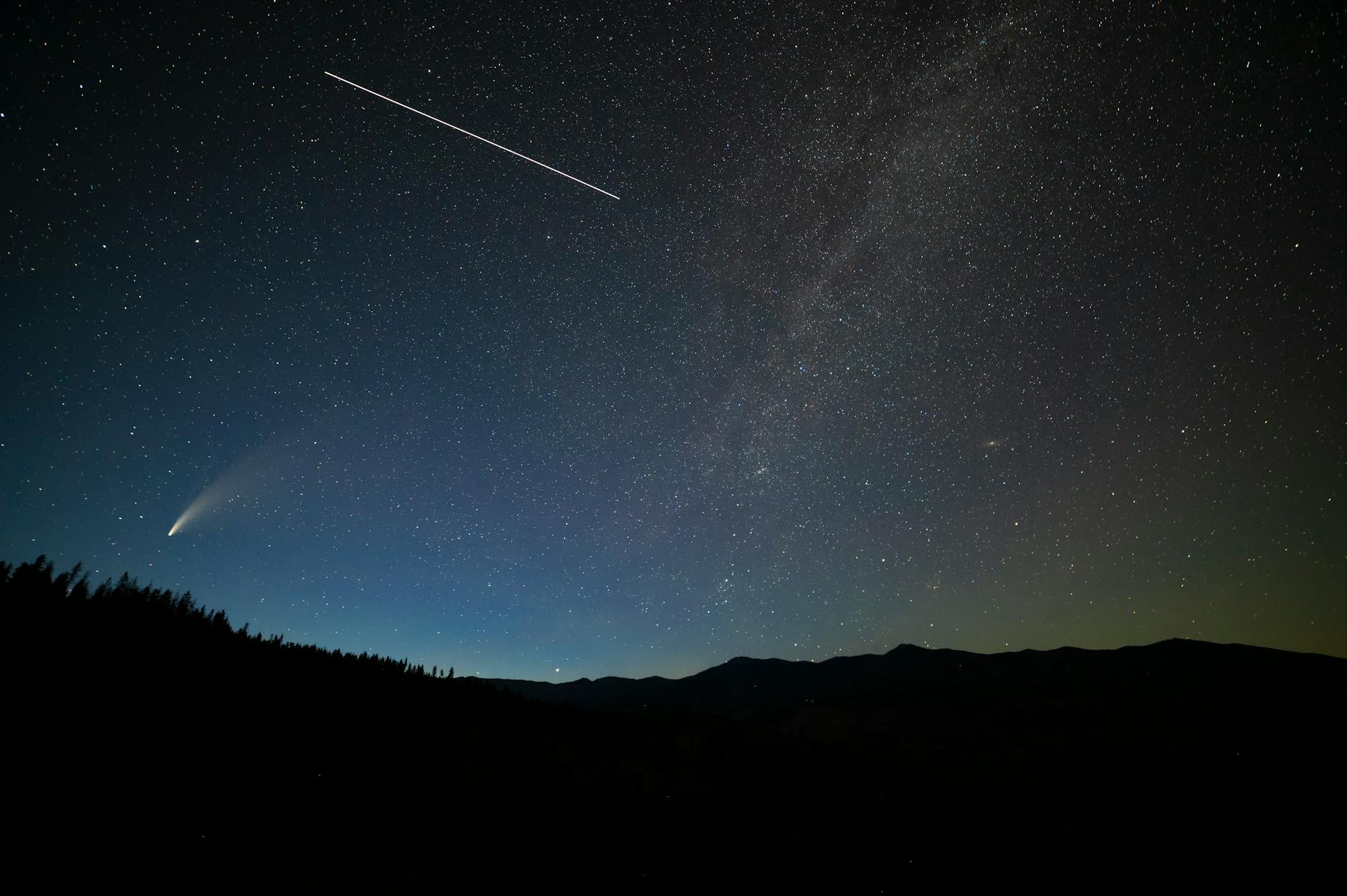
On March 17, 2026, a bright meteor fireball streaked across the sky over Ohio and Pennsylvania, producing a sonic boom so powerful that people across the region heard it distinctly. This type of event is significant because the fragments—if found—can be recovered and studied. scientists believe meteorite pieces likely fell in the area near Medina County, Ohio, and search and recovery efforts are actively underway. Unlike the distant comet observation, this event offers the possibility of physical samples.
When meteorites are recovered intact, scientists can analyze their composition, age, and origin, providing direct evidence about the formation of our solar system. However, finding these fragments is challenging. Most meteorites fall across vast areas, and distinguishing them from ordinary Earth rocks requires expertise and sometimes laboratory analysis. The search continues as researchers hope to locate and collect pieces before they’re lost to time and weathering.
Why These Events Matter for Scientific Understanding
Both the comet fragmentation and the meteor recovery effort serve critical roles in planetary science. The comet observation helps researchers understand the structural integrity of comets—icy bodies that have never been heated by the sun. By watching how C/2025 K1 disintegrated, scientists can develop better models of cometary composition and behavior, which has implications for understanding the early solar system.
Meteorite fragments, meanwhile, tell a different story. Some meteorites contain pristine material from the earliest days of our solar system, preserved in space and untouched until they fall to Earth. The fragments from the March event could contain valuable clues about planetary formation, the delivery of water and organic compounds to early Earth, or the nature of asteroid collisions. Each recovered piece adds to humanity’s understanding of where we came from.

How Do Scientists Track and Search for Space Debris?
The search for the Ohio meteorites relies on a combination of eyewitness reports, trajectory calculations, and expert fieldwork. When a fireball is visible to many people across a wide region, scientists can triangulate the likely landing zone based on where the sonic boom was heard and the direction observers reported seeing the object. Advanced tracking networks and public reporting have made this process more efficient in recent years.
Once a search area is identified, researchers work with volunteers and institutions to canvas fields and locations where meteorites are likely to accumulate. This is labor-intensive work that contrasts sharply with space-based observation like Hubble’s comet imaging, which involves remote sensing from orbit. The advantage of ground searches is the ability to recover actual material; the limitation is the time investment and the difficulty of distinguishing meteorites from terrestrial rocks without laboratory testing.
The Challenge of Distinguishing Meteorites From Earth Rocks
A common misconception is that meteorites are easy to identify—that they’re obviously from space. In reality, many meteorites look very much like ordinary Earth rocks. Distinguishing them requires several approaches: examining magnetic properties, analyzing mineral composition, checking for fusion crusts (the melted outer layer created during atmospheric entry), and sometimes performing isotopic analysis in laboratories. This challenge is particularly relevant for the Ohio search.
If fragments fell in populated or agricultural areas, they may have been collected unknowingly or become mixed with local geology. Any recovered material will need careful examination to confirm its extraterrestrial origin. Time is another factor—weathering gradually alters meteorite surfaces, making older finds harder to identify. This is why searches are most successful in the weeks and months immediately following a visible event.

The Role of Technology in Observing and Tracking
The Hubble Space Telescope’s imaging of the comet fragmentation represents the cutting edge of space observation technology. Hubble’s ability to resolve distant objects in fine detail made the unprecedented observations of comet C/2025 K1 possible. Meanwhile, on Earth, networks of cameras designed specifically to detect and track meteors are becoming increasingly important for pinpointing impact zones accurately.
These technological systems complement each other. Satellite observations tell us what’s happening in space, while ground-based detection networks help us understand where fragments end up. The combination has made 2026 a particularly active year for both types of cosmic observation.
What’s Next for These Research Efforts?
The search for Ohio meteorites will likely continue for months, with scientists reviewing reports from the public and conducting systematic searches in promising areas. Any recovered fragments will be carefully analyzed and shared with the scientific community, potentially contributing to dozens of research papers over the coming years. Some pieces may be displayed in museums or educational institutions, inspiring the next generation of scientists.
As for the comet, Hubble’s observations are being studied in detail now. The data from C/2025 K1’s fragmentation will inform theories about cometary structure and behavior for years to come. Both events—the comet’s demise in space and the meteor’s fragmentation over Ohio—remind us that cosmic events are ongoing and observable, offering continuous opportunities to expand our understanding of the universe.
Conclusion
The search for meteorite fragments in Ohio and the real-time observation of a comet breaking apart represent two of the most significant space-related events of early 2026. While the events differ in scale and location, both offer scientists valuable opportunities to study how objects in space behave, break apart, and contribute to our understanding of the solar system’s structure and history.
If you’re interested in following these discoveries, keep an eye on announcements from NASA and the Smithsonian Institution, which maintain the largest meteorite collection in the United States. These ongoing research efforts remind us that space science isn’t purely about distant observation—it’s also about finding and studying the physical evidence that reaches our world.





