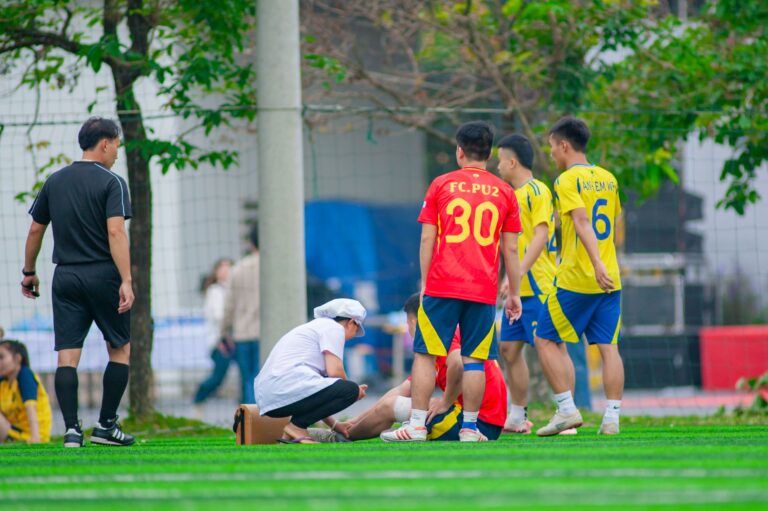
Researchers presenting at the Alzheimer's Association International Conference (AAIC) 2026 in London reported that former elite soccer players show more depression, anxiety, and subtle brain-structure changes than non-players, while a separate study found that heading the ball triggers a short-lived spike in brain-injury blood markers. None of the work presented shows that heading soccer balls causes Alzheimer's disease or dementia, and the researchers themselves describe the findings as preliminary. For readers tracking memory and brain health, the practical takeaway is a mix of real, measured changes and open questions. The studies measured mood symptoms, brain scans, and blood biomarkers — not long-term dementia outcomes — so what follows separates what the data actually shows from what it does not yet answer.
Medical information disclaimer: This article is for general educational purposes only and does not provide medical advice, diagnosis, or treatment. Always consult a physician or other qualified health professional about symptoms, medications, tests, or treatment decisions.
Table of Contents
- What the soccer players study found
- Does heading the ball damage the brain right away?
- What the CTE research adds
- What is established versus what remains unproven
- What this means for someone with memory concerns right now
- Frequently Asked Questions
What the soccer players study found
Imperial College London researcher Caleigh Lynch presented findings from 142 former elite soccer players, ages 30 to 60 with a median of three lifetime concussions, compared with 56 matched controls, at AAIC 2026 in London on July 12, 2026. The former players reported clinically significant depression at more than three times the rate of controls (31% versus 9%) and higher rates of clinically significant anxiety (42% versus 25%), according to the Alzheimer's Association's AAIC 2026 press release. They also described worse planning, focus, and problem-solving than the control group.
Of the 124 former players who underwent brain MRI using a technique called voxel-based morphometry (which measures gray matter volume across brain regions), researchers found lower volume in the frontal, cingulate, and thalamic regions compared with controls. Despite that, only about 2% of individual scans showed atrophy severe enough to be called clinically significant, according to AuntMinnie's coverage. Importantly, the former players performed no differently from controls on objective cognitive testing. The researchers state plainly that these findings do not demonstrate measurable cognitive decline, and the analysis is interim — not yet peer-reviewed or published, per EMJ Reviews.
Does heading the ball damage the brain right away?
A separate AAIC 2026 poster from Marloes Hoppen at Amsterdam UMC examined 302 amateur players across 11 matches and found that 216 of them (72%) headed the ball during play. Players who headed the ball showed significantly larger immediate postmatch increases in two blood markers — S100B and p-tau217 — than players who did not head the ball, with more headers producing larger increases, according to JAMA Neurology's coverage of the poster.
S100B is a protein released when brain tissue is stressed, and p-tau217 is a form of the tau protein associated with neurodegeneration when chronically elevated. Here, though, the spikes were temporary: both markers returned to baseline within 24 to 48 hours after the match, and the study did not follow players over time to see whether repeated spikes add up to lasting harm, as reported by Medical Daily. That means the study documents an acute, self-resolving biological response to heading — not evidence of cumulative brain damage.
What the CTE research adds
A third AAIC 2026 poster, presented July 15, 2026 by Bobak Abdolmohammadi of Boston University, reported that a longer soccer-playing career was associated with a higher risk of chronic traumatic encephalopathy (CTE), according to the Alzheimer's Association press release carried by BioSpace. CTE is a neurodegenerative disease linked to repeated head impacts, and it can currently only be diagnosed after death, through examination of brain tissue.
That diagnostic limitation matters for anyone trying to apply this finding personally: there is no living test that confirms CTE, so career length as a risk marker cannot currently be checked against an individual's own brain in real time. The finding adds to a body of association-based evidence rather than a predictive tool a player or family member can use today.
What is established versus what remains unproven
Across all three AAIC 2026 presentations, the researchers and the Alzheimer's Association describe the findings as preliminary and call for long-term monitoring and further longitudinal research before drawing conclusions about dementia risk, per the Alzheimer's Association's press release. No study presented at AAIC 2026 showed direct evidence that heading soccer balls causes Alzheimer's disease or dementia.
What is established: former elite players report more depression and anxiety symptoms than peers who didn't play at that level, their brain scans show modest structural differences in specific regions, heading produces a measurable but temporary biomarker spike, and longer soccer careers correlate with higher CTE risk at autopsy. What remains open: whether these mood and structural differences translate into cognitive decline over time, whether the biomarker spikes accumulate with repeated exposure across years of play, and whether amateur or recreational players face risks comparable to those seen in elite or professional cohorts. The mental-health and MRI differences are associational findings, the biomarker spikes are acute and self-resolving, and no study followed players over years to confirm later cognitive decline, per EMJ Reviews.
What this means for someone with memory concerns right now
For a reader worried about their own or a family member's memory, especially one with a personal soccer history, a few practical distinctions help: Anyone with memory concerns and a history of repeated head impacts, from soccer or another contact sport, can raise that history explicitly with a clinician evaluating cognitive symptoms, since career length and head-impact exposure are among the factors researchers are actively studying as potential risk contributors.
- A history of playing soccer, even at an elite level with multiple concussions, has not been shown at AAIC 2026 to predict cognitive test performance — the former players in Lynch's cohort scored similarly to controls.
- Mood symptoms (depression, anxiety) showed up more often in former elite players than structural or cognitive changes did, which makes mental health screening a reasonable near-term conversation to have with a doctor if a former player is noticing mood changes alongside memory worries.
- A single match or season of heading the ball produces a brain-marker response that resolves within days, based on the Amsterdant UMC poster — it is not, on its own, evidence of a dementia trajectory.
- CTE remains undiagnosable in a living person, so no current test can tell an active or retired player whether they have it.
Frequently Asked Questions
Did AAIC 2026 prove that heading a soccer ball causes dementia?
No. The presented studies found associational mood, brain-structure, and biomarker differences, but researchers state the findings do not demonstrate cognitive decline and call for further longitudinal research.
How long does the brain-marker spike from heading a ball last?
Blood levels of S100B and p-tau217 returned to baseline within 24 to 48 hours after a match in the Amsterdam UMC study of amateur players.
Can CTE be diagnosed while someone is still alive?
No. CTE is currently diagnosed only after death through brain tissue examination, so the AAIC 2026 finding linking career length to CTE risk cannot be applied as a living test.
You Might Also Like
- p-tau217 Findings a Decade Before Alzheimer’s Symptoms in 2026: What Is Established and What Remains Uncertain for Adults With Memory Concerns
- AAIC 2026 p-tau217 Alzheimer’s Risk Prediction Research: What Is Established and What Remains Uncertain for Adults With Memory Concerns
- Safety Questions After the 2026 LiBBY Dementia Trial: What Is Established and What Remains Uncertain for Adults With Memory Concerns