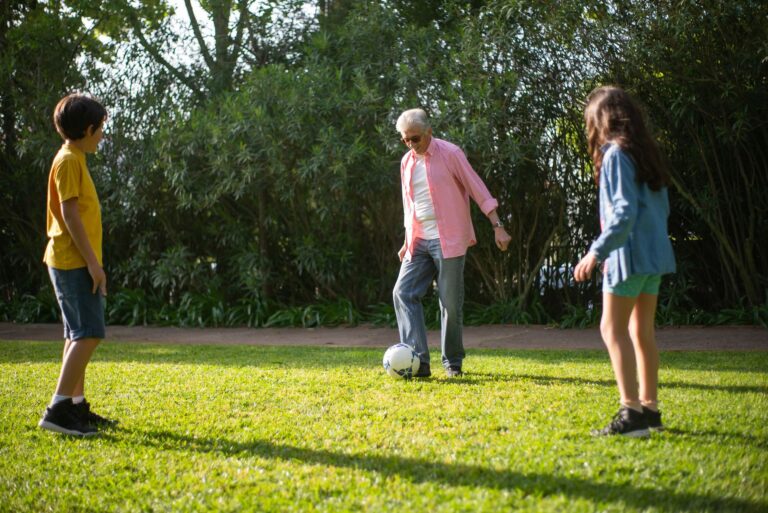
AAIC 2026 reported studies linking repetitive soccer heading with short-lived blood-biomarker changes and with brain-health concerns among retired elite players. For family caregivers, these findings support attention to new symptoms and clinician conversations, but they do not turn a soccer history into a diagnosis. Heading means using the head to direct the ball. The research separates immediate biological signals after matches from longer-term questions about mood, brain structure, thinking, and daily life.
Medical information disclaimer: This article is for general educational purposes only and does not provide medical advice, diagnosis, or treatment. Always consult a physician or other qualified health professional about symptoms, medications, tests, or treatment decisions.
Table of Contents
- What the amateur-player study measured
- What changed after heading
- What the short follow-up does and does not show
- What retired-player findings add
- Practical steps for family caregivers
What the amateur-player study measured
A prospective case-control study followed 302 adult male amateur players through 11 organized matches. Researchers used match video to count headers and collected blood before play, immediately afterward, and 24–48 hours later.
The analyses accounted for exercise intensity, helping distinguish heading-related patterns from the physical demands of playing a match. The study examined blood biomarkers—measurable substances that can reflect activity or injury-related processes in the body—not dementia diagnoses or clinical neurodegeneration outcomes. JAMA Neurology's 2026 study report.
What changed after heading
Players who headed the ball had a 34.7% greater immediate increase in S100B than players who did not. More headers also tracked with greater immediate increases in S100B and p-tau217.
High-impact headers involved balls traveling more than 20 meters. Multiple high-impact headers were associated with immediate 51.4% increases in both p-tau217 and S100B compared with no heading; one high-impact header raised S100B but did not significantly raise p-tau217. JAMA Neurology reported these match-level biomarker findings.
What the short follow-up does and does not show
The reported S100B and p-tau217 elevations returned to baseline within 24–48 hours. Heading was not significantly associated with immediate or delayed changes in NSE, brain-derived tau, NfL, or GFAP.
This design captures biological changes around one match, not the health effects of years of play. Because it was observational, involved higher-level adult male amateurs, and did not measure clinical neurodegeneration, it does not establish that heading causes dementia or quantify an individual player's future risk.
What retired-player findings add
A separate AAIC interim study compared 142 retired elite players aged 30–60 with 56 non-contact-sport controls. Retired players reported more depression and anxiety, and MRI scans from 124 players showed lower gray-matter volume in frontal, cingulate, and thalamic areas.
Objective cognitive testing did not show a significant group difference. The study authors described the symptoms and brain-volume differences as findings that may point toward trauma-related neurodegeneration and need confirmation through longitudinal follow-up. The Alzheimer's Association's AAIC 2026 release summarizes both soccer studies.
Practical steps for family caregivers
A past soccer career can be useful health context, especially when a loved one develops changes that affect relationships, safety, work, or everyday routines. Bring a concise timeline to a clinician conversation: CTE, or chronic traumatic encephalopathy, cannot currently be diagnosed in living people; CDC states that confirmation requires examination of the brain after death.
New symptoms still deserve evaluation because they can have many causes that need different forms of care. CDC guidance on repeated head impacts and CTE.
- When thinking, mood, emotional, or daily-function changes began
- Whether symptoms are stable, worsening, or episodic
- Past concussions, repeated head impacts, playing position, and years of play
- Current medicines, sleep changes, alcohol use, and other health conditions
You Might Also Like
- p-tau217 Findings a Decade Before Alzheimer’s Symptoms in 2026: Study Design and Evidence Limits for Family Caregivers
- LiBBY Trial Findings for Late-Stage Dementia Agitation in 2026: Study Design and Evidence Limits for Family Caregivers
- AAIC 2026 p-tau217 Alzheimer’s Risk Prediction Research: Study Design and Evidence Limits for Family Caregivers