Yes, eating processed red meat appears to meaningfully increase the risk of dementia. A landmark Harvard study published in January 2025 in the journal Neurology tracked over 130,000 participants for up to 43 years and found that consuming as little as two servings per week of processed red meat — bacon, hot dogs, bologna, and similar products — was associated with a 13-15% higher risk of dementia. To put that in concrete terms, each additional daily serving of processed red meat was linked to the equivalent of 1.61 extra years of cognitive aging. That is not a trivial number when you consider that cognitive reserve is one of the few buffers we have against Alzheimer’s disease. What makes this finding particularly important is the distinction it draws between processed and unprocessed red meat.
A plain steak or pork chop did not carry the same statistically significant risk. The danger appears concentrated in meats that have been cured, smoked, salted, or chemically preserved. This article breaks down the Harvard study’s key findings, explains the biological mechanism that may link red meat to brain pathology, examines what dietary substitutions actually reduce risk, and places all of this in the broader context of the MIND and Mediterranean diets. The research also revealed a promising flip side: replacing just one daily serving of processed red meat with nuts and legumes was associated with roughly a 20% lower risk of dementia. So this is not simply a story about what to avoid — it is also about what to reach for instead.
Table of Contents
- What Does the Largest Study on Red Meat and Alzheimer’s Risk Actually Show?
- Why Processed Red Meat May Damage the Brain — The TMAO Connection
- Unprocessed Red Meat — A Different Story Than You Might Expect
- What to Eat Instead — Substitutions That Actually Lower Risk
- The MIND and Mediterranean Diets — Broader Protection Against Alzheimer’s
- Cognitive Aging Measured in Years — Why That Metric Matters
- Where the Research Goes From Here
- Conclusion
- Frequently Asked Questions
What Does the Largest Study on Red Meat and Alzheimer’s Risk Actually Show?
The study in question came out of Mass General Brigham and the Harvard T.H. Chan School of Public Health. It drew on data from the Nurses’ Health Study and the Health Professionals Follow-Up Study — two of the longest-running nutritional cohort studies in the world. Across those two cohorts, researchers identified 11,173 cases of dementia, making this one of the largest investigations ever conducted on the relationship between diet and cognitive decline. The findings were first presented at the Alzheimer’s Association International Conference in July 2024 and formally published in Neurology in January 2025. The central finding was this: participants who ate 0.25 or more servings per day of processed red meat (roughly two or more servings per week) had a 13-15% higher risk of developing dementia compared to those who ate fewer than 0.10 servings per day — about three servings per month.
That threshold matters. It means you do not have to eat processed meat every day for the risk to show up. A person who eats a few strips of bacon with weekend breakfast and a deli sandwich during the work week is already in the elevated-risk category. Beyond the dementia diagnosis itself, the study measured subjective cognitive decline — whether participants themselves noticed their thinking getting worse. Processed red meat consumers had a 14% higher risk of reporting this kind of decline. That is a meaningful detail because subjective cognitive complaints often precede a formal diagnosis by years. It suggests the damage may be accumulating well before it becomes clinically obvious.

Why Processed Red Meat May Damage the Brain — The TMAO Connection
The leading biological explanation centers on a molecule called trimethylamine N-oxide, or TMAO. When you eat red meat, gut bacteria break down certain compounds in it — particularly L-carnitine and choline — and produce trimethylamine. Your liver then converts that into TMAO. Research suggests that elevated TMAO levels may promote the aggregation of amyloid and tau proteins, which are the hallmark pathologies of Alzheimer’s disease. In other words, the metabolite does not just circulate harmlessly; it may actively contribute to the plaques and tangles that destroy brain tissue. processed red meat carries an additional burden beyond TMAO.
The saturated fat and high sodium content in bacon, sausages, and deli meats may directly impair brain cell health through vascular damage. Chronic high sodium intake raises blood pressure, and sustained hypertension is one of the most well-established modifiable risk factors for dementia. The saturated fat, meanwhile, promotes systemic inflammation, which has its own independent relationship with neurodegeneration. So processed red meat may be attacking the brain through multiple pathways simultaneously. However, it is important to note a limitation: these mechanisms have been demonstrated in laboratory and animal studies, but the exact causal chain in humans is still being mapped. Observational studies like the Harvard cohort can show associations and suggest biological plausibility, but they cannot definitively prove that TMAO from processed meat caused any individual case of dementia. Confounding factors — people who eat a lot of processed meat may also exercise less, smoke more, or have other dietary deficiencies — are always a consideration, even though the Harvard team adjusted for many of these variables.
Unprocessed Red Meat — A Different Story Than You Might Expect
One of the most striking findings from the Harvard study is what it did not find. Unprocessed red meat — a grilled steak, a hamburger patty, a pork chop — did not show a statistically significant association with increased dementia risk. This runs counter to the simplified narrative that “red meat is bad for your brain.” The reality is more nuanced. The processing itself — the curing, the nitrates, the added sodium and preservatives — appears to be a major part of the problem. Consider a practical example. A person who eats a four-ounce serving of grilled sirloin twice a week is in a very different category, according to this data, than someone who eats two servings of bacon and a couple of hot dogs in the same period.
The total red meat consumption might be comparable, but the risk profiles diverge. This distinction is useful because it gives people who enjoy red meat a more realistic framework for making decisions, rather than an all-or-nothing decree. That said, moderation still matters with unprocessed red meat. The study’s finding of no significant association does not mean unprocessed red meat is protective or that unlimited consumption is harmless. Other research has linked high overall red meat intake to cardiovascular disease, and cardiovascular health is tightly linked to brain health. The takeaway is not “eat all the steak you want” — it is that the most urgent dietary change, if you are concerned about dementia, is cutting back specifically on the processed varieties.
What to Eat Instead — Substitutions That Actually Lower Risk
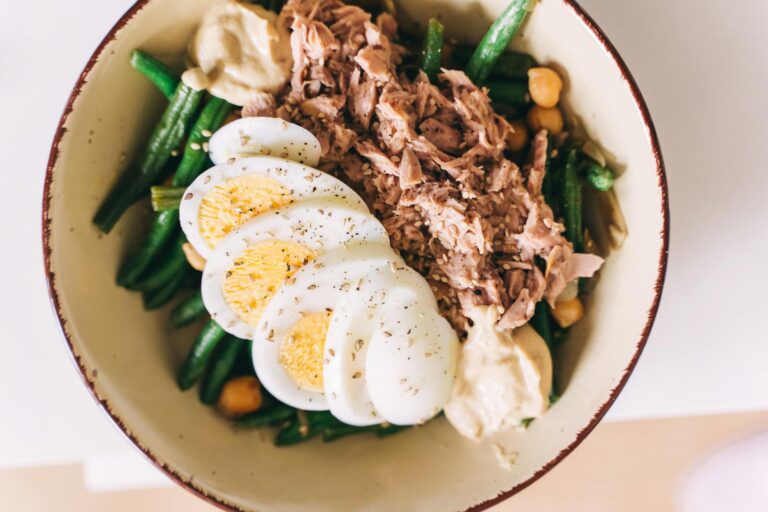
The Harvard study did not just identify a problem — it quantified a solution. Replacing one daily serving of processed red meat with nuts and legumes (beans, peas, lentils) was associated with an approximately 20% lower risk of dementia. That is a substantial reduction for a single dietary swap. Fish also showed protective effects as a substitute, which aligns with decades of research on omega-3 fatty acids and brain health. The tradeoff here is worth examining honestly. Nuts and legumes are cheaper than processed meat in most grocery stores, and they have a longer shelf life.
A can of black beans costs less than a package of bacon and provides fiber, plant protein, and micronutrients without the TMAO production, excess sodium, or nitrates. Fish, on the other hand, can be more expensive and raises questions about mercury exposure, particularly for people who might eat it daily. The best approach is probably a rotation: lentil-based meals some days, fish others, and perhaps unprocessed poultry or eggs filling in the gaps. It is also worth noting that these substitutions are not about deprivation. A black bean burger with avocado, a walnut-crusted salmon fillet, or a chickpea curry are not lesser meals. The practical barrier for most people is habit, not flavor. Someone accustomed to starting the day with bacon and ending it with a hot dog at a ballgame is facing a genuine lifestyle adjustment — but the cognitive payoff, measured in years of preserved brain function, is difficult to ignore.
The MIND and Mediterranean Diets — Broader Protection Against Alzheimer’s
The red meat findings do not exist in a vacuum. Both the MIND diet (Mediterranean-DASH Intervention for Neurodegenerative Delay) and the traditional Mediterranean diet limit red meat consumption as part of a broader eating pattern, and both have been associated with dramatic reductions in Alzheimer’s pathology. NIA-funded research has found that adherence to either diet is associated with approximately 40% lower odds of having amyloid plaques and tau tangles in the brain at autopsy. That is not a small effect — it is one of the largest dietary associations in Alzheimer’s research. A 2025 study reported in the Harvard Gazette added another layer: people who carried the highest genetic risk for Alzheimer’s — specifically, those with two copies of the APOE4 gene variant — and who followed a Mediterranean diet reduced their dementia risk by 35%. This is significant because APOE4 carriers are often told their risk is largely genetic and difficult to modify.
The finding suggests that diet can meaningfully offset even strong genetic predispositions. Separately, a 2025 University of Hawaii and USC study found that the MIND diet produces a “stronger and more consistent reduction in dementia risk” compared to other healthy eating patterns. A word of caution, though: diet studies are inherently messy. People who follow a Mediterranean or MIND diet tend to be more health-conscious overall — they may exercise more, sleep better, manage stress differently, and have better access to healthcare. Researchers adjust for these factors, but no statistical model can eliminate them entirely. The evidence for these diets is strong and growing, but it is not equivalent to a clinical trial where one group is randomly assigned to eat Mediterranean and another is not. Such trials are extremely difficult to run for decades, which is the timescale relevant to Alzheimer’s.

Cognitive Aging Measured in Years — Why That Metric Matters
The Harvard study’s finding that each additional daily serving of processed red meat was associated with 1.61 extra years of cognitive aging in global cognition — and 1.69 extra years in verbal memory — deserves special attention. Most people struggle to interpret percentage-based risk increases. But “nearly two extra years of brain aging” is immediately understandable.
Think about it this way: if you are 65 and eat processed red meat daily, your cognitive function may resemble that of someone closer to 67, all else being equal. Over a decade of this habit, the cumulative effect could be substantial. For someone already on the edge of mild cognitive impairment, that acceleration might be the difference between maintaining independence and requiring care. This framing also makes the substitution data more vivid — swapping processed meat for nuts and legumes is not just reducing a statistical risk; it may be literally buying back years of sharper thinking.
Where the Research Goes From Here
The Harvard study is the largest and longest of its kind, but it will not be the last. Researchers are now designing studies to examine TMAO levels directly in blood samples and correlate them with brain imaging markers over time. This kind of biomarker-driven research could help establish a clearer causal link — or reveal that the relationship is more complicated than current models suggest. There is also growing interest in the gut microbiome’s role: not everyone produces the same amount of TMAO from the same foods, which may explain why some heavy meat eaters never develop cognitive problems while others do.
For now, the practical takeaway is clear enough to act on. The evidence linking processed red meat to cognitive decline is strong, consistent, and supported by plausible biological mechanisms. You do not need to wait for a perfect randomized trial to make dietary changes that are low-risk and potentially high-reward. The science will continue to sharpen, but the direction it points is unlikely to reverse.
Conclusion
The evidence connecting processed red meat to increased dementia risk is among the most robust dietary findings in Alzheimer’s research. The Harvard study — spanning 130,000 participants and 43 years — found that just two servings per week of processed red meat raised dementia risk by 13-15%, accelerated cognitive aging by nearly two years per daily serving, and increased subjective cognitive decline by 14%. Unprocessed red meat did not carry the same statistically significant risk, pointing to the processing itself as a key factor. The biological explanation, centered on TMAO and its potential to promote amyloid and tau aggregation, adds mechanistic weight to the epidemiological data. The actionable steps are straightforward.
Reduce or eliminate processed red meat — bacon, hot dogs, sausages, deli meats. Replace those servings with nuts, legumes, and fish, which the data suggests can lower dementia risk by around 20%. Consider adopting a MIND or Mediterranean dietary pattern, which goes beyond any single food and has been linked to 40% lower odds of Alzheimer’s brain pathology and meaningful risk reduction even for those with the highest genetic susceptibility. These are not radical changes. They are grocery-list adjustments with potentially profound consequences for long-term brain health.
Frequently Asked Questions
Does eating any amount of processed red meat increase Alzheimer’s risk?
The Harvard study found elevated risk starting at about two servings per week (0.25 servings per day). Those eating roughly three servings per month or fewer did not show significantly increased risk. The dose matters, and occasional consumption appears to be far less concerning than regular intake.
Is a plain hamburger or steak as risky as bacon for brain health?
According to the Harvard study, unprocessed red meat like steak, hamburgers, and pork chops did not show a statistically significant association with increased dementia risk. The elevated risk was concentrated in processed forms — meats that are cured, smoked, or preserved with additives.
What is TMAO, and why does it matter for Alzheimer’s?
TMAO (trimethylamine N-oxide) is a metabolite produced by gut bacteria when they break down compounds found in red meat. Research suggests that TMAO may promote the aggregation of amyloid and tau proteins — the toxic clumps and tangles that are hallmarks of Alzheimer’s disease. Processed red meat tends to generate higher TMAO levels due to its composition and additives.
Can diet really offset genetic risk for Alzheimer’s?
A 2025 Harvard Gazette study found that people with the highest genetic risk (two copies of the APOE4 gene) who followed a Mediterranean diet reduced their dementia risk by 35%. This does not eliminate genetic risk entirely, but it suggests meaningful modification is possible through dietary choices.
What should I eat instead of processed red meat to protect my brain?
The Harvard study found that replacing one daily serving of processed red meat with nuts and legumes was associated with approximately 20% lower dementia risk. Fish also showed protective effects. Both the MIND and Mediterranean diets, which emphasize these foods while limiting red meat, have been linked to roughly 40% lower odds of Alzheimer’s brain pathology.
Is the evidence strong enough to change my diet now, or should I wait for more research?
The Harvard study is one of the largest ever conducted on this topic, with over 130,000 participants followed for up to 43 years. While observational studies cannot prove causation with absolute certainty, the consistency of the findings, the size of the study, and the plausible biological mechanisms make a compelling case. The dietary changes involved — eating less processed meat and more nuts, beans, and fish — carry virtually no downside risk, making them reasonable to adopt now.