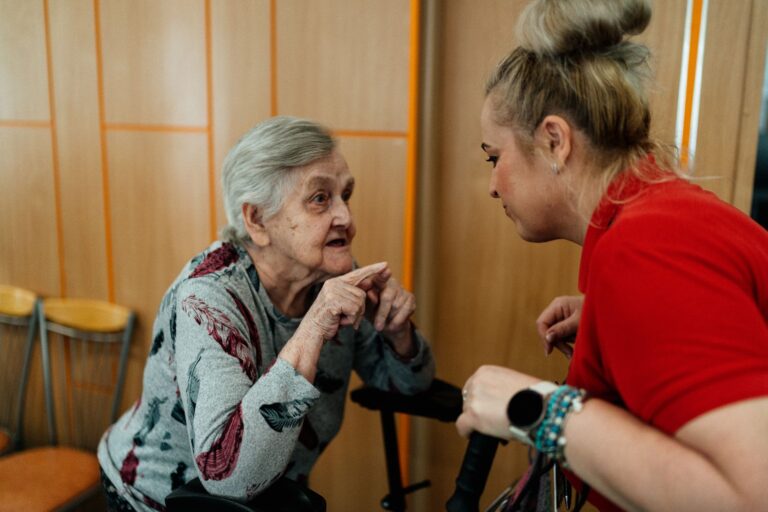
Ask a dementia specialist whether low intake signals late-stage progression or a treatable problem, and how to feed safely. Ask about swallowing, aspiration risk, hand feeding versus a tube, and comfort-focused support. Late-stage dementia means advanced decline with major loss of memory, speech, movement, and self-care. Appetite often falls at this point, so clear questions help families choose safe next steps.
Medical information disclaimer: This article is for general educational purposes only and does not provide medical advice, diagnosis, or treatment. Always consult a physician or other qualified health professional about symptoms, medications, tests, or treatment decisions.
Table of Contents
- Is low intake expected or treatable?
- How safe is swallowing now?
- Why is hand feeding preferred over a tube?
- Does comfort-focused feeding fit now?
Is low intake expected or treatable?
The Alzheimer's Association's food and eating guidance describes reduced appetite, weight loss, and refusal of favorite foods as expected as dementia advances. Ask whether low intake in your person reflects that progression rather than a reversible problem.
Also ask what treatable contributors have been ruled out. Name medication effects, depression, dental pain, constipation, and infection one by one. Bring current medicines, recent weight change, mouth pain, mood change, bowel pattern, and fever or urinary symptoms.
How safe is swallowing now?
Ask for a swallowing assessment because late-stage loss of chewing and swallowing coordination makes meals unsafe. Watch for these warning signs and report them: The National Institute on Aging's care in the last stages of Alzheimer's disease warns that food or liquid entering the lungs can cause pneumonia that can lead to death. Ask whether texture changes, upright positioning, and small bites lower that risk for your person.
- food held or pocketed in the cheek
- coughing, choking, or wet voice during meals
- turning away, clamping the mouth, or refusing to swallow
Why is hand feeding preferred over a tube?
Ask about feeding-tube tradeoffs before any decision. A SUNY Upstate Medical University geriatrics report on feeding tubes says tube liquid nutrition is poorly absorbed and can cause diarrhea, fluid imbalance, blockage, displacement, skin irritation, and leakage of stomach acid.
Post-acute-care standards from AMDA advise against percutaneous feeding tubes in advanced dementia and recommend oral assisted feeding instead. Ask why careful hand feeding fits here, who will do it, how much time meals need, and what intake goal counts as enough.
Does comfort-focused feeding fit now?
Ask whether comfort-focused feeding plus palliative or hospice support fits now. According to Being Patient, advanced dementia often brings total dependence, minimal speech, eating difficulty, and a late stage lasting about one to two years.
Ask what comfort feeding means day to day. It often means favorite textures, small frequent offers, mouth care, and stopping when the person shows distress. Bring a one-page list of medicines, recent weight, coughing episodes, and feeding goals to the visit.