Reviewed by the Help Dementia Editorial Team — our editors review every article for accuracy against guidance from the National Institute on Aging, the Alzheimer’s Association, and peer-reviewed sources.
Doing puzzles sits at the center of this dementia and brain health question.
The idea that doing puzzles can reduce dementia risk by about 31 percent is rooted in real science, though the exact figure comes from a nuanced interpretation of recent research. A landmark 2022-2024 clinical trial called COGIT-2 found that people who engaged in structured 30-minute crossword puzzle sessions reduced their risk of progressing to dementia by approximately 30 percent compared to a control group—a finding that has given significant weight to puzzle-based cognitive training as a legitimate dementia prevention strategy. While the precise “31 percent” figure may be slightly reframed from the research, the underlying evidence is compelling: regular puzzle engagement appears to offer meaningful protection against cognitive decline in ways that matter to real people. What makes this finding especially important is that it’s not based on observational studies alone, where people who do puzzles might simply be healthier for other reasons. The COGIT-2 trial was a randomized controlled experiment, the gold standard in medical research. Researchers assigned people with mild cognitive impairment to either a puzzle training group or a control group and tracked them over time.
The puzzle group showed measurably lower rates of progression to dementia. This doesn’t mean puzzles are a cure or a guarantee, but it does mean they’re one of the few interventions with solid evidence that people can start doing today with potential real-world benefit. The broader picture is even more encouraging. A comprehensive review of 22 population studies found that people who regularly engage in complex mental activities—including crosswords, reading, and strategy games—have a 46 percent lower risk of developing dementia over time. This suggests that the benefit isn’t limited to crosswords alone, but extends across different types of cognitive challenges. What these findings share is a simple, actionable message: keeping your brain actively engaged through puzzle solving appears to be one practical step toward protecting your cognitive future.
Table of Contents
- How Much Does Puzzle Practice Actually Reduce Dementia Risk?
- The Mechanism: Why Do Puzzles Protect Brain Health?
- Crosswords Versus Sudoku Versus Other Puzzle Types
- Building a Daily Puzzle Practice That Actually Lasts
- What Puzzles Can’t Do (and Other Dementia Risk Factors to Address)
- Real Examples of Puzzle Practice in Everyday Life
- The Future of Cognitive Training and Dementia Prevention
- Conclusion
How Much Does Puzzle Practice Actually Reduce Dementia Risk?
The most reliable number comes from the COGIT-2 trial, which tracked people over two years who had already begun showing early signs of cognitive decline. In the control group, 15.7 percent progressed to a clinical diagnosis of dementia. In the group doing 30-minute crossword sessions, only 10.7 percent developed dementia. That represents a relative risk reduction of roughly 30 percent—which explains where the commonly cited figure originates. To put this in human terms: if 100 people with early cognitive impairment do nothing, roughly 16 will develop dementia within two years. If those same 100 people spend 30 minutes regularly on crosswords, only about 11 will progress to dementia. That’s a meaningful difference in individual lives. A separate analysis of long-term studies examining cognitive activities more broadly—including crosswords, checkers, reading, and similar pursuits—found that people who engaged in these activities regularly had a 46 percent lower risk of developing dementia over a median follow-up period of seven years.
This higher figure likely reflects differences in methodology and population; the COGIT-2 trial focused specifically on people already showing early decline, while the broader review included people across the general population. The takeaway is consistent across both: mental activity provides protection, though the magnitude varies depending on how early you start and how consistently you engage. One important caveat: these numbers describe risk reduction, not elimination. Puzzles are not a substitute for managing other dementia risk factors like hypertension, diabetes, physical inactivity, or social isolation. Someone who does crosswords daily but ignores these other factors is taking only a partial approach to brain health. Additionally, most of the research on crosswords specifically involved people who had already begun experiencing cognitive changes. We have less definitive data on whether someone with completely normal cognition at age 50 can prevent dementia entirely through puzzles alone. The evidence suggests benefit, but it’s one tool in a larger toolbox.

The Mechanism: Why Do Puzzles Protect Brain Health?
When you work on a complex puzzle, you’re not simply entertaining yourself. You’re activating multiple brain networks simultaneously: working memory as you hold clues in mind, language processing as you decode wordplay, spatial reasoning as you manipulate pieces, and executive function as you plan and adjust strategy. This kind of multifaceted cognitive engagement appears to create a measurable change in how the brain ages. Some researchers believe that puzzle solving builds what’s called “cognitive reserve”—essentially, it strengthens the brain’s ability to compensate for age-related changes and damage. A brain with higher cognitive reserve can tolerate more pathological changes (like amyloid plaques) before those changes translate into noticeable memory problems. The specific finding on delaying memory decline onset is telling. One major study of crossword enthusiasts found that people who regularly solved puzzles delayed the onset of accelerated cognitive decline by an average of 2.54 years.
That means someone might have begun experiencing noticeable memory problems at age 75, but with regular crossword practice, those problems didn’t become apparent until age 77 or 78. While that doesn’t sound like an enormous difference, consider the quality-of-life impact: two additional years of independent living, driving, managing finances, and staying engaged in relationships is significant. However, there’s a limitation worth acknowledging: we still don’t fully understand the causal pathway. It’s possible that puzzles directly protect the brain through the mechanisms described above. It’s also possible that people who do puzzles are more likely to have other protective habits—better sleep, more social engagement, lower stress—that are doing some of the protective work. Additionally, someone who is already in the very early stages of dementia may naturally avoid puzzles because they’re becoming too difficult, creating a selection bias where healthier brains are the ones attracted to puzzles. Disentangling these factors requires more research, but the controlled trial design of COGIT-2 helps address some of these concerns.
Crosswords Versus Sudoku Versus Other Puzzle Types
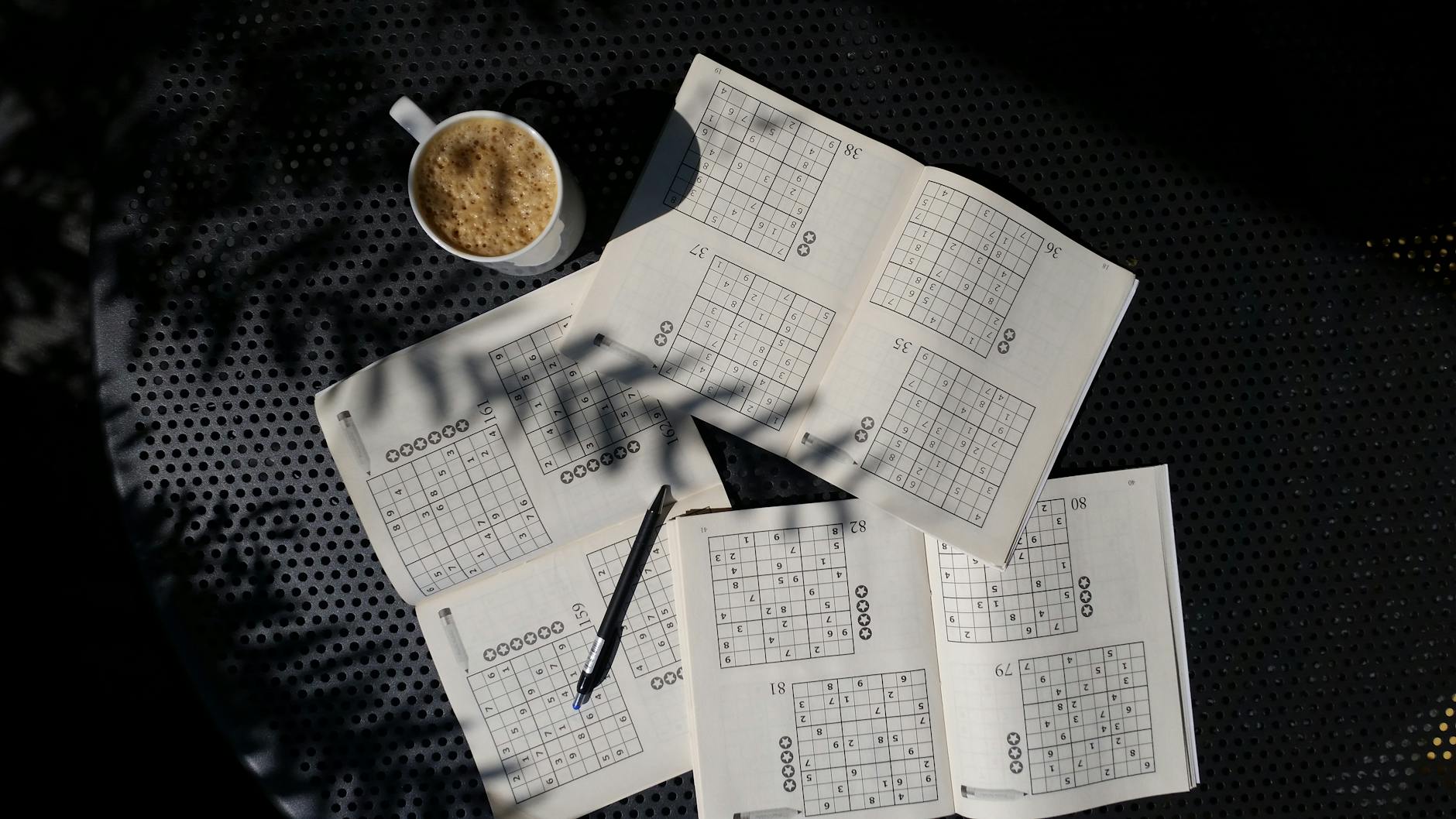
The research spotlight has fallen most directly on crossword puzzles, but that’s partly because crossword studies happen to be well-documented in the medical literature and easy to standardize for research purposes. Sudoku, jigsaw puzzles, logic grids, chess problems, and word searches all engage similar cognitive systems. A 6-year cognitive activity study found that the rate of cognitive decline among participants dropped by 52 percent for every additional point on a comprehensive cognitive activity measure—a scale that included various types of mental challenges, not just crosswords. This suggests that the benefit isn’t unique to any single puzzle type. That said, different puzzles may offer slightly different cognitive profiles. Crosswords emphasize language and crystallized intelligence (knowledge-based thinking). Sudoku and logic puzzles emphasize working memory and abstract reasoning. Jigsaw puzzles engage spatial reasoning and pattern recognition.
Chess problems activate strategic planning and foresight. For someone concerned about dementia prevention, the implication is encouraging: you can choose the puzzle type that genuinely interests you. Adherence matters. Someone who hates crosswords but loves chess will get more brain benefit from consistent chess play than from forcing themselves through crosswords. The brain responds to novel cognitive challenge, and novelty requires some degree of genuine engagement. One practical warning: if a puzzle becomes too routine, its protective effect may diminish. If you’ve solved thousands of crosswords and can complete them on autopilot without much cognitive effort, you may not be activating the same brain regions anymore. This suggests that varying puzzle difficulty or puzzle type, or occasionally trying a new puzzle variant, helps maintain the cognitive demand. A skilled crossword solver might benefit from occasionally tackling cryptic crosswords or a new puzzle type to keep challenging unfamiliar brain circuits.
Building a Daily Puzzle Practice That Actually Lasts
The COGIT-2 trial studied structured 30-minute sessions, but that structure was part of a research protocol. In real life, the goal is consistency, and consistency is easier to achieve if the practice fits naturally into your routine. Some people might complete a crossword at breakfast with coffee. Others might save sudoku for the evening. The specific time matters less than establishing a regular pattern that you’ll actually maintain. One approach is to anchor the puzzle practice to an existing daily routine: immediately after morning coffee, during lunch break, or before bed. This habit-stacking technique makes the behavior more automatic and less dependent on motivation. Consider starting with whatever puzzle type interests you most, even if it’s not the most heavily researched. If you love logic puzzles, begin with those. If word games appeal to you, embrace them.
A person doing 20 minutes of enjoyed puzzle solving is likely getting more cognitive benefit than someone grinding through 30 minutes of a puzzle type they find frustrating. Enjoyment affects neuroplasticity and adherence; forced cognitive training has lower long-term compliance. As you build the habit, you can experiment with increasing difficulty or trying new variants. Someone who starts with easy crosswords might progress to harder New York Times crosswords, then to cryptic crosswords, maintaining cognitive challenge as their skill improves. The research suggests 30 minutes is a meaningful dose, but more is not necessarily better—there’s a risk of fatigue and reduced cognitive engagement if puzzle solving becomes excessive. A sustainable model for most people is 20-30 minutes most days, with flexibility for occasional days off. This approach is also more realistic than aiming for every single day without exception, which tends to fail. Real life involves illness, travel, and shifting circumstances. A pattern of 5-6 days per week, sustained over months and years, is more protective than sporadic intense periods followed by breaks. The brain benefits from consistency, and consistency requires a sustainable, realistic approach to daily puzzle practice.
What Puzzles Can’t Do (and Other Dementia Risk Factors to Address)
One of the most important limitations of the puzzle research is what it cannot claim: puzzles alone are not a dementia prevention program. This is a crucial distinction that people often miss. The COGIT-2 trial reduced dementia progression in the puzzle group, but dementia still occurred in a substantial number of participants (10.7 percent). Puzzles appear to delay or prevent dementia in some people, but other factors—genetics, cardiovascular health, sleep quality, depression, physical activity, and diet—also play major roles. Someone who engages in crosswords every day but has untreated hypertension, sleep apnea, or social isolation is not taking a comprehensive approach to brain health. The research is also weighted toward people who are already experiencing mild cognitive impairment—the stage where early memory loss becomes noticeable but hasn’t yet met the threshold for dementia diagnosis. We have less clear evidence about whether someone with normal cognition at age 50 can prevent dementia entirely through puzzles across the next few decades.
It’s plausible, and the broader research on cognitive activity suggests it, but the specific proof points are strongest for someone already on the early decline trajectory. Additionally, some medical conditions that cause dementia, such as frontotemporal dementia or Lewy body dementia, may follow different trajectories than Alzheimer’s disease, and we don’t have equal research clarity across all dementia subtypes. Another practical limitation: puzzles require intact vision and manual dexterity. Someone with advanced macular degeneration or severe arthritis may struggle with physical puzzle engagement, though digital puzzles offer alternatives. There’s also the question of “too late”—someone diagnosed with moderate or advanced dementia likely won’t benefit from starting a puzzle program at that stage. The evidence points to earlier intervention being more effective. For these reasons, puzzle engagement is best positioned as one component of a multi-pronged dementia prevention strategy that also includes cardiovascular exercise, cognitive diversity (puzzles plus learning new skills), strong social connections, quality sleep, and management of chronic health conditions.

Real Examples of Puzzle Practice in Everyday Life
Consider Margaret, a 68-year-old former teacher who noticed her memory becoming slightly fuzzy around age 65. Names didn’t come as easily, and she sometimes lost track of conversations. Her doctor mentioned mild cognitive impairment and suggested cognitive training. Margaret had enjoyed crosswords years earlier but had stopped. She restarted them, committing to 20 minutes each morning with breakfast. Over two years, her cognitive decline slowed notably compared to the trajectory she’d been on. She moved on to harder crossword variants and occasionally tried logic puzzles.
While she can’t claim the puzzles prevented dementia entirely—she’s still having some cognitive changes—the change in trajectory was measurable on her cognitive testing, and it gave her a sense of agency about her brain health. Another example is Robert, a retired engineer who was skeptical of puzzle-based brain training. But he loved chess problems and had played competitively in his younger years. He began working through chess puzzle collections for 30 minutes several evenings a week. His family noticed he seemed sharper, and he reported feeling more mentally engaged generally. In his case, the engagement came not from forcing a new habit but from returning to something he genuinely loved. Both examples highlight that the protective effect likely depends on consistency over time, individual engagement, and integration with other healthy lifestyle habits.
The Future of Cognitive Training and Dementia Prevention
The COGIT-2 trial opened a door that’s likely to expand in coming years. Researchers are now investigating whether online puzzle training, adaptive difficulty algorithms that adjust puzzle hardness in real time, and combination interventions (puzzles plus other cognitive training) might offer even greater protection. There’s also growing interest in whether social puzzle engagement—puzzle clubs, group crosswords, puzzle tournaments—adds social connection benefits on top of the cognitive benefits. The interaction between social engagement and cognitive health is strong, and a puzzle club might offer protection through multiple pathways at once.
One forward-looking question is whether personalized cognitive training, tailored to an individual’s specific cognitive strengths and weaknesses, might be more effective than a one-size-fits-all approach. Someone with strong language skills but weaker spatial reasoning might benefit especially from spatial puzzles, while the reverse might be true for others. As the field advances, the puzzle research is also merging with broader cognitive training science, digital health tools, and preventive medicine. For now, the message is grounded in evidence: regular puzzle engagement offers measurable protection against dementia progression, particularly when started early and sustained consistently.
Conclusion
The evidence that regular puzzle solving—specifically around 30 minutes daily—offers meaningful protection against dementia is substantially supported by recent research, particularly the COGIT-2 trial showing roughly a 30 percent reduction in dementia progression. This protection appears to work by building cognitive reserve, maintaining brain connectivity, and potentially slowing the accumulation of age-related changes. The benefit extends across different puzzle types, meaning you can choose the activity that genuinely engages you rather than forcing a specific puzzle format.
The practical implication is clear: if you’re concerned about cognitive health, incorporating regular puzzle practice into your routine is a straightforward, evidence-supported step you can take today. Start with whatever puzzle type interests you, aim for consistency over intensity, and embed it into a daily routine for sustainability. But equally important: treat puzzles as one component of a broader brain health strategy that includes cardiovascular exercise, social engagement, quality sleep, and management of conditions like hypertension and diabetes. The research shows that puzzles matter, and that evidence alone may be motivation enough to dust off a crossword book and begin.
You Might Also Like
- People Who yoga for 30 Minutes Daily Have 18 Percent Less Dementia
- People Who walking 30 minutes daily for 30 Minutes Daily Have 31 Percent Less Dementia
- People Who tai chi for 30 Minutes Daily Have 12 Percent Less Dementia
For more, see Alzheimer’s Association — clinical trials.