Reviewed by the Help Dementia Editorial Team — our editors review every article for accuracy against guidance from the National Institute on Aging, the Alzheimer’s Association, and peer-reviewed sources.
Peer support sits at the center of this dementia and brain health question.
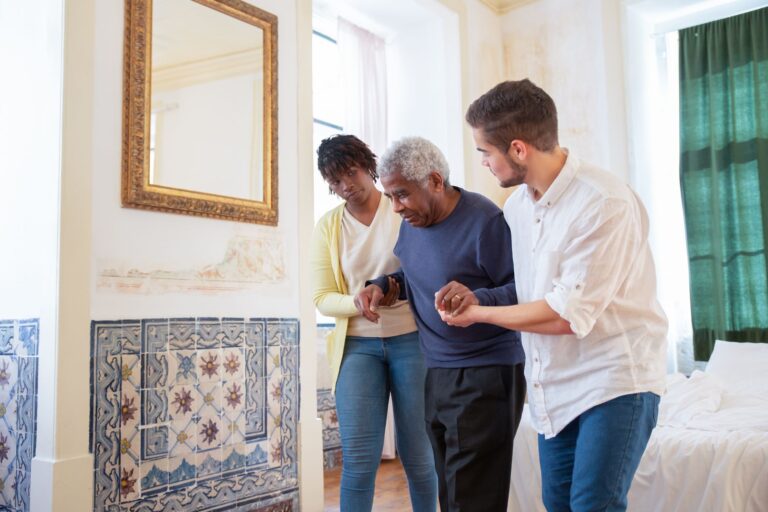
Peer support networks connect families living with Alzheimer’s by bringing together people who share the common experience of caring for a loved one with dementia, creating spaces where they can share knowledge, emotional support, and practical strategies. These networks—whether meeting in person, online, or hybrid—reduce isolation and provide validation that caregivers are not alone in their struggles.
A family caregiver in rural Ohio, for example, was able to access a state-sponsored support group that met monthly at a local senior center; when her husband’s behavioral changes worsened, the group provided both emotional reassurance and concrete advice on managing sundowning that her doctor hadn’t mentioned. Peer support works because other families understand the specific grief, frustration, and unexpected humor that comes with an Alzheimer’s diagnosis in a way that well-meaning friends cannot. Unlike professional counseling—which is valuable and complementary—peer networks offer the distinctive relief of being truly understood by someone who has already walked the path you’re on.
Table of Contents
- Why Peer Support Networks Matter for Alzheimer’s Caregivers
- The Therapeutic Power of Shared Experience in Dementia Care
- Types of Peer Support Available for Alzheimer’s Families
- Finding and Joining Peer Support Networks in Your Community
- Barriers and Challenges in Accessing Peer Support
- Digital and Hybrid Support Networks: Expanding Access
- The Future of Peer Support in Dementia Care
- Conclusion
Why Peer Support Networks Matter for Alzheimer’s Caregivers
Alzheimer’s caregiving is isolating work. A family may find that friends stop calling after the diagnosis, that routine social events become impossible to attend, or that the weight of 24/7 care leaves no time for personal connections. Peer support networks directly counter this isolation by creating structured, judgment-free spaces where caregivers can gather regularly. The Alzheimer’s Association, for instance, reports that caregiver stress levels are measurably lower among those who participate in support groups, with many describing the group as their “lifeline” during the darkest periods of their loved one’s decline.
The comparison is instructive: a caregiver receiving support only from family members or professionals may feel they must stay strong and positive. In a peer group, the same person can acknowledge despair, express anger at the disease, or laugh about the absurdity of trying to bathe someone who no longer recognizes them. This emotional release alone has measurable health benefits, reducing caregiver depression and burnout. Networks also serve as knowledge-sharing hubs, where one person’s hard-won discovery—like a particular music approach that reaches a withdrawn loved one—spreads to others facing similar challenges.

The Therapeutic Power of Shared Experience in Dementia Care
The core mechanism of peer support networks is simple but powerful: shared experience creates legitimacy and reduces shame. When a caregiver admits to the group that she put her father in daycare because she felt like she was losing her mind, and three other people nod and say “me too, I thought I was the only one,” something shifts. The burden doesn’t get lighter in practical terms, but psychologically, the sense of personal failure transforms into an understanding of caregiver burden as a predictable, almost universal consequence of this disease. research on caregiver outcomes shows that peer support reduces rates of clinical depression and anxiety, improves sleep quality, and even helps caregivers stay healthier longer.
However, there is an important limitation: peer support is not a substitute for professional mental health care, particularly for caregivers with histories of depression, complicated grief, or suicidal ideation. A caregiver who joins a support group while also experiencing their own major depressive episode will still need therapy or medication—the group cannot provide clinical treatment. Additionally, the quality and helpfulness of any given support group varies significantly depending on the facilitator, the group’s culture, and the specific mix of participants. A group that is mostly focused on venting without any sense of direction or hope can sometimes reinforce despair rather than countering it.
Types of Peer Support Available for Alzheimer’s Families
Peer support networks come in several distinct flavors, each serving different needs. The most traditional model is the in-person support group, often facilitated by trained volunteers or social workers, meeting weekly or monthly in libraries, hospitals, senior centers, or churches. These typically feature structured agendas—educational speakers, skill-building activities, or open discussion time—and provide the irreplaceable benefit of face-to-face human connection. A support group for early-stage Alzheimer’s patients and their spouses, for example, often looks different from one for adult children caring for a parent, allowing for more tailored conversations.
Online peer communities have expanded dramatically, particularly since 2020, and now include disease-specific forums (like those hosted by the Alzheimer’s Association), social media groups, and dedicated platforms where caregivers can access support 24/7, post questions at 2 a.m. when they cannot sleep, and read responses from others across the country or world. Some programs offer hybrid models combining monthly in-person meetings with a private online community for between-meeting support. Respite care groups, while not purely peer support, serve a related function: they allow caregivers to attend a meeting while trained staff watch their loved one, removing the barrier that prevents many full-time caregivers from attending anything.

Finding and Joining Peer Support Networks in Your Community
Locating peer support can feel daunting, but several established pathways exist. The Alzheimer’s Association operates a 24/7 helpline (1-800-272-3900) that can direct callers to local support groups, care consultation, and resources in their specific area. Many regional hospitals have memory care units or geriatric departments that maintain lists of local groups. Senior centers frequently host support groups, and some are specifically designed for early-stage dementia patients (allowing them to participate while they are still able).
Nursing homes and assisted living facilities sometimes open their support groups to family members. When evaluating a group, a caregiver should attend at least twice before deciding whether it’s a good fit. Some groups will feel warm and validating immediately; others may feel awkward or dominated by certain personalities. A practical trade-off to consider: an in-person group requires travel and scheduling, but offers real-time connection; an online group is accessible from home but misses the sensory comfort of being physically in a room with others. Many caregivers benefit from participating in both, using online groups for crisis moments and in-person meetings for deeper relationships.
Barriers and Challenges in Accessing Peer Support
Not all caregivers can easily access peer support, and recognizing these barriers matters. Rural areas often have no local support groups, leaving families to rely on online communities—which helps but doesn’t fully replace in-person connection. Caregivers working full-time may find that group meeting schedules don’t align with their availability, and many cannot afford paid childcare or care for their loved one in order to attend. Language barriers, transportation limitations, disability, and caregiver burnout so severe that leaving the house feels impossible all prevent people from accessing this resource.
There is also a less-discussed barrier: some people find peer support emotionally destabilizing rather than supportive. Spending an evening with five other families in crisis can sometimes amplify anxiety rather than relieve it, particularly early in the caregiving journey when a person is still coming to terms with the diagnosis. For these individuals, one-on-one counseling, educational resources, or smaller peer connections (like a coffee group with one other caregiver) may be more helpful. A warning here: caregivers experiencing significant depression, hopelessness, or thoughts of harming themselves should speak with a mental health professional directly rather than relying on peer support as their primary intervention.

Digital and Hybrid Support Networks: Expanding Access
Technology has dramatically expanded the reach of peer support, making it possible for a caregiver in a small town to connect with others in the same situation anywhere in the world. Dedicated apps and platforms now allow families to share advice, post questions, and engage in video calls with peer support facilitators. Some groups use video conferencing to hold online meetings with hundreds of participants, creating larger communities but less intimate conversation.
Others maintain smaller, closed groups where regulars develop genuine friendships. Hybrid programs offer the best of both approaches: monthly in-person meetings for deep connection, paired with an online community for daily support and practical questions. A caregiver working through her mother’s decline can attend a group meeting on the first Thursday of each month, then log into the group’s private Facebook page on the Wednesday night when she cannot sleep, worried about whether her mother’s new medication is causing confusion. The combination addresses the reality that caregiver crises don’t happen on a schedule.
The Future of Peer Support in Dementia Care
As Alzheimer’s rates climb and family caregiving becomes an increasingly central public health issue, peer support networks are evolving to meet growing demand. Many regional Alzheimer’s Association chapters are training peer support facilitators from among their most experienced caregivers, recognizing that the most credible support often comes from someone who has already navigated the journey. Some programs are now offering specialized groups for specific populations—Black families navigating both cultural grief and health disparities in dementia care, for example, or young adult children caring for a parent with early-onset Alzheimer’s.
The integration of peer support with telehealth and clinical care is also expanding. Some medical centers now refer newly diagnosed patients and their families directly to peer support as a standard part of care, similar to how they would refer someone newly diagnosed with cancer to a support group. This normalization, alongside greater recognition of caregiver mental health as a legitimate medical concern, is slowly shifting peer support from a nice-to-have resource into a recognized standard of care.
Conclusion
Peer support networks address one of the most profound needs in Alzheimer’s caregiving: the need to be understood and supported by others who have lived through it. Whether through in-person groups, online communities, or hybrid models, these networks reduce isolation, provide practical knowledge-sharing, and affirm that the difficult emotions caregivers experience—anger, grief, guilt, exhaustion—are natural responses to an unnaturally difficult situation. They remind families that they are not alone and that their struggle has been witnessed and survived by others.
If you are caring for someone with Alzheimer’s, locating a peer support group should be treated as seriously as scheduling medical appointments. Start by calling the Alzheimer’s Association helpline, asking your doctor, or checking your local senior center. Be patient in finding the right group—the first one may not be the fit, but the investment in finding genuine peer connection can sustain you through the years ahead. Your experience matters, and your burden is shared by millions of other families who understand exactly what you are facing.
You Might Also Like
- Psychosocial Support Services Enhance Alzheimer’s Caregiver Well-Being
- Telehealth Solutions Improve Access to Alzheimer’s Specialist Care
- Standards of Care Updated to Reflect Alzheimer’s Treatment Advances
For more, see Alzheimer’s Association — medical tests.