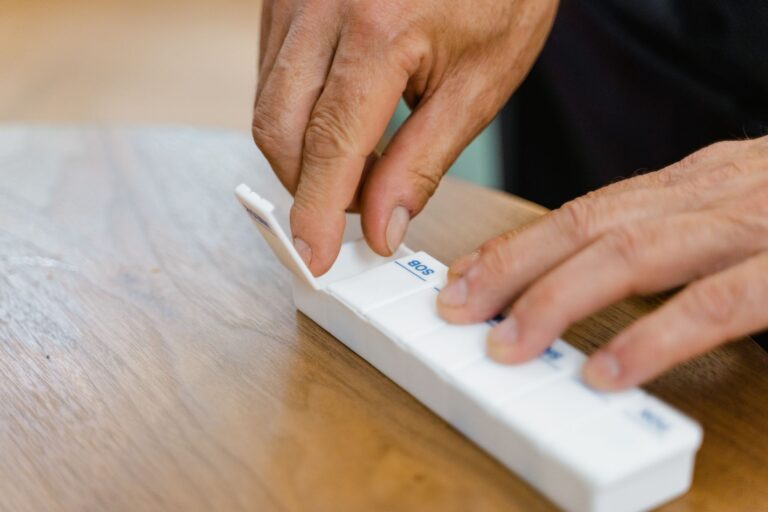
Families sharing care should track thinking, hallucinations, sleep, mood, walking, falls and medicine changes between visits. Parkinson's disease dementia means dementia that starts at least a year, often years, after Parkinson's movement symptoms. A shared log shows what changed, when it started, and what seemed to trigger it. It helps every caregiver report the same facts at the next visit.
Medical information disclaimer: This article is for general educational purposes only and does not provide medical advice, diagnosis, or treatment. Always consult a physician or other qualified health professional about symptoms, medications, tests, or treatment decisions.
Table of Contents
- When is it Parkinson's disease dementia?
- Which thinking changes affect daily tasks?
- What should you record about hallucinations and beliefs?
- Which triggers, sleep and safety signs go in the shared log?
- Which medicine effects should you bring to the visit?
When is it Parkinson's disease dementia?
The Alzheimer's Association explains that Parkinson's disease dementia is diagnosed when dementia starts at least one year, often several years, after Parkinson's movement symptoms Alzheimer's Association overview. This timing helps separate it from dementia with Lewy bodies.
Families can note both start dates in the shared log. No single test firmly confirms Parkinson's disease dementia. Note new symptoms with dates so the care team can judge change over time.
Which thinking changes affect daily tasks?
The Michael J. Fox Foundation notes that Parkinson's thinking change often hits attention, planning and navigation more than memory. Planning means multitasking and solving step-by-step problems.
Navigation means judging space, such as doorways or parking. The same Foundation notes mild change spares daily activities. Dementia disrupts work and daily function. Families might see lost train of thought, stalled meal steps, or wrong turns in a familiar store.
What should you record about hallucinations and beliefs?
The Michael J. Fox Foundation describes Parkinson's psychosis as seeing people or animals that are not there, plus false beliefs such as theft or infidelity hallucinations and delusions guide. It often starts years or decades after movement symptoms.
Episodes can range from monthly to daily, with or without dementia. Carbidopa-levodopa for movement can worsen hallucinations and confusion. Report new or frightening psychosis and any medicine change right away. Log date, time, what was seen or believed, fear level and response.
Which triggers, sleep and safety signs go in the shared log?
The Michael J. Fox Foundation lists reversible contributors families should track between visits. Note any of these alongside the date thinking or psychosis worsened.
Also log REM sleep behavior, which means acting out dreams, plus daytime sleepiness, depression and anxiety. Add freezing mid-step, shuffling, balance loss and falls. The Alzheimer's Association links these signs to daily function and safety needs.
- dopamine agonists, amantadine and diphenhydramine use
- signs of urinary or breathing infection
- hospital stay, surgery or routine change
- broken sleep
Which medicine effects should you bring to the visit?
The Michael J. Fox Foundation reports pimavanserin won FDA approval in 2016 for Parkinson's hallucinations and delusions FDA approval notice. It acts on serotonin without blocking dopamine, so it can ease psychosis without worsening movement.
Watch for leg swelling, nausea and confusion, and ask about the added death risk in older people with dementia. An NIH/PMC review describes rivastigmine as indicated for mild-to-moderate Parkinson's dementia and the only FDA-approved dementia drug for this use NIH/PMC review. Benefit is modest and needs blood-pressure and heart monitoring. Bring the log, pill bottles and recent blood-pressure readings to every visit.