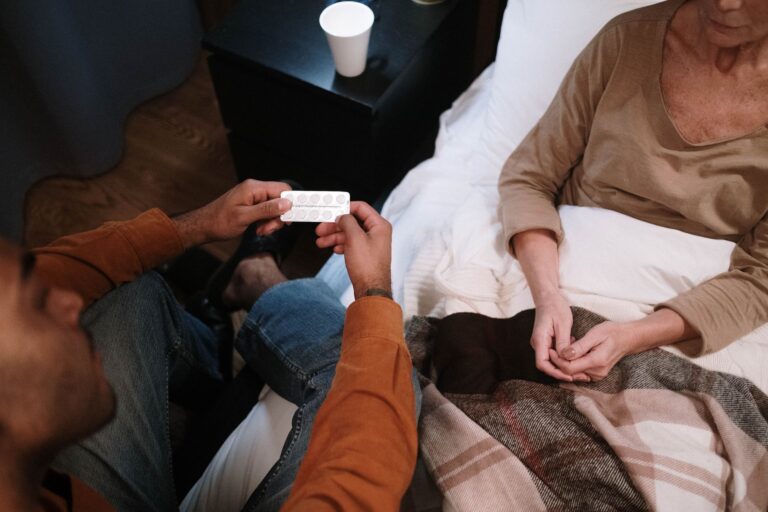
Not wanting to be in the room when a parent with dementia dies is a common reaction, not a failure of love or duty. Research on family caregivers finds that most describe the death itself as a relief, and clinical data show that even trained professionals are rarely present at the exact moment someone dies. The discomfort usually traces back to years of anticipatory grief — mourning a parent's personality and memory long before the body fails — plus the simple fact that the final moment is medically unpredictable. Understanding both points helps explain why stepping back, or stepping away, is a normal response rather than a warning sign.
Medical information disclaimer: This article is for general educational purposes only and does not provide medical advice, diagnosis, or treatment. Always consult a physician or other qualified health professional about symptoms, medications, tests, or treatment decisions.
Table of Contents
- Why This Reaction Is So Common
- Is Being Present at the Exact Moment of Death Even Realistic?
- Does Caring Well for a Parent Require Being There at the End?
- What's Really Behind the Dread of Being There
- What to Do With This Feeling
- Frequently Asked Questions
Why This Reaction Is So Common
A 2003 study in the *New England Journal of Medicine* followed 217 family caregivers of people with dementia through the death and afterward. In the NEJM end-of-life study, 72% of caregivers said the death came as a relief to them personally, and more than 90% believed it was a relief to the patient as well. That makes relief the majority response, not an exception. The same research tracked caregivers' depressive symptoms, which run high during the final year of caregiving.
Those symptoms dropped significantly within three months of the death and stayed substantially lower a year out, according to a review summarizing the NEJM findings. About a quarter of caregivers remained depressed at the one-year mark, so relief does not mean grief disappears — it means the dominant emotional shift after a dementia death trends toward relief rather than only sorrow. Wanting the ordeal to end, or not wanting to witness its final hour, fits squarely inside that documented pattern. It reflects exhaustion from prolonged caregiving, not indifference toward the parent.
Is Being Present at the Exact Moment of Death Even Realistic?
Dying from dementia is not a single event a family member can schedule around. Hospice clinical guidance describes the final days as a gradual process: prolonged sleep, reduced food and fluid intake, trouble swallowing, noisy "rattling" breathing from secretions the body can no longer clear, and skin that turns mottled and cool, according to Amedisys hospice. These signs can unfold over days, making the exact hour impossible to predict. That unpredictability holds true even for clinicians who specialize in dying patients.
A 2020 survey of 676 terminal cancer patients who died at home across 45 Japanese palliative-care clinics found a doctor was present at the literal moment of death in only 5.6% of cases, and a nurse in just 9.9%, per the study in *Palliative Care Research*. Trained professionals, paid to monitor dying patients, missed the exact moment far more often than they caught it. The same study found that 49% of these deaths happened at night or on a public holiday — timing nobody controls — even though 91% of the patients were living with family at the time, according to the same research. If professionals surrounded by monitoring equipment can't reliably catch the moment, a family member stepping out of the room for air, sleep, or a break is not missing something anyone could have guaranteed to see.
Does Caring Well for a Parent Require Being There at the End?
No. The National Institute on Aging defines end-of-life care as the support given throughout the days, weeks, or months before death — not a single scene at the deathbed, according to its booklet on comfort and care. By that definition, the care already given during the illness is what counts, not whether anyone was watching when breathing stopped. Hospice sources reinforce this directly.
Because no clinician can predict the exact hour, hospice teams routinely tell families that stepping away, sleeping, or being elsewhere when death occurs is common and carries no judgment about the quality of care provided, according to Three Oaks Hospice. That reassurance comes from people who sit with dying patients and their families for a living. A parent's final hour is one data point in a much longer relationship. Measuring a lifetime of caregiving against a moment nobody can schedule sets an unfair and clinically unrealistic standard.
What's Really Behind the Dread of Being There
Dementia caregivers often grieve long before death arrives, as the parent's memory, personality, and recognition of family fade years ahead of the body. The American Hospice Foundation notes that caregivers who dread witnessing the death, or who feel relief rather than only sorrow afterward, are describing a well-documented reaction tied to that earlier anticipatory grief — not evidence that they failed their parent, according to the American Hospice Foundation.
Much of the loss has already happened by the time the body is dying. Dread of the room itself is also physical, not just emotional. The noisy breathing, skin changes, and prolonged unresponsiveness described in hospice guidance can be distressing to witness even when a family member understands they signal a natural process rather than suffering.
What to Do With This Feeling
A reader weighing whether to stay, step out, or arrange shift coverage can use a few practical anchors drawn from this evidence: Whatever happens in the final hour, the caregiving already given is what defined the relationship with a dying parent.
- Ask the hospice team what the specific signs (breathing changes, skin color, responsiveness) mean, so uncertainty is replaced with information.
- Arrange shared coverage with siblings, other relatives, or hospice volunteers so no single person carries the vigil alone.
- Give yourself permission to step out for rest, since even clinicians are absent at the moment of death most of the time.
- If relief arrives afterward, treat it as a documented, common response rather than something to hide or feel guilty about.
- If depressive symptoms persist beyond a few months, that's the pattern worth raising with a doctor or grief counselor — not the fact of feeling relief itself.
Frequently Asked Questions
Is it normal to feel relieved after a parent with dementia dies?
Yes. A study of 217 family caregivers found 72% felt relief themselves and over 90% believed the death relieved the patient, according to the NEJM study.
Do most people actually witness the exact moment a loved one dies?
No. Among 676 home deaths studied in Japan, a doctor was present at the moment of death only 5.6% of the time and a nurse 9.9% of the time, per the Palliative Care Research study.
Does missing the moment of death mean I didn't care for my parent properly?
No. The National Institute on Aging defines end-of-life care as support given over the preceding days, weeks, or months, not presence at the final instant, according to its guidance.