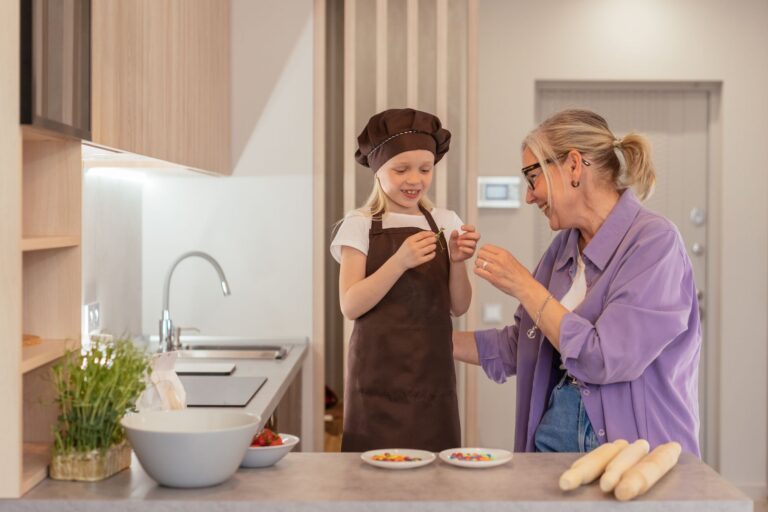
No-cook food preparation for early-stage dementia means setting up a safe station with ready-to-eat foods that need no stove or oven. Early-stage dementia means memory and thinking changes are present, but the person can often still eat and help with simple tasks. The goal is independence with guardrails. A calm eating space, simple tools, and strict food-safety habits reduce confusion, burns, and illness while keeping meals familiar.
Medical information disclaimer: This article is for general educational purposes only and does not provide medical advice, diagnosis, or treatment. Always consult a physician or other qualified health professional about symptoms, medications, tests, or treatment decisions.
Table of Contents
- How should you arrange the eating space?
- What no-cook supplies support independence?
- How do you make the kitchen safer?
- What food-safety rules matter after age 65?
- When is finger food no longer enough?
How should you arrange the eating space?
Serve meals in quiet surroundings away from television. Keep the table setting simple and remove clutter that distracts from eating.
The Alzheimer's Association advises avoiding patterned plates and tablecloths that confuse, and using contrasting colors to distinguish food and plate, as described in the Association's food and eating guidance. White fish on a white plate is hard to see. Dark meat on a light plate is easier to find and finish.
What no-cook supplies support independence?
Stock small, familiar foods that need no utensils or heat. Useful choices include cheese cubes, fruit slices, sandwiches, small muffins, pre-chopped vegetables, rotisserie chicken, and canned beans or fish.
Set out one plate, one cup, and one food at a time. Cut sandwiches and fruit into bite-size pieces before serving, and keep extras refrigerated until needed.
How do you make the kitchen safer?
Choose appliances with automatic shut-off when possible. The Alzheimer's Association recommends stove knob covers or removed knobs or gas turned off when not in use, a disconnected garbage disposal, and removing decorative fruit, medicines, and seasonings from counters, explained in the Association's home safety guidance. Add a second layer for sharps and chemicals:.
- Install childproof latches on cabinets with breakable or dangerous items
- Lock away cleaning products, matches, knives, scissors, blades, small appliances, and valuables
- Keep a kitchen night-light on for safer trips after dark
What food-safety rules matter after age 65?
Refrigerate perishable food within 2 hours, or within 1 hour when exposed above 90°F. FoodSafety.gov states this limit because older adults face higher foodborne-illness risk, detailed in the federal food safety page for older adults.
Be strict with deli meats and hot dogs. The CDC advises adults 65 and older to avoid unheated deli meat, cold cuts, hot dogs, and fermented or dry sausages, and instead heat them to 165°F or steaming hot, according to the CDC safer food choices for older adults. Listeria can grow at refrigeration temperatures, so cold storage alone does not make these foods safe.
When is finger food no longer enough?
Offer finger foods or bite-size pieces when chewing becomes difficult. When chewing or swallowing worsens, grind or puree foods to a safer texture.
Seat the person upright, allow extra time, and watch for choking, pocketed food, or weight loss. Finger foods and calm setup do not make unsafe swallowing safe, so seek clinical swallowing evaluation if those signs appear.