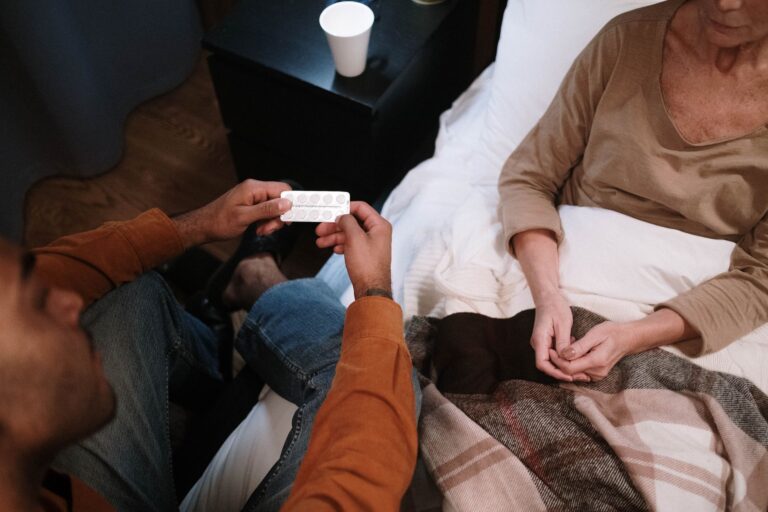
At-home Leqembi dosing does not change how often people with early Alzheimer's need brain scans. The subcutaneous autoinjector, called Leqembi Iqlik, follows the same MRI and safety-monitoring schedule as the original infusion, with one extra scan the FDA added in 2026 after reviewing cases of severe brain swelling. Eisai and Biogen announced on August 24, 2026 that the once-weekly, 500 mg at-home injection for early Alzheimer's (mild cognitive impairment or mild dementia) is now available in the U.S., delivered as two 250 mg injections patients or care partners give themselves the Biogen press release. The companies built the same imaging checkpoints into the home regimen that already applied to the clinic-based IV version, so switching to home dosing does not reduce how many scans a patient needs.
Medical information disclaimer: This article is for general educational purposes only and does not provide medical advice, diagnosis, or treatment. Always consult a physician or other qualified health professional about symptoms, medications, tests, or treatment decisions.
Table of Contents
- What MRI schedule does at-home Leqembi actually require?
- Why did the FDA add another scan?
- What training does a patient or caregiver need before starting at-home injections?
- Does Medicare or other insurance still require anything beyond the drug itself?
- Frequently Asked Questions
What MRI schedule does at-home Leqembi actually require?
Current labeling requires a baseline brain MRI before anyone starts lecanemab, the drug sold as Leqembi, according to an updated label copy on Drugs.com. After that, patients need a follow-up MRI within about a week before their 3rd, 5th, 7th, and 14th doses. In July 2026, the FDA revised the drug's label — marked "Revised: 7/2026" — to add one more scan, this one between the 2nd and 3rd doses, on top of the existing schedule the FDA drug label.
That means an early-stage patient starting treatment now faces five scheduled MRIs in roughly the first several months: baseline, the new between-dose-2-and-3 scan, and the pre-existing checkpoints before doses 5, 7, and 14. Eisai and Biogen have stated that this schedule is identical whether a patient takes the drug by weekly subcutaneous injection at home or by infusion in a clinic the Biogen press release. The at-home option changes where the drug is administered, not how closely the brain is imaged.
Why did the FDA add another scan?
The added MRI responds to safety data the FDA reviewed on ARIA-E, short for amyloid-related imaging abnormalities with edema — a type of brain swelling that shows up on MRI and is a known risk of amyloid-clearing drugs like lecanemab. The agency's review covered 101 severe ARIA-E cases, including six deaths, reported in patients treated with lecanemab reporting from Patient Worthy. That risk is not new to 2026.
Trial-era data cited in a 2025 Anthem clinical policy found ARIA of some kind in about 22% of lecanemab-treated patients, versus 10% on placebo, with deaths also reported during the drug's open-label extension period an Anthem clinical criteria document. Most ARIA cases are mild and show no symptoms, but the severe cases behind the FDA's 2026 label change are what prompted the extra imaging checkpoint. The added scan gives clinicians one more look at the brain during the window when severe ARIA-E has shown up before the drug's standard checkpoints would have caught it.
What training does a patient or caregiver need before starting at-home injections?
Home dosing does not start the first day a patient picks up the autoinjector. A healthcare provider must first teach the patient or a caregiver how to use the device correctly, and Eisai and Biogen supply injection-training materials, a treatment-tracking tool, and specialty-pharmacy support to help with that transition patient materials summarized by Epocrates. The device itself is described as needle-free to handle during use, meaning the caregiver does not manipulate an exposed needle.
In a company-reported acceptability study, 94% of patients and care partners said the autoinjector was easy to use once they had gone through instruction a study summary via Pharmacally. That high comfort rate after training is the evidence behind moving weekly dosing out of the infusion clinic and into the home in the first place. What training does not change is the MRI calendar. A family that completes injection training still needs to get the patient to an imaging center on the same schedule a clinic-based patient would follow.
Does Medicare or other insurance still require anything beyond the drug itself?
Yes. Medicare coverage of Leqembi still requires the treating physician to participate in CMS's Monoclonal Antibodies Against Amyloid for Alzheimer's Disease registry, and this requirement does not depend on whether the patient is dosed at home or in a clinic. A 2026 payer policy from Anthem/CarePartners CT lists prior authorization as a continuing requirement as well, regardless of administration route the CarePartners CT policy document.
Separately, genetic testing for the ApoE ε4 gene variant — used to flag patients at higher risk of ARIA before and during treatment — remains labeled as recommended rather than mandatory. That coverage question was still unsettled as of 2026: the American College of Medical Genetics and Genomics and the College of American Pathologists submitted comments to Medicare's genetic-testing contractor asking for explicit coverage of pretreatment APOE testing joint comments from ACMG. A patient or family starting at-home Leqembi should confirm with their insurer whether ApoE testing is billed separately and whether it is covered before treatment begins. A family weighing the at-home option can use this list to check with their neurologist's office and insurer before the first injection, since none of these requirements disappear once dosing moves out of the clinic.
- Registry participation: required for Medicare coverage, tied to the physician, not the patient
- Prior authorization: still required under at least one 2026 payer policy reviewed
- ApoE ε4 testing: recommended, with coverage rules still being negotiated as of 2026
- MRI schedule: baseline, then before doses 3, 5, 7, and 14, unchanged by home dosing
Frequently Asked Questions
Does switching to the at-home Leqembi injection reduce the number of MRI scans needed?
No. Eisai and Biogen state the MRI schedule is identical for the at-home subcutaneous regimen and the in-clinic IV regimen.
Who has to administer the at-home injection?
A patient or a trained caregiver, after a healthcare provider teaches them to use the autoinjector, with training materials and specialty-pharmacy support provided by the manufacturer.
Is genetic testing required before starting Leqembi?
ApoE ε4 testing is recommended, not mandatory, and its Medicare coverage was still being clarified as of 2026.
You Might Also Like
- FDA’s 2026 At-Home Leqembi IQLIK Starting Dose: Access, Coverage, and Training Questions for People With Early Alzheimer’s
- At-Home Leqembi vs IV Infusions After the 2026 FDA Decision: Access, Coverage, and Training Questions for People With Early Alzheimer’s
- Day-One Subcutaneous Leqembi for Early Alzheimer’s in 2026: A Preparation Checklist for People With Mild Cognitive Impairment