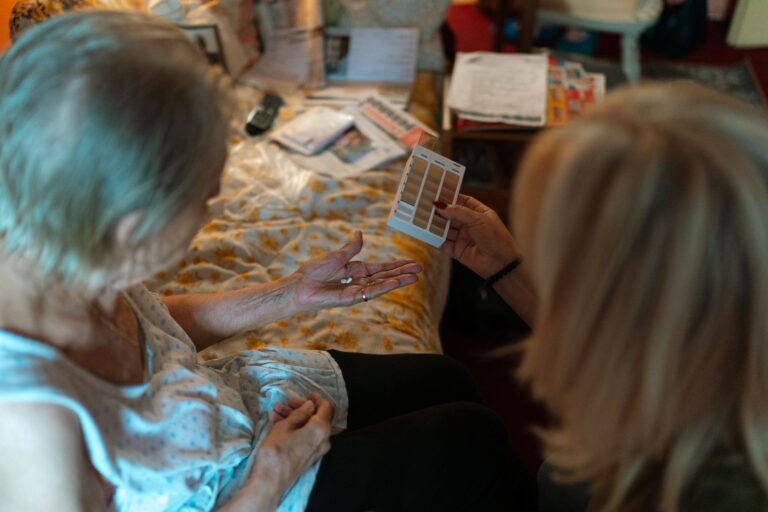
The person's health, safety, daily routines, communication style, life story, and treatment wishes should travel with them to every dementia care setting. A person-centered care plan is the working document that brings those preferences together so the next team can provide familiar, appropriate care. A move can mean home care, assisted living, hospital care, rehabilitation, or a nursing home. The setting changes, but the person's identity and preferences do not.
Medical information disclaimer: This article is for general educational purposes only and does not provide medical advice, diagnosis, or treatment. Always consult a physician or other qualified health professional about symptoms, medications, tests, or treatment decisions.
Table of Contents
- Start with the current care plan
- Preserve routines and the person behind the diagnosis
- Keep the person's voice in the handoff
- Transfer treatment and future-care wishes
- Treat the handoff as a review, not a one-time transfer
Start with the current care plan
Send the receiving team a current, person-centered care plan. It should cover health conditions, functional abilities, behavior, psychosocial needs, safety, medicines, nutrition, pain, and everyday routines, according to the Alzheimer's Association's dementia-care planning guidance. Include what the person can do independently and where they need help.
For example, note whether they need cues to dress, assistance with walking, help using the bathroom, or a calm approach during personal care. The plan should also identify behavioral or neuropsychiatric symptoms, safety risks, the person responsible for medicines, and the care partner's capacity to help. These details help the new team prepare for the person's actual needs rather than make assumptions.
Preserve routines and the person behind the diagnosis
A handoff should include more than diagnoses and tasks. Share meaningful memories, former work, hobbies, favorite activities, dislikes, preferred clothing, and usual morning and evening routines; the Alzheimer's Association recommends this kind of life-history information so staff can individualize care. Small details can prevent distress.
A person may prefer tea before getting dressed, quiet music at bedtime, a familiar nickname, or a shower rather than a bath. Record communication preferences too. Note the language the person uses, whether they respond best to short sentences or visual cues, and what nonverbal signs may show pain, fear, hunger, or the need for a break.
Keep the person's voice in the handoff
Ask the person what matters to them now, even if a health-care proxy is involved. The Alzheimer's Association and *The Gerontologist* emphasize that dementia does not erase a person's voice; verbal and nonverbal preferences should still be sought and documented in care planning. A proxy can help explain prior wishes and make decisions when needed.
That role does not replace listening for present preferences, such as a refusal, a gesture of comfort, or a clear choice about food, activity, or visitors. In Medicare- or Medicaid-certified U.S. nursing homes, residents have rights to choose activities, health care, and schedules for waking, eating, bathing, and bedtime when consistent with their interests and care plan, according to CMS's nursing-home guidance.
Transfer treatment and future-care wishes
Give the new team advance directives and the name and contact information of the designated health-care proxy. Also share documented wishes about CPR, intubation, life-sustaining treatment, comfort-focused care, and preferred place of care, as outlined by Alzheimer's.gov and the National Institute on Aging. Make these documents easy to find, not just part of a large medical file.
A copy with the person, a copy with the care partner, and a copy sent directly to the receiving setting can reduce confusion during an urgent change in condition. Cultural, religious, social, spiritual, communication, and food preferences also belong in this packet. They can shape everyday comfort and how care is understood during serious illness.
Treat the handoff as a review, not a one-time transfer
Before or soon after the move, ask for a review with the person, care partner, and receiving team. Bring the current plan, medication list, emergency contacts, proxy documents, and a short "what helps" summary.
Use this checklist: Care plans need updating as dementia progresses or health, behavior, medicines, hospitalization history, or setting suitability changes. Nursing-home rights described by CMS do not automatically apply to home care, hospitals, assisted living, or settings outside the United States.
- Confirm current medicines and who gives them.
- Explain safety concerns and what usually calms distress.
- Identify mobility, eating, toileting, sleep, and pain needs.
- Share routines, meaningful activities, and communication cues.
- Set a date to revisit the plan after the person has settled in.