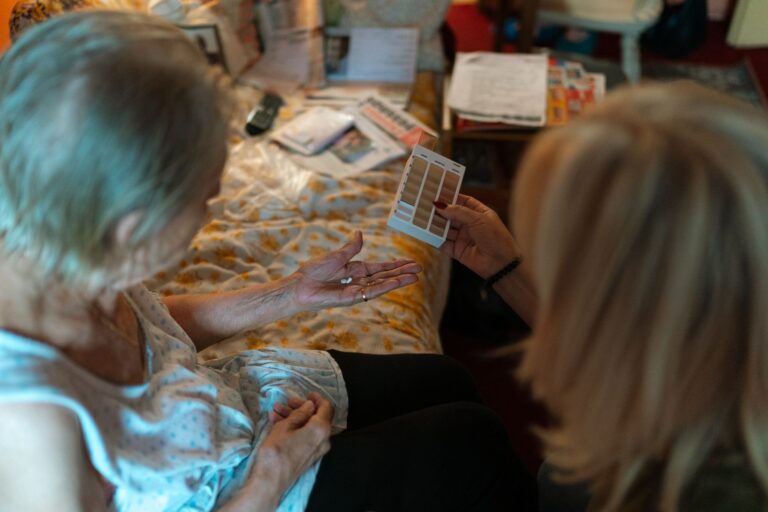
Medication management for someone with dementia means tracking what they take, when they take it, and whether it’s actually working—a task that becomes harder as memory fades but doesn’t become less important. The average person with moderate dementia is on 4 to 6 medications, sometimes more, and forgetting a single dose or taking a pill twice can trigger falls, confusion, infections, or dangerous interactions. A family medication checklist transforms this from a daily guessing game into a reproducible system that catches errors before they cause harm.
Your family checklist should include three core elements: a complete, dated list of every medication (prescription, over-the-counter, and supplement), a visible schedule showing when each is taken, and a log of who gave what on which day. This prevents the common scenario where your mother takes her blood pressure pill twice because she forgot she already took it, or where your father stops taking an antidepressant without telling anyone because he doesn’t remember why he’s on it. When dementia affects the person who’s been managing their own medications for 40 years, the system itself has to become external and foolproof.
Table of Contents
- Why Medication Management Becomes Critical in Dementia Care
- Building a Medication Schedule Your Family Can Follow
- Identifying and Preventing Common Medication Problems
- Creating a Family Medication Management System
- Drug Interactions and Cognitive Changes
- Managing Medications During Behavioral Transitions
- When to Involve Your Doctor and Pharmacy Team
Why Medication Management Becomes Critical in Dementia Care
People with dementia lose the ability to remember their medication routine long before they lose the ability to swallow a pill. someone in the early stages might miss a dose here or there. By the moderate stage, they may not remember whether they’ve taken anything at all, or they may take the same pill multiple times in an hour because they don’t recognize the bottle. Advanced dementia removes nearly all self-management ability, and the person becomes entirely dependent on someone else’s attention and accuracy. The stakes are highest with medications that have narrow safety windows—medications where too much is dangerous and too little is ineffective. Warfarin (a blood thinner for heart rhythm problems) is a classic example: miss a dose and blood clots may form; take an extra dose and bleeding can become life-threatening. Insulin for diabetes, heart medications like digoxin, and seizure preventers all carry similar risks.
Even “safer” medications can cause problems with missed or doubled doses. A missed thyroid pill doesn’t cause immediate crisis but does cause fatigue and cognitive decline that may be mistaken for worsening dementia. A doubled dose of some blood pressure medications can cause dangerous drops in blood pressure and falls. Medication errors in people with dementia also happen because of how the medications affect thinking itself. Some antidepressants, anti-anxiety drugs, and sleep aids can worsen confusion or cause falls. A medication that was safe at 65 may become unsafe at 85, especially as kidney function declines and the body processes drugs more slowly. Your checklist needs to flag not just doses and timing but also side effects that might be blamed on the dementia itself rather than recognized as a drug reaction.
Building a Medication Schedule Your Family Can Follow
A medication schedule works best when it’s built around the person‘s existing daily routine, not the pharmacy’s default schedule. If your mother normally eats breakfast at 7 a.m., noon, and 6 p.m., tie her medications to those meals rather than spreading them across arbitrary times. Morning, lunchtime, and dinner medications are much easier for a family member to remember and supervise than “take this one at 7 a.m., that one at 10 a.m., another at 2 p.m.” Many families use a pill organizer—a plastic box with compartments for each day and time of day. Fill it once a week on the same day (Sunday evening is common), so the person or caregiver just reaches for the right compartment and nothing else. The advantage is simplicity: your mother can’t accidentally take two doses because each compartment has exactly the right amount.
The limitation is that once pills are out of their original bottles, you lose the pharmacy label, the dosage information, and the medication name. If an emergency happens and your mother needs medical care, the ER team won’t immediately know what she’s on. A compromise is to keep a photo of the filled organizer on your phone and carry a written list of all current medications with you. Some families skip the organizer for a different approach: keep medications in their original bottles and use a checklist sheet or app to mark off each dose as it’s given. This approach preserves the pharmacy label and reduces the chance of mix-ups, but it requires more diligence—someone has to consciously check the bottle, count out the right number of pills, and then mark it down. The risk is higher that a dose will be forgotten, especially if multiple family members are sharing responsibility and one person doesn’t realize the other already gave the medication.
Identifying and Preventing Common Medication Problems
One of the most frequent errors in dementia medication management is duplicate medications—the same drug prescribed under different names or by different doctors. Your father might be taking metoprolol from the cardiologist for his heart rate and also taking Lopressor prescribed by his primary care doctor years ago, not realizing these are the same drug. A family checklist should include not just the brand name but the generic name and the purpose of each medication, so these overlaps become visible. Another common problem is medications that should be taken at specific times relative to food but aren’t because the caregiver doesn’t know this detail. Some antibiotics need to be taken on an empty stomach to be absorbed properly. Some supplements should never be taken with calcium or iron. Thyroid medication needs to be taken alone, at least an hour away from any other drugs or supplements.
If your mom’s nurse aide gives the thyroid pill with breakfast and a multivitamin, the thyroid medication won’t be absorbed well, and her thyroid levels will become imbalanced despite “taking” the medication faithfully. The problem won’t show up until blood work is done weeks later, and it may be wrongly attributed to disease progression. Medication interactions also intensify with age and dementia. A person on five different medications might experience an interaction that only becomes apparent when the sixth medication is added. Grapefruit juice blocks the metabolism of certain heart medications, antihistamines, and psychiatric drugs. Alcohol potentiates the effects of sedating medications, blood pressure drugs, and painkillers. Your medication list should note any known interactions and any foods or drinks to avoid, and everyone involved in care should know these rules.
Creating a Family Medication Management System
The most reliable family medication system assigns one primary person to manage medications and a backup person who can step in if the primary is sick or traveling. This prevents the scenario where no one is sure who gave what, or where two people each think the other gave the morning medications. The primary person gets an organized list, a schedule, and the responsibility to document each dose. The backup person has a copy of everything and practices the routine at least monthly so they’re not fumbling through an unfamiliar system in a crisis. Documentation is the backbone of this system. A simple paper log with columns for date, time, medication name, dose, and who administered it serves as a record you can show to the doctor if problems arise.
Many families use a Google Sheet or a simple medication-tracking app so multiple family members can access the information and add notes in real time—”Mom’s hand tremor worse today” or “Skipped noon dose because of doctor appointment.” If the person with dementia lives in an assisted living facility or has paid caregivers, the documentation also becomes a way to verify that medications were actually given and not just assumed. A comparison: paper logs are private and free but require someone to physically write in them every time. Apps cost nothing to minimal amounts but require everyone to learn the interface. Some families use both—a paper log for the primary caregiver who sees the person daily, and a shared app so remote family members stay informed. The tradeoff is time. Logging takes two minutes per medication cycle; it’s worth it to catch errors, but it adds up over a week.
Drug Interactions and Cognitive Changes
As dementia progresses, the brain becomes more sensitive to medications that affect cognition. An antidepressant dose that was safe at the mild stage may cause excessive sedation or worsening confusion by the moderate stage. Anticholinergic medications (used for urinary incontinence, nausea, and other problems) can accelerate cognitive decline. Some pain medications that don’t seem to cause drowsiness in younger people will cause significant confusion in someone with dementia. Your checklist should flag any new cognitive changes and trigger a conversation with the doctor: “Is this the dementia progressing, or is this a medication side effect?” One specific warning: older adults and people with dementia are at high risk for falls, and many common medications increase that risk. Blood pressure medications can cause dizziness, sedating antidepressants and anti-anxiety drugs increase fall risk directly, and pain medications impair balance and judgment.
If your father has had a fall and is on one of these medications, the medication may be the cause, not just the dementia. A doctor might adjust the dose, change the timing (avoiding evening doses that impair nighttime balance), or switch to a different drug. The limitation is that some of these medications are truly necessary—you can’t just stop the blood pressure medication because it might lower blood pressure, but you can work with the doctor to find the safest dose and timing. Some families discover that their relative’s mood, behavior, or sleep improves dramatically when a medication is changed or stopped. This can feel like the person is “coming back,” but it’s usually just the removal of a drug that was clouding their cognition or altering their mood. Document these changes clearly so the doctor can see the pattern.
Managing Medications During Behavioral Transitions
As dementia progresses, your family may encounter a behavioral change—increased agitation, wandering, aggression, or refusal to take medications. Sometimes this signals the need for a medication adjustment. Someone experiencing the anxiety and paranoia of moderate dementia might genuinely need an anti-anxiety medication, but giving it at the wrong time (morning instead of evening) or at the wrong dose can make things worse. Your medication checklist should include not just what your father is on but how he typically responds—does the antidepressant help his mood, or does he seem more withdrawn? Does the anxiety medication calm him or make him drowsy? One specific scenario: many people with dementia refuse to take medications because they don’t remember why they need them, or they’re suspicious about strange pills.
A family member might grind up a tablet and mix it into food or applesauce to get the person to take it. This approach can work in the short term, but it carries risks. Some medications are designed to dissolve slowly (extended-release tablets) and can cause harm if crushed. Other medications taste bitter or change the taste of food, which can undermine the person’s willingness to eat. The better approach is to ask the pharmacist for alternatives: can the medication come as a liquid? A chewable? A patch? If medication refusal is the core problem, the doctor might recommend discussing the medication’s purpose in simple language, or using timing strategies (giving medications with favorite foods or during a time when the person is most cooperative).
When to Involve Your Doctor and Pharmacy Team
Your family medication management system is not meant to replace professional oversight—it’s meant to support it. Schedule medication reviews with the doctor at least yearly, more often if the person is on many medications or if the dementia is advancing rapidly. Doctors sometimes prescribe medications that overlap in function, or they don’t realize the person is already on a similar drug prescribed by another specialist. A formal medication review by the primary care doctor (and ideally a pharmacist) catches these duplications and can simplify the regimen.
Pharmacists are often the most medication-savvy professionals in the system and are underutilized by families. Many pharmacies offer free medication therapy management reviews where a pharmacist sits down, reviews all the medications, and identifies interactions, duplications, or dosing problems. If your mother has experienced a fall, sudden confusion, or other puzzling change, asking the pharmacist “Could any of her medications cause this?” often produces insights that doctors might miss. Keep your medication list and your documentation log easily accessible to share with any healthcare provider, and don’t hesitate to ask whether a new symptom or behavior change could be medication-related before accepting it as part of the disease.