Kitchen range hoods are your first line of defense against gas cooking brain pollution because they remove nitrogen oxides (NOx), carbon dioxide, and ultrafine particles that accumulate in your kitchen before they reach your bloodstream and lungs. When you use an unvented or poorly vented gas stove, these pollutants build up to concentrations that can exceed outdoor air quality standards—sometimes two to three times higher than the ambient pollution in the worst-performing kitchens. A properly functioning range hood captures these emissions at the source before they spread throughout your home, dramatically reducing exposure to a class of pollutants that research increasingly links to cognitive decline and dementia risk. The brain’s sensitivity to air quality is well-documented.
Epidemiological studies have shown that chronic exposure to fine particulate matter (PM2.5) and nitrogen dioxide can cross the blood-brain barrier and trigger neuroinflammation. This process doesn’t happen overnight, but rather accumulates over years of daily cooking and breathing. Your kitchen is one of the places you spend the most time, often in a confined space with limited natural ventilation. A range hood operating during cooking sessions is the single most effective intervention to reduce this exposure.
Table of Contents
- How Much Pollution Does Your Gas Stove Actually Release?
- What Makes Range Hoods Effective—or Ineffective?
- The Neurotoxic Pathway: How Indoor Air Pollution Affects the Brain
- Choosing and Installing a Range Hood That Actually Works
- The Limitations of Relying on Range Hoods Alone
- Window Opening and Cross Ventilation as Backup
- Checking Your Hood’s Performance and Air Quality
- Frequently Asked Questions
How Much Pollution Does Your Gas Stove Actually Release?
Gas stoves emit nitrogen dioxide (NO2), nitrogen oxide (NO), carbon dioxide, and water vapor—all from incomplete combustion. In addition to these gaseous pollutants, the high-temperature flame creates fine particulate matter that remains suspended in the air. Research using air quality monitors placed inside kitchens has found that NO2 levels can spike to 300–500 parts per billion (ppb) during active cooking, compared to EPA ambient air quality standards of 53 ppb for one-hour exposure.
A kitchen without ventilation or with only a recirculating hood (not ducted outside) will accumulate these pollutants systematically during the cooking event and even linger for hours afterward. The amount released depends on several factors: the number of burners lit, the heat setting, the duration of cooking, and the stove’s age and maintenance. A single burner on high for 30 minutes can produce pollution levels comparable to sitting in moderate traffic pollution during rush hour. When you cook dinner every night without proper ventilation, you’re exposing your household to tens of thousands of parts per billion of NOx over the course of a month—an exposure profile that would be considered unsafe in an outdoor industrial setting.
What Makes Range Hoods Effective—or Ineffective?
A ducted range hood that vents outside removes pollutants directly from your kitchen, capturing 50–90% of the emissions at the source depending on hood design, installation, and how close you position cookware to the unit. The most effective hoods have strong suction (500+ cubic feet per minute), proper ducting with minimal bends, a make-up air system, and correct kitchen negative pressure balance. However, many installed range hoods are dramatically under-sized or improperly installed. A hood that’s too small, poorly sealed, or vented into the attic instead of outside provides a false sense of security and quality by creating negative pressure without removing pollutants. Recirculating hoods—those that filter the air and return it to the kitchen—are common in rental properties and apartments but provide minimal protection against gas cooking pollutants. They can capture some large particles and odor, but they cannot remove NOx or CO2 effectively, because these gases pass through standard charcoal filters without being converted or destroyed. If your kitchen has a recirculating hood, you have minimal ventilation protection and should open windows or doors during and immediately after cooking.
The Neurotoxic Pathway: How Indoor Air Pollution Affects the Brain
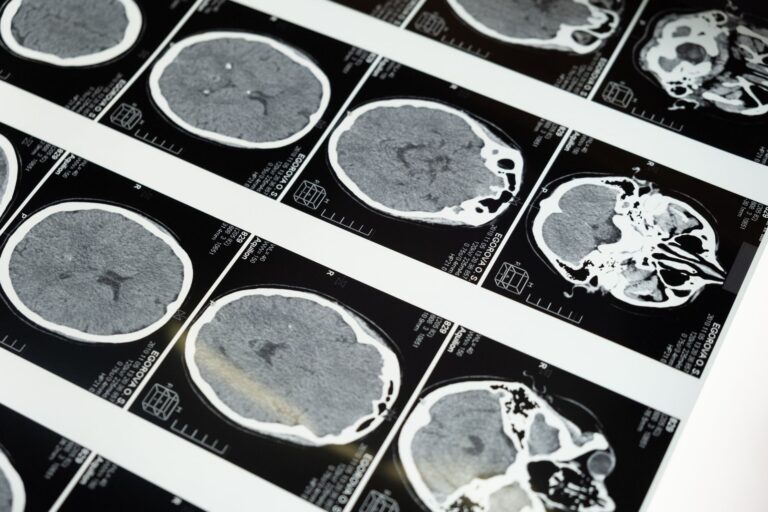
Nitrogen dioxide and fine particulate matter that you inhale during cooking can translocate to the olfactory bulb—the smell center of your brain—and potentially travel deeper into brain tissue through that pathway. The particles and NO2 trigger an inflammatory response in your brain’s microglia, the immune cells responsible for clearing pathogens and debris. Chronic activation of microglia is associated with accelerated cognitive decline and increased risk of neurodegenerative diseases, including Alzheimer’s and Parkinson’s disease.
A six-year cohort study of older adults found that those chronically exposed to higher levels of ambient air pollution had reduced gray matter volume in brain regions associated with memory and executive function. The mechanism isn’t unique to outdoor air pollution. Indoor sources—especially gas stoves—deliver these neurotoxic particles directly to your respiratory system and into your bloodstream without the dilution that occurs outdoors. Cooking without proper ventilation creates localized air quality worse than what you’d experience breathing outdoor urban air pollution for the same amount of time.
Choosing and Installing a Range Hood That Actually Works
A ducted range hood should move at least 300–500 cubic feet per minute (CFM) to effectively capture gas cooking emissions, though higher-performance models (600+ CFM) provide additional safety margin for typical residential kitchens. The hood should be installed as close to the cooktop as possible (24–30 inches is typical) and should extend at least 3 inches beyond the burners on all sides. Ducting should be rigid metal (not flexible accordion-style ductwork, which restricts airflow and can collapse), properly sealed at all connections, and routed directly outside with minimal bends.
A common mistake is installing a hood with inadequate makeup air, which causes the kitchen to become negatively pressurized and can backdraft combustion gases from gas furnaces or water heaters into living spaces. In modern, well-sealed homes, makeup air is essential. Professional installation costs $500–$2,000 depending on ducting complexity, but it’s a one-time investment that provides continuous protection. A recirculating hood provides limited protection and should only be considered if outdoor ducting is impossible; even then, open a window for at least 15 minutes after cooking to allow additional air exchange.
The Limitations of Relying on Range Hoods Alone
Range hoods require discipline to use correctly. Studies of actual household cooking habits show that many people fail to turn on their hoods during cooking, turn them on but underestimate the duration needed, or run them on low speed (which reduces effectiveness by 20–50%). If you cook multiple times daily without consistently using your hood, or if the hood is undersized, your cumulative exposure over months and years remains substantial.
Hoods also don’t protect you during cooking that occurs on countertop appliances like toaster ovens or griddles, and they can’t mitigate gas leakage from pilot lights or slow leaks from valves. Additionally, the effectiveness of a hood diminishes if it’s not maintained. Grease accumulation on filters and ductwork reduces airflow, and mold can grow inside unsealed ducts, potentially releasing additional indoor contaminants. A hood should be inspected and cleaned every 2–3 months during regular cooking season.
Window Opening and Cross Ventilation as Backup
If your hood is missing, broken, or you’re renting and can’t install one, opening windows immediately during and after cooking provides significant additional protection. Cross-ventilation—opening windows on opposite sides of the kitchen—creates air exchange that dilutes gas stove emissions.
A window opened during an hour of cooking provides 1–3 air changes per hour, enough to substantially reduce NOx accumulation. In winter months when heating bills are a concern, this becomes a tradeoff: you’ll lose some heated air, but you’ll dramatically reduce your exposure to neurotoxic cooking emissions.
Checking Your Hood’s Performance and Air Quality
You can verify your range hood is working by placing a piece of paper or a thin plastic bag held loosely near the hood surface—if the material is pulled strongly toward the hood opening, suction is adequate. A more rigorous check involves using a handheld air quality monitor that measures PM2.5 and NO2 concentration.
If you place the monitor near your cooktop while cooking without ventilation, it will typically read 200–600 µg/m³ for PM2.5 and 300+ ppb for NO2. Running your hood should drop those readings by 50–80% depending on hood quality. If your readings remain high even with the hood on, your hood is either undersized, improperly installed, or recirculating rather than ducted outside.
- —
Frequently Asked Questions
How long should I run my range hood after cooking?
Run the hood during cooking and for at least 15 minutes afterward to clear residual pollutants and moisture. Some experts recommend 20–30 minutes for high-heat cooking events.
Can I use a window instead of a range hood?
Opening windows provides significant help and dilutes pollutants, but it’s not as effective as a ducted range hood. Combining both methods is ideal.
Do electric stoves need range hood ventilation?
Electric stoves produce no NOx emissions from combustion, but they still generate heat, moisture, and cooking byproducts. A range hood helps with odor control and moisture removal, but the health imperative is less critical than with gas.
How often should I have my range hood serviced?
Inspect ducting and seals every 2–3 months. Clean or replace filters monthly if you cook frequently. Ducts should be professionally cleaned annually in homes with heavy cooking use.
What CFM (cubic feet per minute) do I need?
Aim for 300–500 CFM for standard residential kitchens; larger or commercial-style kitchens may need 600+ CFM. Consult a professional to assess your kitchen’s specific needs.
Is a recirculating hood better than nothing?
It removes some odor and grease particles, but does not remove NOx or CO2. It’s significantly inferior to a ducted hood and should be a last resort.