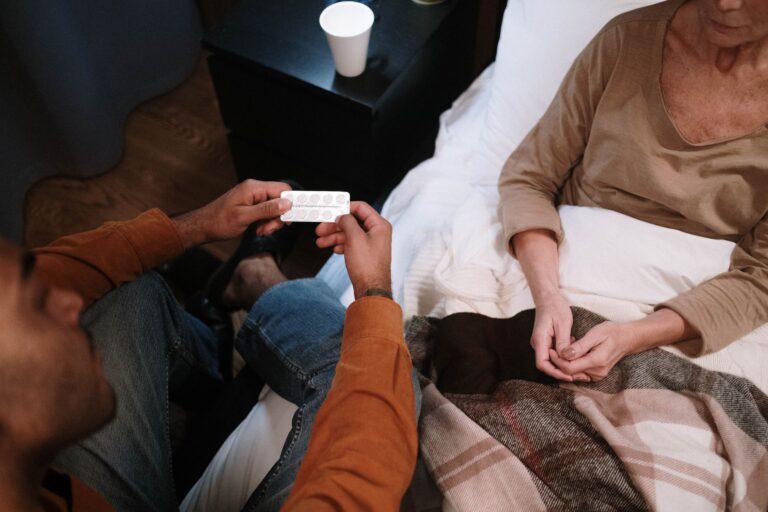
Injection training for the 2026 at-home Leqembi regimen teaches a person with mild cognitive impairment and a care partner to give once-weekly autoinjector doses at home. Leqembi Iqlik is subcutaneous lecanemab-irmb for early Alzheimer's disease, started outside an infusion center. This checklist explains who qualifies, what the dose involves, how to prepare, and what safety follow-up remains. Use it to plan with your care team and to know what questions to ask.
Medical information disclaimer: This article is for general educational purposes only and does not provide medical advice, diagnosis, or treatment. Always consult a physician or other qualified health professional about symptoms, medications, tests, or treatment decisions.
Table of Contents
- Who can start treatment at home?
- What does the weekly initiation dose involve?
- How do you train for self-injection?
- What safety monitoring still applies at home?
Who can start treatment at home?
Adults with mild cognitive impairment or mild dementia due to Alzheimer's may qualify when testing confirms amyloid-beta pathology in the brain. The Annals, Academy of Medicine Singapore guidance states Leqembi/Iqlik is indicated only for that early group with confirmed pathology guidance on eligible patients.
Ask your doctor whether your diagnosis, amyloid test result, and overall health fit that use. Bring a care partner to that visit when possible, since home dosing works best with two trained people.
What does the weekly initiation dose involve?
The initiation regimen is 500 mg once weekly, given as two consecutive 250-mg autoinjector injections. The BioArctic/Eisai partner reports each injection takes about 15 seconds partner launch announcement.
After 18 months of IV or subcutaneous treatment, Managed Healthcare Executive reports patients may switch to 360 mg once weekly by autoinjector for maintenance. Plan for the same dosing day each week and keep a simple log of dates and injection order.
How do you train for self-injection?
Eisai reports injection education is provided through Nurse Educators in person or virtually to train patients and care partners on autoinjector use company training notice. Schedule that session before your first home dose and have your regular helper attend.
The Leqembi.com self-injection guide directs users to remove one carton from refrigeration for 20 minutes at room temperature and to view the preparation video before injecting. Use training time to practice these steps: Ask the educator to watch both of you complete the sequence. Confirm when you are ready to dose without help nearby.
- check the carton, let it warm for 20 minutes, and gather supplies
- follow the preparation video and guide for each of the two injections
- review storage, disposal, missed-dose, and call-your-team rules
What safety monitoring still applies at home?
FDA Safety Labeling Changes from Dec. 15, 2025 direct ApoE epsilon 4 testing before starting because homozygotes face substantially higher rates of symptomatic and serious ARIA. Share prior genetic results with your doctor and decide together how the result affects your plan. The DailyMed Leqembi label v13 from July 2026 requires a recent baseline brain MRI plus scheduled MRI surveillance for ARIA-E edema and ARIA-H hemorrhage.
Early ARIA is often asymptomatic and carries a boxed warning, so scans matter even when thinking seems stable. TechTimes reporting from Nov. 13, 2026 notes the weekly injection was cleared by matching blood drug exposure, not by a new trial proving equal slowing of decline. Keep every scheduled MRI and report new symptoms promptly between visits.
You Might Also Like
- FDA’s 2026 At-Home Leqembi IQLIK Starting Dose: A Preparation Checklist for People With Mild Cognitive Impairment
- At-Home Leqembi vs IV Infusions After the 2026 FDA Decision: A Preparation Checklist for People With Mild Cognitive Impairment
- MRI and ARIA Monitoring With At-Home Leqembi in 2026: A Preparation Checklist for People With Mild Cognitive Impairment