Track forgetting to drink by keeping a daily fluid chart with time, drink type and amount, plus missed drinks and reasons. A dementia evaluation is a clinical visit that checks memory, thinking and daily tasks to look for causes of change.
Bring that chart to the visit so the clinician can see patterns instead of relying on recall. Older adults face higher risk because aging lowers body water, weakens kidney water saving and dulls thirst. People with dementia may also forget drinks, miss thirst, lose cups or faucets from view, have trouble swallowing, struggle to ask, take fluid-losing medicines or cut fluids to avoid incontinence.
Medical information disclaimer: This article is for general educational purposes only and does not provide medical advice, diagnosis, or treatment. Always consult a physician or other qualified health professional about symptoms, medications, tests, or treatment decisions.
Table of Contents
- Why missed drinks matter for thinking
- What to record each day
- Which body cues to add to the notes
- How to bring the record to the visit
Why missed drinks matter for thinking
Low fluid intake can bring sudden confusion, poor attention, sleepiness, disorientation or delirium that looks like dementia. Saint Alphonsus explains that dehydration onset is usually hours to days in when confusion may reflect dehydration rather than dementia, while dementia progresses gradually.
A dated log helps the clinician judge timing. Short, new changes tied to missed drinks point in one direction. Slow loss of daily skills over weeks or months points in another.
What to record each day
Right at Home recommends a simple chart that tracks fluids and related body changes in its daily fluid-intake guidance. Use one line per offer, not a memory-based estimate at night.
Keep the page near the kettle, fridge or chair where drinks are served. Note daily-function problems too, such as missed medicines, cooking trouble or getting lost. Dated examples give the evaluator context for test scores.
- time offered, drink type and amount finished
- drink refused, spilled, hidden or forgotten, and reason
- toilet visits, urine color and smell
- dry mouth, headache, dizziness, tiredness or new confusion
- bowel changes and heat, illness, vomiting or diarrhea
Which body cues to add to the notes
Add urine and mouth checks beside the drink amounts. Pale-straw urine suggests adequate fluid, while dark-yellow or strong-smelling urine, fewer toilet trips, dry mouth or lips, headache, tiredness and 8 or more hours without urination suggest low intake. Treat single signs with care.
A Cochrane review of 67 tests in people over 65 found skin pinch, dry mouth, urine color and body-water meters should not prove dehydration alone, as reported in the Cochrane review of dehydration signs in older adults. Record clusters and dates instead of one check. Write "dark urine plus dizziness at 4 p.m. after no drink since breakfast" rather than "dehydrated.".
How to bring the record to the visit
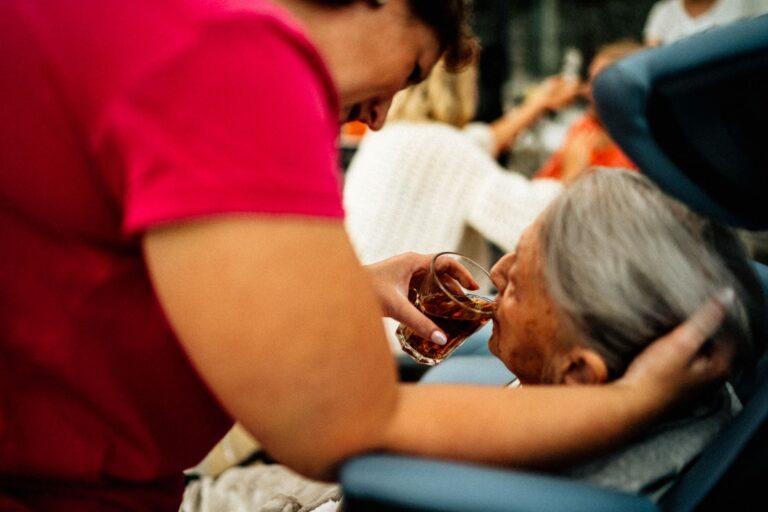
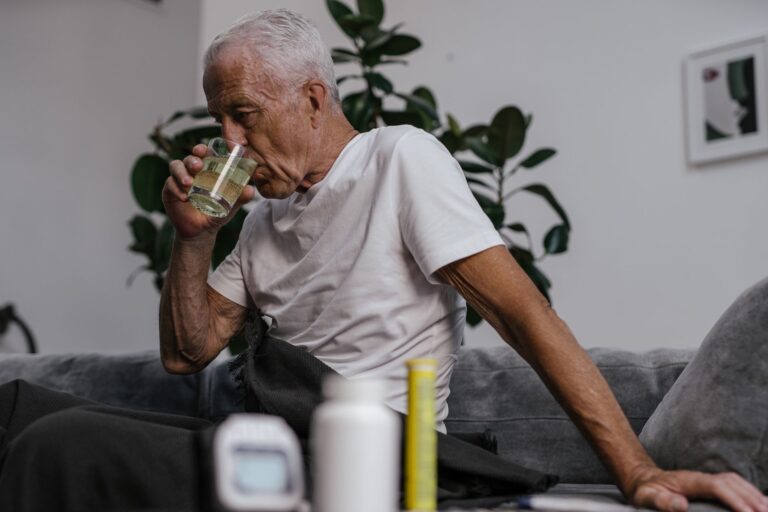
Make forgetting visible during the tracking week. Keep drinks within reach, use bright or clear easy-hold cups, add straws, pair drinks with meals or toileting, offer varied fluids and water-rich foods and take a sip together.
Bring the hydration log plus dated cognitive examples, daily-function problems, full prescription and over-the-counter medicine list, medical and family history and prior test results. Put refused drinks and incontinence worries in writing, since families often forget to mention them aloud.