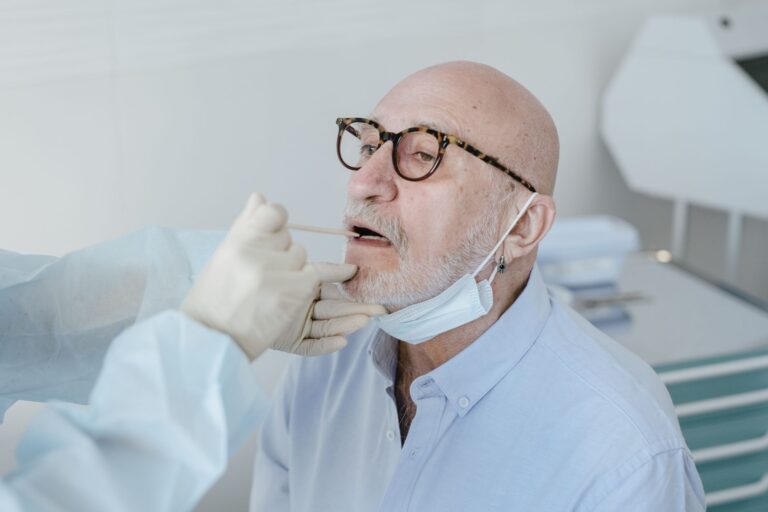
When dementia damages the parts of the brain responsible for impulse control and social filtering, people say things they never would have said before—crude remarks about appearance, racial or sexual comments, or brutally blunt observations. These statements are not expressions of the person’s true beliefs or character. They are symptoms of brain damage, the direct result of neurological deterioration in regions like the prefrontal cortex that normally keep social behavior appropriate. A man who spent 40 years as a polite banker might suddenly comment on a nurse’s body.
A woman might repeat a slur she heard decades ago, or make cutting remarks about family members she loves. The correct response is not to argue, shame, or try to teach the person why their comment was wrong. Their damaged brain cannot access the filter that once made those comments unthinkable. Instead, the goal is to stay calm, redirect attention, and protect everyone’s dignity—including your own. This means accepting that you cannot reason away a symptom of dementia, just as you cannot reason away difficulty with words or forgetting faces.
Table of Contents
- Why Does Dementia Cause Socially Inappropriate Comments?
- Why Correction, Punishment, and Logic Do Not Work
- The Immediate Response: Stay Calm and Redirect
- Managing Public Situations and Social Embarrassment
- When Inappropriate Comments Include Racism, Sexism, or Other Offensive Content
- When Medications or Professional Support May Help
- How Dementia Caregiving Affects Your Own Emotional Health
Why Does Dementia Cause Socially Inappropriate Comments?
dementia damages the regions of the brain that act as an internal censor. The prefrontal cortex, located just behind the forehead, normally monitors behavior, considers social consequences, and suppresses impulses that would violate social norms. When this area atrophies, the person loses access to that filter. They may think of something and say it immediately, without the split-second pause that allows most of us to evaluate whether it’s appropriate. Frontotemporal dementia and behavioral-variant Alzheimer’s disease are particularly likely to cause socially inappropriate behavior, though it can emerge in any type of dementia as the disease progresses.
This is different from a person who is simply being rude or disrespectful. A person with an intact brain chooses their words, even if the choice is to be unkind. A person with dementia has lost the neurological machinery that makes that choice possible. They may say something shocking and then forget it entirely moments later, or seem puzzled by family members’ upset reactions. The comments reflect damage to the brain, not a hidden personality emerging.
Why Correction, Punishment, and Logic Do Not Work
A common instinct is to correct the behavior: “That’s not okay to say,” “We don’t say that in this family,” or “That’s offensive.” These responses fail because they assume the person can apply logic and learn from feedback. Someone whose prefrontal cortex has deteriorated cannot process “if I do X, then Y will happen” in the way they once could. Repeating corrections typically creates frustration and agitation without changing the behavior, and it may escalate the situation. The person might become defensive, argumentative, or distressed. Shame and punishment are equally ineffective and harmful.
Punishing someone for behavior stemming from brain damage is both futile and cruel. It teaches nothing because the person cannot access the learning mechanism. It only creates fear, anger, or withdrawal. Some families have found that the repeated correction eventually causes the person with dementia to stop speaking altogether, which replaces one problem with another: loss of communication and increased isolation. The limitation here is that caregivers often feel they must respond in some corrective way; accepting that no correction will work requires a significant shift in perspective.
The Immediate Response: Stay Calm and Redirect
When someone with dementia makes an inappropriate comment, the first step is to manage your own reaction. Your calm or distress will shape the person’s emotional state. If you react with anger or shock, the person may become agitated, frightened, or hostile, escalating the situation. If you remain neutral and calm, they are more likely to stay regulated. This is not about endorsing the comment—it is about managing the person’s brain damage effectively.
The second step is to redirect. If your grandfather with Alzheimer’s makes an inappropriate sexual comment, do not engage with the content of the remark. Instead: acknowledge him briefly (“I hear you”), redirect his attention to something concrete (“Let’s go look at the garden”), and move forward. The goal is to interrupt the behavioral pattern without creating shame or distress. For example, if he repeats a racial slur, you might say, “That’s not how we talk,” and immediately shift focus: “Are you thirsty? Let me get you some water.” This acknowledges the comment without debate and provides a new focus for his attention. Most people with dementia have poor short-term memory; redirecting often ends the problem entirely because the person forgets what they just said.
Managing Public Situations and Social Embarrassment
Public incidents are particularly difficult for caregivers because there is an audience, and the caregiver’s embarrassment is often sharper than when the comment occurs at home. Your mother makes a crude remark at a restaurant. A stranger might stare. You might feel shame, as if her behavior reflects on you personally. It does not. The appropriate response is the same as at home: stay calm, do not correct or argue, and redirect. With a stranger, you might use a brief, simple phrase that signals to them that the person has dementia: “She has Alzheimer’s.
We’re okay, thank you.” Most people respond with understanding. If the situation is genuinely disruptive or unsafe—for example, the person is making threats or becoming aggressive—the best action is often to leave. This is not punishment; it is harm prevention. You might excuse yourself calmly: “We need to go. Thank you.” Then move the person to a quieter, calmer environment. The tradeoff is between trying to maintain normalcy in a situation the person’s brain can no longer process, and removing them to a calmer setting where they will feel safer and you can both recover. Staying in an overstimulating environment typically makes behavioral problems worse, not better.
When Inappropriate Comments Include Racism, Sexism, or Other Offensive Content
Racial slurs, homophobic remarks, and other explicitly offensive comments are particularly painful for family members, especially if the person has a history of being inclusive or progressive. It is crucial to separate the disease from the person. A woman who marched for civil rights in the 1960s may now repeat racist comments she heard as a child, comments her intact brain would have rejected immediately. The comments do not represent her values or her true self; they represent the loss of the neural filter that would suppress them. This knowledge does not make it painless to hear. Caregivers have reported feeling profound grief over hearing loved ones say things they never would have said, and simultaneously feeling guilty for being upset because they know it is the disease.
That contradiction is real and valid. You are grieving the loss of the person’s intact brain while caring for the person whose brain is damaged. Setting boundaries for yourself is necessary: you might decide that you will leave the room, put in earbuds, or take a break when this happens. You are not abandoning the person; you are protecting your own mental health so you can continue to provide care. This is not selfish. It is essential.
When Medications or Professional Support May Help
Some caregivers consult with a neurologist or psychiatrist about behavioral medications that might reduce inappropriate comments or other behavioral symptoms. Medications like SSRIs, antipsychotics (at low doses, in specific situations), or anti-anxiety agents can sometimes reduce behavioral problems, particularly if the person is anxious or agitated. However, medications are not a reliable fix.
Some people respond; others do not. Medications also carry risks, including sedation, falls, or paradoxical worsening of behavior. A professional evaluation is worthwhile if the behavior is severe enough to affect safety or quality of life, but it is important to have realistic expectations. Medication may reduce the frequency or intensity of inappropriate comments, but it is unlikely to eliminate them entirely if they stem from advanced dementia.
How Dementia Caregiving Affects Your Own Emotional Health
Hearing a loved one make socially inappropriate, offensive, or crude comments is emotionally taxing. Many caregivers report shock, shame, grief, and anger—sometimes all in the same hour. The cumulative effect of repeated exposure to behavior that contradicts who the person was before dementia can contribute to caregiver burnout and depression. It is important to name this and seek support. Caregiver support groups, whether in-person or online, provide space to talk about these experiences with people who understand.
Individual therapy can help you process the grief of seeing a loved one change in such a fundamental way. Taking breaks from caregiving is also critical. If you are the primary caregiver and you hear these comments every day, you need regular relief. This might mean hiring in-home help for a few hours a week, using adult day care services, or asking family members to take shifts. Respite care is not a luxury; it is a necessity for your survival as a caregiver. Without it, you risk burnout so severe that you cannot provide good care, and you risk your own physical and mental health.
- —