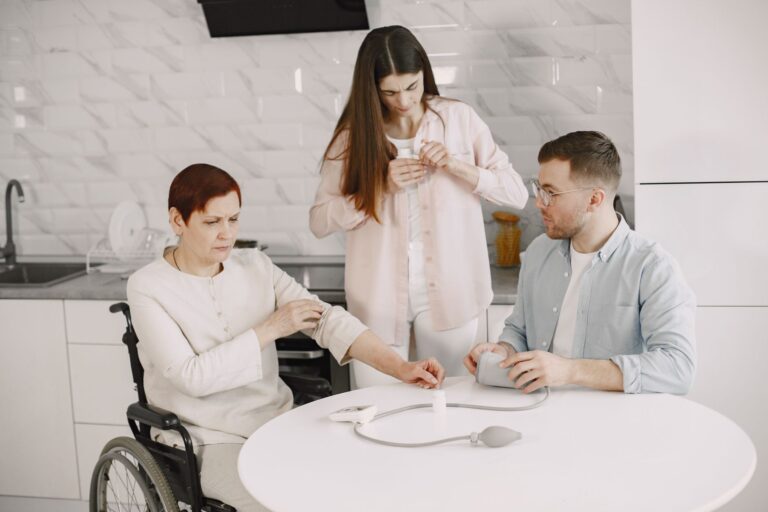
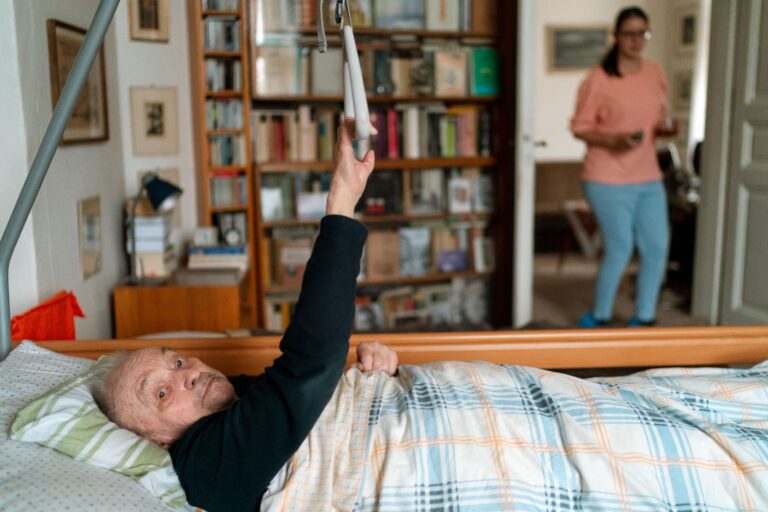
Advocating for a dementia patient in the hospital means taking an active role in their medical care decisions, ensuring staff understand their baseline abilities and needs, and serving as a bridge between the patient’s history and the medical team treating them. You do this by clearly communicating the patient’s cognitive status to nurses and doctors, documenting their care preferences before or immediately after admission, staying present when possible during critical transitions like medication administration and tests, and stepping in when the hospital’s standard approach conflicts with what you know works for this person. For example, if your mother stops eating and becomes agitated during hospitalization, a good advocate asks whether she’s in pain (which dementia patients often can’t verbally report), requests that medications be given with her preferred food or drink rather than on an unfamiliar hospital tray, and ensures staff know that she responds better to quiet, one-person instructions than to rushed group interactions. Hospital staff are trained to treat acute conditions, not to manage the behavioral and communication complexities of dementia.
This gap creates risk. A patient who can’t explain their symptoms may receive incorrect diagnoses. A patient whose dementia causes sundowning may be over-sedated with antipsychotics instead of having their environment adjusted. A patient who wanders or removes medical devices may be restrained or isolated instead of given supervised movement. Your role as advocate is to close this gap—not by second-guessing medical decisions, but by making the invisible visible: translating what dementia looks like for this individual person, catching mistakes before they escalate, and protecting the patient’s dignity and safety in a system that can accidentally harm people it doesn’t understand.
Table of Contents
- What Does Effective Advocacy Look Like in a Hospital Setting?
- Understanding Hospital Systems and Your Legal Rights as a Caregiver
- Managing Communication and Behavioral Challenges
- Documenting Medical History and Current Medication Lists
- Common Hospital Mistakes with Dementia Patients
- Coordinating Care and Discharge Planning
- Escalating Concerns and When to Involve Hospital Administration
- Frequently Asked Questions
What Does Effective Advocacy Look Like in a Hospital Setting?
Effective advocacy starts before the crisis, if possible. Create a one-page summary of your family member’s baseline: What can they still do? What do they need help with? What communication style works best? Do they have pain behaviors—like grabbing, grimacing, or silence—instead of complaints? Is there a particular medication or approach that has caused problems before? If admission is planned (surgery, cardiac workup), deliver this summary to the nursing station and ask that it be added to the chart. If it’s an emergency, bring it with you and hand it to the triage nurse, the floor nurse, and the hospitalist, because information doesn’t always cross departments. During the hospital stay, your job is not to hover or contradict doctors, but to observe and report. Sit quietly during rounds if you’re allowed. Notice changes in the patient’s behavior, appetite, continence, sleep, or pain signals. Write them down with times and context. If the patient says something unusual or if their mental status shifts—worse confusion, new hallucinations, aggression that’s out of character—tell the medical team the same day, not the next morning. Many hospitals have a hierarchy: nurses report to residents, residents report to attendings, attendings report to no one.
If something important isn’t getting attention at the nurse level, ask to speak to the charge nurse or the hospitalist directly. Stay calm and specific: “He hasn’t eaten since yesterday afternoon and is pulling at his IV. I think he may be in pain or very uncomfortable” is more effective than “You’re not taking care of him.” A real example: A 78-year-old woman with moderate Alzheimer’s was admitted for a urinary tract infection. On day two, she became combative during vital signs, which was completely unlike her. The family mentioned it to a passing resident, who documented “agitation” and ordered a sedative. The family, who knew her well, pushed back, asking whether she might be in pain or if something hurt during the vital-sign check. The nurse then discovered the blood-pressure cuff had been applied too tightly on an old bruise. Once that was adjusted and pain medication given, the agitation stopped. Without the family’s insistence, she would have been sedated—which can accelerate cognitive decline and cloud diagnosis of the real problem.
Understanding Hospital Systems and Your Legal Rights as a Caregiver
Hospitals operate on strict timelines and protocols. Rounds happen at a fixed time each morning, patients are expected to eat at set hours, and tests are scheduled according to hospital efficiency, not patient preference. Understanding this system helps you work within it instead of fighting it. If your family member can’t eat regular hospital food due to swallowing problems or texture preferences you know they have, don’t wait for a dietary consult; ask the nurse whether you can bring approved foods from home. If your family member does better in the afternoon but all the key decisions happen at 6 a.m. rounds, ask if you can attend rounds or if the team can give you a call with updates. Know your legal standing. In most states, if the patient is cognitively intact enough to make medical decisions, they decide; if they’re not, a healthcare proxy or power of attorney decides. If no legal document exists, the hospital will follow a hierarchy of next-of-kin (spouse, then adult children, then parents).
If you’re not in that order—you’re a sibling, adult grandchild, or friend—you may have limited say without a legal document. Hospital social workers can explain your state’s rules. Even if you’re not the legal decision-maker, you can still advocate for the patient’s comfort and safety. Request to meet with the palliative care team if the hospital has one; they specialize in comfort and quality of life, not just diagnosis and cure, and they often catch issues the acute-care team misses. One major limitation: Hospital staff are busy. A nurse with eight patients can’t spend an hour coaxing your family member to eat or repositioning them every hour to prevent bedsores. If your family member needs extensive hands-on care, you or another family member may need to be present a significant portion of the day. This is not ideal, and it’s not fair, but it’s the reality of short-staffed hospital units. Many hospitals allow one support person to stay overnight in the patient’s room. If your family member is at high risk for falls, pulling out medical devices, or extreme distress, staying overnight may prevent a bad outcome like a restrained patient or an unexpected transfer to a psychiatric unit.
Managing Communication and Behavioral Challenges
dementia patients in hospitals face disorientation on top of their baseline cognitive loss. They’re in an unfamiliar place, often in pain or discomfort, on medications that can worsen confusion, and scheduled for tests and procedures with strangers. This recipe produces behavioral symptoms: agitation, resistance to care, refusal to eat or take medication, pulling at IV lines, or wandering into other patients’ rooms. Many hospital staff interpret these behaviors as “difficult” or “combative” rather than as distress signals. Your job is to reframe and translate. If your family member resists medication or becomes upset during care, pause and try a different approach. Is the room too bright or noisy? Are they in pain? Hungry? Do they need to use the bathroom? Are they scared? A person with dementia can’t tell you logically, but they can show you through behavior.
One effective strategy: Introduce yourself and the procedure as if meeting them for the first time each time you enter, especially if they don’t have intact short-term memory. “Hi, Mom, it’s your daughter Sarah. The nurse is going to check your blood pressure now. It might feel a little tight, but it won’t hurt. You’re in the hospital, and you’re safe.” This sounds repetitive, but it reduces confusion and resistance far more than assuming they remember the last time. A concrete limitation: If a patient becomes genuinely dangerous—swinging at staff, throwing objects—the hospital may seek to sedate them or move them to a psychiatric observation unit, even if the behavior is caused by pain, infection, or ICU delirium rather than inherent aggression. Once a patient is labeled as “behavioral” or “psychiatric,” they sometimes get fewer medical workups and more chemical restraints. Advocate proactively for a medical cause: “Before you sedate him, can you check whether he has an infection or is in pain? This behavior is brand new.”.
Documenting Medical History and Current Medication Lists
Hospitals have their own systems, and they sometimes lose information. Before admission or on arrival, prepare a complete list of all medications (including over-the-counter supplements), allergies, past hospitalizations, surgeries, reactions to anesthesia, and any chronic conditions like hearing loss or vision problems. Include psychiatric medications and doses, because some antipsychotics can interact badly with common hospital drugs or worsen delirium. Mention if the patient has a history of falling, if they wear hearing aids or glasses (hospitals sometimes misplace these), and if they have a history of refusing certain medical procedures. The difference between a patient who brings a medical summary and one who doesn’t is striking.
Hospitals can look up past records, but it takes time; in the meantime, your family member might be given a duplicate medication, undergo a test they’ve already had, or be started on something that conflicts with a dose given in the ER an hour earlier. A typed half-page summary—name, date of birth, current medications with doses, known allergies, key medical history, and contact information for their primary care doctor—speeds up safe care. Ask the admitting nurse to photograph it and add it to the chart, and ask each shift change if they’ve reviewed it. One tradeoff to consider: Detailed medical documentation is protective, but it can also flag the patient as complex, which sometimes means they get deprioritized in favor of simpler cases. Most hospitals are fair about this, but in a critical situation, being aware that complexity exists helps you advocate for the care your family member actually needs rather than assuming the system will automatically escalate appropriately.
Common Hospital Mistakes with Dementia Patients
The most common mistake is over-sedation. A confused, agitated patient is prescribed antipsychotics or sedatives, which often make confusion worse, increase fall risk, slow their recovery, and can trigger serious side effects like falls, stroke, or aspiration pneumonia in older adults. Hospitals do this because it’s faster than investigating the cause or managing it with non-drug approaches. Push back. Ask the doctor: “What is the target behavior? Why do we think medication is the right answer? Have we ruled out infection, pain, hunger, or the need to use the bathroom?” Often the answer is yes to that last one. Dementia patients can’t always find or use the call button, and if they’re constipated, in urinary retention, or desperate for the toilet, their entire demeanor changes once that’s addressed. A second mistake is stopping essential dementia medications. When an older adult is hospitalized, some medications get temporarily held—which is medically appropriate. But some hospitals hold dementia medications like cholinesterase inhibitors (donepezil, rivastigmine) “until we see how they do,” which often means indefinitely, and then the patient’s cognition genuinely declines.
If your family member takes a dementia drug, ask the hospitalist on day one whether it should be continued, held, or restarted before discharge. A third mistake is sedating patients for procedures unnecessarily or giving sedation that’s too strong. Many hospitals sedate dementia patients for endoscopy or other routine procedures out of habit, not medical necessity. Sedation itself can cause delirium, aspiration, and longer recovery. Before any procedure, ask: “Does he actually need sedation, or can we do this with local anesthetic and a calm approach?” If sedation is truly needed, ask for the lightest possible dose and a specific reversal plan. A final, serious mistake: Restraints and isolation. If a patient pulls out an IV or tries to leave the bed without permission, some hospitals respond with physical restraints or isolation in a quiet room—which in a person with dementia often causes extreme panic and can lead to falls or injury. Modern hospital guidelines recommend against restraints, but they still happen. If the staff mention restraints or isolation, ask what behavior they’re trying to prevent and whether there are alternatives: a sitter, frequent check-ins, moving the IV to a less accessible location, or simply accepting that the patient may need less invasive monitoring instead.
Coordinating Care and Discharge Planning
Discharge planning should start on day one, not day before discharge. Ask the social worker or case manager: “What will he need when he goes home? Will he need physical therapy, home health, wound care?” If your family member was independent before hospitalization and comes out weaker or more confused, they may need temporary services. Ask the hospital to arrange these before discharge, not after. Many hospitals have a list of home health agencies; ask specifically for one experienced with dementia patients. During the hospital stay, attend the discharge planning meeting if possible. The hospital team will often recommend services and equipment that seem reasonable but aren’t quite right for your family member or your home setup.
For example, a hospital might order a walker for a patient who has never used one and will refuse it, or recommend twice-daily home health when your family member will tolerate it only if the same person comes each time. Speak up now, because changing services after discharge is harder than getting it right the first time. Request a detailed discharge summary before your family member leaves. It should include the reason for admission, tests performed, test results, treatments given, discharge medications (with clear instructions on whether this is the same as before or changed), and any restrictions. Don’t leave without it. Give a copy to your family member’s primary care doctor within a week and tell the doctor if anything in the summary doesn’t match what you were told.
Escalating Concerns and When to Involve Hospital Administration
If you raise a concern with a nurse and it’s not addressed, ask to speak with the charge nurse. If the charge nurse doesn’t resolve it, ask to speak with the hospitalist or attending. If that doesn’t work, ask for the patient advocate or ombudsman; most hospitals have one, and their job is to help patients navigate these exact situations. You don’t need permission to ask for this person; they’re a resource for families. Escalation should be professional and specific, not emotional.
Instead of “Your staff is neglecting him,” say: “He hasn’t had his dementia medication since admission, he’s not eating, and when I asked about restarting his medication, I was told it would be reviewed but it hasn’t been. Can we set a specific time for that review?” Document everything: dates, times, who you spoke with, what was said, and what you asked for. If a serious mistake happens—wrong medication given, patient fall, patient left unattended—ask for an incident report and request a meeting with the risk management or quality department. In rare cases, a family needs to consider transferring the patient to another hospital. This is disruptive and should be a last resort, but if the hospital is genuinely not capable of safely caring for your family member—if they’ve made repeated medical errors or if the culture is dismissive of dementia-specific needs—and if your family member is stable enough to transfer, it may be the right call. Speak with your family member’s doctor and the hospital social worker about logistics.
Frequently Asked Questions
How much time do I need to spend at the hospital?
Ideally, someone visits daily and is present for at least one meal and one round of doctor or nursing interactions. If your family member is very confused, pulls at medical devices, or is at high risk for falls, more presence is protective. Night stays are helpful if the patient is extremely distressed or high-risk. Be realistic about what you can do without exhausting yourself; even a few hours helps, and a calm visitor is better than an exhausted, frustrated one.
What if the hospital won’t let me stay or won’t involve me in decisions?
Ask for the patient advocate. Know your legal standing (healthcare proxy, power of attorney, or next-of-kin status) and request that it be documented. If you are the legal decision-maker and the hospital refuses to involve you, that’s a compliance issue; involve the ombudsman or risk management department.
Should I challenge the doctor’s decisions?
Rarely. Your role is to provide information and ask questions, not to practice medicine. Appropriate questions are: “Why is this medication being started?” “What are we monitoring for?” “If this doesn’t work, what’s the next step?” Do challenge if there’s a clear error (wrong medication, allergic reaction, neglect of documented preferences).
What if my family member refuses care or medications?
If they still have decision-making capacity, they can refuse. If they lack capacity, the healthcare proxy or court-appointed guardian decides. But before you accept a refusal, ask why. Is the medication bitter and causing nausea? Is the care painful? Is the patient scared? Sometimes reframing, timing, or a different approach works better than forcing compliance.
How do I prevent readmission after discharge?
Clarify discharge instructions before leaving the hospital. Fill prescriptions the same day or next day, not a week later. Attend the first primary care appointment (within a week of discharge is ideal). Report any new symptoms to the doctor immediately rather than waiting. Most readmissions within 30 days are preventable with close follow-up.
Should I hire a private duty nurse to stay with my family member in the hospital?
It depends on cost, the patient’s risk level, and what the hospital allows. A private duty nurse can provide direct observation and alert staff to problems, but some hospitals are uncomfortable with it or have strict rules about what they can do. Ask the hospital about their private-duty policy first. A family member present most of the day often provides similar protection at no cost.