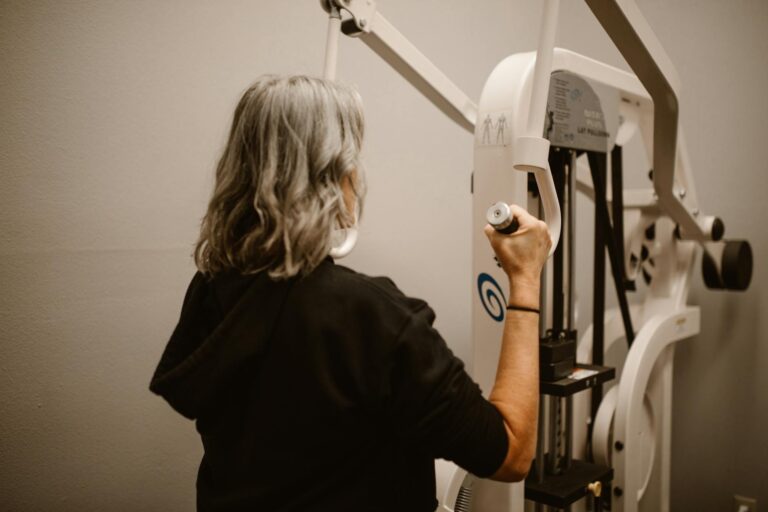
Physical therapy builds spine stability by reeducating and strengthening the deep core muscles—primarily the multifidus and transverse abdominis—that protect and support the spinal column from within. These stabilizer muscles work like an internal corset, creating the precise muscular control needed to prevent abnormal spinal movement and reduce stress on the vertebrae and discs. When these muscles are active and properly coordinated, they distribute load evenly across the spine and protect against the microtrauma that accumulates during daily activities and can eventually cause chronic pain or instability.
The approach works quickly enough that many patients see measurable improvement within weeks. Studies show that core stabilization exercise programs reduce pain by an average of 65.9% at six months and produce a 34.3% reduction in medication use at one year. This article explores the evidence behind spinal stabilization, explains why some patients respond faster than others, and covers both established methods and emerging technologies like posture wearables and virtual reality that are now helping patients maintain the gains they make.
Table of Contents
- How Deep Core Muscles Provide Spinal Protection
- Why Clinical Guidelines Recommend This Approach First
- The Four Patient Response Patterns and Individual Variation
- The Role of Posture Retraining and Neuromuscular Awareness
- Why Proprioception and Movement Patterns Matter
- Emerging Virtual Reality Approaches for Breaking Fear Cycles
- Integration with Broader Spine Health and Future Outlook
- Conclusion
How Deep Core Muscles Provide Spinal Protection
The multifidus and transverse abdominis are not the showy, visible abdominal muscles you see on the surface. Instead, they sit deeper in the trunk and don’t move the spine—their job is to stabilize it. The transverse abdominis wraps horizontally around the torso like a belt, while the multifidus runs along both sides of the spine in deep layers. When these muscles contract properly, they create intra-abdominal pressure that stabilizes the entire spinal column, similar to how air pressure in a balloon helps it hold its shape. Most people with chronic spine problems have lost the ability to activate these muscles automatically or correctly. They may have over-developed their superficial muscles (like the rectus abdominis) while their stabilizers have become inhibited or weak.
Physical therapy retrains these patterns through specific exercises that emphasize slow, controlled movements and precise activation cues. A therapist might ask you to draw your navel toward your spine during a simple bridge hold, or to maintain neutral spine posture while moving only a single limb—these are not flashy exercises, but they directly target the muscles responsible for spinal protection. The evidence for this approach is strong. Research from the International Journal of Sports Physical Therapy found that spinal stabilization exercise groups achieved a mean pain reduction of -2.73±0.51, compared to -1.18±0.79 in groups doing conventional exercises. In direct comparison, core stabilization showed a 72% pain reduction rate versus 65.2% in groups using proprioceptive neuromuscular facilitation techniques. This difference matters because it means the method is not just marginally better—it produces clinically meaningful gains.

Why Clinical Guidelines Recommend This Approach First
European clinical guidelines for managing chronic non-specific low back pain now recommend supervised exercise therapy as first-line treatment, even before most pharmaceutical interventions. This reflects decades of research showing that properly prescribed spinal stabilization work outperforms passive treatments and many medications alone. However, there’s an important caveat: the exercises must be supervised and progressive, and they must be performed correctly—sloppy form defeats the purpose. One often-overlooked benefit of supervised therapy is the development of a sustainable home exercise program. A four-week course of supervised spinal stabilization exercises paired with an at-home routine produces significantly better outcomes for dynamic balance—the ability to maintain stability while moving—than general exercise programs alone.
This dual approach matters because it keeps patients accountable and ensures they understand how to progress or modify exercises as their strength improves. Patients who skip the supervised phase or rely entirely on internet videos often fail to engage the target muscles and see minimal progress. The timeline is also realistic: significant pain reduction emerges within six months, but full neuromotor adaptation may take longer. At one year, patients who stick with the program show not only continued pain reduction but also a 34.3% decrease in medication use, suggesting that the spine has genuinely stabilized and the nervous system has recalibrated its pain response. This is the key difference between temporary relief and lasting improvement.
The Four Patient Response Patterns and Individual Variation
Not all patients progress at the same rate. Recent 2025 research using advanced motion analysis identified four distinct neuromotor adaptation trajectories in patients undergoing spinal stabilization training. Fast responders (31.1% of patients) show significant improvement within 4-6 weeks, moderate responders (33.3%) progress steadily over 8-12 weeks, gradual adapters (22.2%) require 3-6 months to show meaningful gains, and minimal responders (13.3%) show little change and may need alternative approaches. Understanding which category you fall into helps set realistic expectations and prevents discouragement. Several factors influence response speed, including age, prior injury history, the degree of muscle inhibition present at baseline, and consistency with home exercises.
A patient who has had a recent spinal surgery may progress faster than someone who has had pain for fifteen years, because their nervous system hasn’t had as long to develop protective patterns that must be unlearned. Patients over 65 tend to progress slightly more slowly but still achieve the same endpoint gains given adequate time. The consistency factor is non-negotiable: patients who do home exercises three times weekly outpace those who do them once or twice weekly, even when supervised sessions are identical. If you fall into the minimal responder category, it doesn’t mean physical therapy is permanently ineffective for you. It often means the starting approach needs adjustment—perhaps different cuing strategies, different exercise order, or concurrent treatment for related issues like hip mobility problems that are limiting spinal stability. Your therapist should be monitoring your progress at each visit and adjusting the plan accordingly.

The Role of Posture Retraining and Neuromuscular Awareness
Even perfect spinal stabilizer strength is wasted if your nervous system reverts to poor postural habits throughout the day. This is where neuromuscular retraining comes in—the process of teaching your brain and muscles to maintain stable posture automatically, without conscious effort. For years, this has relied on therapist cues, mirrors, and patient self-awareness. In 2026, smart posture wearables with real-time haptic feedback (gentle vibration) are emerging as practical tools for retraining during daily activities. These devices work by providing a gentle vibration whenever you slip into slouching or asymmetrical posture—essentially coaching your nervous system in real time rather than only during therapy sessions.
The research, led by Dr. Keren Gomez and others studying 2026 innovations in spine health, suggests that consistent haptic feedback over weeks accelerates the neuromotor adaptation process and reduces the number of conscious cues patients need. A patient wearing such a device while working at a desk or during household tasks gets continuous feedback on spinal alignment, much like having a therapist in your pocket. However, these tools are supplements to, not replacements for, the core stabilization exercises themselves. The advantage of combining posture wearables with traditional physical therapy is that the exercises build the strength, while the wearable maintains the awareness. A comparison: building muscle without postural retraining is like strengthening your car’s engine without fixing the steering—you have more power but still no direction.
Why Proprioception and Movement Patterns Matter
Proprioception—the sense of where your body is in space—involves tiny sensory receptors in muscles and joints that send constant signals to your brain about spinal position and movement. When the spine has been injured or unstable for a long time, these receptors become less responsive, and your brain loses accurate feedback. Physical therapy restores proprioceptive acuity through exercises that challenge stability in multiple planes and positions. This is why therapists progress patients from simple positions (like lying down) to complex ones (like standing on one leg while reaching) as they improve.
A common misconception is that only athletes and younger people benefit from this work. In reality, older adults and those with dementia or cognitive decline often benefit profoundly because improved proprioceptive feedback reduces fall risk and improves confidence during movement. Someone with brain health concerns who also has spinal instability gains twofold: better trunk stability makes walking safer, and the focused, coordinated movement demands of spinal stabilization exercises engage cognitive and motor pathways that may be at risk of decline. One limitation of proprioceptive training is that it requires active participation and focus—a patient who is not engaged or who is practicing distracted exercises will not develop the same sensory gains. This is another argument for supervised therapy in the early phase, when a therapist can ensure exercises are done with proper attention and precision.

Emerging Virtual Reality Approaches for Breaking Fear Cycles
The FDA has cleared several virtual reality programs for chronic back pain that use what researchers call “pain distraction therapy”—essentially, the VR program engages your attention so fully that pain signals receive less neural processing. While this might sound like mere distraction, the mechanism is more sophisticated: chronic pain often involves a fear-avoidance cycle where people avoid movement because they expect pain, their muscles become less active and weaker, and pain genuinely worsens. VR programs break this cycle by placing patients in immersive environments where they perform functional movements (reaching, bending, walking) with full cognitive engagement, gradually building evidence that the movement is safe.
The advantage is particularly relevant for patients whose pain is more centralized (amplified by the nervous system) than structural. Someone with mild disc bulging but severe pain amplified by fear and anxiety may progress faster with VR combined with traditional therapy than with physical therapy alone. However, VR programs work best for patients with adequate cognition and no motion sickness sensitivity, and they’re typically used as adjuncts rather than standalone treatments.
Integration with Broader Spine Health and Future Outlook
As spine care evolves, physical therapy is increasingly recognized not as a single intervention but as the foundation on which other treatments should build. If surgery or injections are needed, patients recover faster and better when they already have strong spinal stabilizers in place. If medications are used, adding physical therapy allows many patients to reduce dosages over time.
The most effective spine programs integrate supervised stabilization exercises, home practice, posture retraining (with or without wearables), and patient education about load management in daily activities. Looking ahead, the convergence of real-time wearables, VR training, and advanced movement analysis is likely to personalize spinal stabilization programs further. Instead of a one-size-fits-all approach, therapists will be able to identify your specific movement patterns, predict your likely response trajectory, and adjust your program accordingly. The core principle—retraining deep stabilizer muscles and restoring proprioceptive control—will remain unchanged, but the tools to accomplish it will become more precise and accessible.
Conclusion
Physical therapy builds spine stability by restoring the function of deep core muscles and retraining the nervous system to recognize and respond to postural challenges. The evidence is clear: 65.9% average pain reduction at six months, continued medication reduction at one year, and clinically superior outcomes compared to conventional exercise. The method works because it addresses the root cause—neuromuscular dysfunction—rather than just masking symptoms.
If you’re considering physical therapy for spine stability, expect to commit to at least 4-6 weeks of supervised sessions plus consistent home practice. Identify your likely response pattern, discuss a realistic timeline with your therapist, and consider emerging tools like posture wearables or VR programs to accelerate your progress. The investment in rebuilding spinal stability now prevents years of pain, medication dependence, and activity limitation later.