Pelvic instability triggers chronic back pain through a cascade of biomechanical failures that destabilize your spine’s foundation. When the pelvis—which supports your entire upper body—becomes misaligned or structurally unstable, your lumbar spine must compensate by taking on loads it was never designed to handle. This compensation creates inflammation, muscle tension, and eventually chronic pain that conventional treatments often fail to address because they’re focused on the spine itself rather than the pelvic dysfunction driving the problem. Consider someone who sits most of the day with poor posture: their pelvis tilts anteriorly, their lumbar spine hyperextends to compensate, and within months they develop lower back pain that persists even after physical therapy—because the underlying pelvic instability was never corrected.
This article explains the anatomy of this connection, how pelvic dysfunction manifests, who is most at risk, and what diagnostic and management approaches actually address the root cause rather than the symptoms. Pelvic instability is not just a structural issue confined to the pelvis—it’s a systemic problem that compromises the entire kinetic chain. Your pelvis functions as the foundation upon which your lumbar spine rests, and when that foundation becomes unstable, your spine, muscles, and ligaments respond with pain and dysfunction. Understanding this relationship is critical for anyone with persistent lower back pain that hasn’t responded to standard treatments.
Table of Contents
- What Is Pelvic Instability and How Does It Create Back Pain?
- Spinopelvic Malalignment and Lumbar Spine Instability
- The Pelvic Floor Dysfunction Connection
- Assessing Pelvic Instability Through Clinical and Imaging Findings
- Red Flags and Limitations of Conventional Treatment
- Pelvic Stabilization and Neuromuscular Re-Education
- Future Directions and the Evolving Understanding of Pelvic Instability
- Conclusion
What Is Pelvic Instability and How Does It Create Back Pain?
Pelvic instability occurs when the joints, ligaments, and muscles that stabilize the pelvis fail to maintain proper alignment and control. The primary culprit is often sacroiliac joint (SIJ) dysfunction, where the joint connecting your sacrum to your ilium becomes hypermobile (too loose) or hypomobile (too stiff). Research shows that approximately 13% of chronic low back pain patients have sacroiliac joint dysfunction, with 15-30% of all low back pain attributable to SIJ pathology. When this joint becomes unstable, the mechanical load that would normally be distributed evenly across your pelvis and spine becomes concentrated on specific structures—primarily your lumbar discs and facet joints. The mechanism works like a building with a faulty foundation: if the base isn’t level, every structure above it must work harder to remain stable.
Your lumbar spine compensates for pelvic instability by increasing muscle tension, altering movement patterns, and eventually developing pain. Some people develop this instability from a single trauma—a fall or a lifting injury—while others develop it gradually from postural habits, pregnancy, or degenerative changes in the pelvic joints. The critical point is that once pelvic instability begins, it creates a self-perpetuating cycle: pain leads to muscle inhibition, muscle inhibition leads to further instability, and further instability leads to more pain. One important caveat: not all lower back pain stems from pelvic instability. Disc herniation, stenosis, and inflammatory conditions can cause pain independent of pelvic alignment. However, if you have lower back pain that doesn’t respond to standard treatments, or if your pain worsens with prolonged sitting, standing, or certain movements like single-leg activities, pelvic dysfunction should be investigated.

Spinopelvic Malalignment and Lumbar Spine Instability
Beyond simple sacroiliac joint dysfunction exists a broader architectural problem: spinopelvic malalignment. This occurs when the relationship between your pelvis’s angle and your lumbar spine’s curve becomes distorted. Researchers use the PI-LL measurement—pelvic incidence minus lumbar lordosis—to quantify this mismatch. When the PI-LL exceeds 10 degrees, it correlates strongly with chronic low back pain. A recent 2024 study published in Scientific Reports documented that spinopelvic malalignment directly correlates to decreased lumbar musculature strength and development of lumbar instability in chronic low back pain patients. Think of spinopelvic malalignment as a fundamental structural imbalance. Your pelvis has a specific degree of “incidence”—essentially a fixed anatomical angle determined by your bone structure.
Your lumbar spine has a natural curve called lordosis. When these two measurements don’t match within a normal range, your spine develops abnormal stress distribution. This can lead to accelerated disc degeneration, facet joint arthritis, and chronic pain that worsens over time. A person with significant spinopelvic malalignment may experience pain that intensifies with standing or walking, as these activities demand maximum spinal stability. However, it’s important to note that spinopelvic malalignment doesn’t automatically mean you’ll develop pain. Some people have structural malalignment but maintain stability through excellent muscle control and neuromuscular coordination. Others with less dramatic malalignment may develop severe pain if their supportive muscles weaken or their movement patterns become compromised. This is why assessment requires both imaging and functional movement testing rather than imaging alone.
The Pelvic Floor Dysfunction Connection
One of the most overlooked aspects of pelvic instability is dysfunction in the pelvic floor muscles—the deep muscular layer that supports your pelvic organs and contributes to spinal stability. A 2018 cross-sectional study found that 95.3% of women with lumbopelvic pain had concurrent pelvic floor dysfunction. The study revealed that among these women, 71% had pelvic floor muscle tenderness, 66% exhibited pelvic floor weakness, and 41% had some degree of pelvic organ prolapse. This extremely high correlation suggests that pelvic floor dysfunction is not incidental to back pain—it’s often a primary component. The pelvic floor muscles work synergistically with your deep abdominal muscles and other spinal stabilizers to maintain intra-abdominal pressure and prevent excessive spinal motion.
When these muscles become weak, tight, or dysfunctional, they lose this stabilizing capacity. You may experience pain during specific activities like climbing stairs, single-leg standing, or the transition from sitting to standing—activities that demand pelvic floor engagement. Conversely, some people develop painful pelvic floor muscle tension as a compensation pattern: their pelvic floor muscles tighten excessively in response to spinal instability, creating a vicious cycle of tension and pain that perpetuates the problem. A practical example: a woman with sacroiliac joint dysfunction may develop pelvic floor muscle hypertonicity as her body attempts to stabilize the unstable joint. This hypertonicity restricts pelvic mobility even further, worsens the instability, and creates pain with both back-related and pelvic floor-related activities. Standard treatment for back pain (stretching, core strengthening) may actually worsen her condition if it doesn’t address the pelvic floor tension and dysfunction.

Assessing Pelvic Instability Through Clinical and Imaging Findings
Diagnosing pelvic instability requires both clinical examination and imaging. Physical therapists and physicians look for specific signs: positive sacroiliac joint tests, pelvic asymmetry, abnormal movement patterns with single-leg stance, and weakness in hip and core muscles. Imaging like X-rays, MRI, and specialized imaging protocols can reveal sacroiliac joint inflammation, hypermobility, or the spinopelvic malalignment described earlier. However, a critical limitation is that imaging findings don’t always correlate with pain: some people show significant pelvic or spinal abnormalities on imaging but remain asymptomatic, while others have minimal imaging findings yet experience severe pain. This is where functional assessment becomes crucial. How does your pelvis move when you walk? Do you have single-leg stability? Can you maintain proper pelvic alignment during exercise? These functional questions often reveal pelvic instability that static imaging might miss.
Dynamic movement analysis—evaluating how your pelvis moves throughout the day—often provides more clinically relevant information than a single imaging snapshot. Many people with pelvic instability show normal imaging findings because their instability is neuromuscular (related to muscle control) rather than structural. The challenge in assessment is distinguishing between true pelvic instability and simple muscle weakness or movement pattern dysfunction. Someone might appear to have pelvic instability on examination but actually have normal pelvic structure with poor muscle activation patterns. This distinction matters because the treatment approaches differ significantly: true structural instability may require more aggressive stabilization or even surgical intervention, while neuromuscular pelvic dysfunction typically responds well to targeted physical therapy. This is why comprehensive assessment by a skilled clinician—preferably one trained in pelvic and spinal dysfunction—is essential before committing to any treatment pathway.
Red Flags and Limitations of Conventional Treatment
When treating pelvic instability-related back pain, several red flags suggest that standard care approaches may be insufficient. If your pain persists after 4-6 weeks of standard physical therapy that focuses only on core strengthening and stretching, if your pain varies significantly with specific positions or single-leg activities, or if you experience pain that worsens with pregnancy or hormonal fluctuations (common in people with underlying pelvic instability), your treatment may need to be reconsidered. Standard core strengthening exercises like planks and crunches can actually exacerbate pelvic instability if they’re performed without proper pelvic alignment or without simultaneously addressing pelvic floor dysfunction. A critical limitation of conventional back pain treatment is that it often targets the symptom (lumbar pain) rather than the root cause (pelvic instability). Many people receive months of therapy focused on lumbar spine mobility, lumbar stabilization, or pain management—only to have their pain return because the underlying pelvic dysfunction was never addressed.
This is particularly true for women, whose pelvic anatomy changes with hormonal cycles and pregnancy, creating vulnerability to instability that males with similar spinal pathology may not experience. Another important warning: aggressive stretching or aggressive lumbar mobilization in the presence of untreated pelvic instability can temporarily worsen symptoms. If your pelvis is hypermobile (too loose), techniques that increase spinal mobility may increase instability rather than improve it. Conversely, if your pelvis is hypomobile on one side, stretching alone won’t restore function—you need specific joint mobilization and neuromuscular re-education. This is why self-guided treatment based on general back pain advice can sometimes backfire for people with pelvic dysfunction.

Pelvic Stabilization and Neuromuscular Re-Education
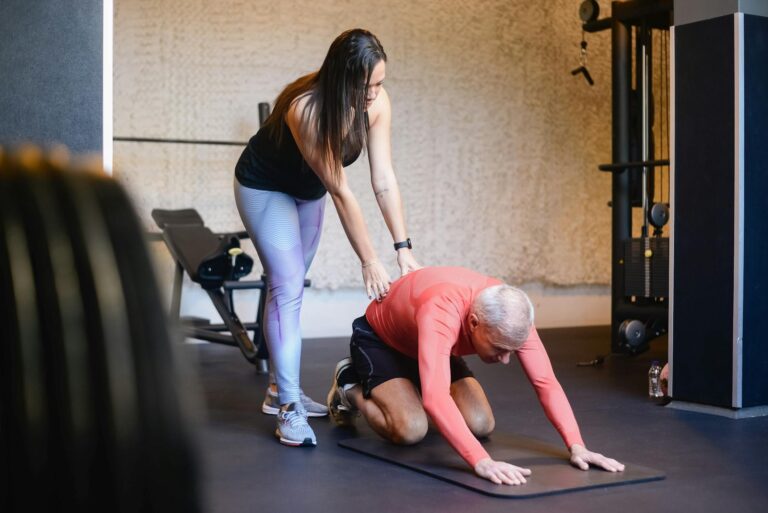
Effective treatment of pelvic instability-related back pain focuses on restoring pelvic stability through targeted muscle activation and movement pattern correction. This differs fundamentally from standard core strengthening. Rather than performing generic core exercises, treatment involves learning to activate your deep stabilizers—the transverse abdominis, multifidus, pelvic floor muscles, and diaphragm—in a coordinated manner that controls pelvic motion.
Physical therapy should include assessment and training of breathing patterns, because many people with chronic pelvic or back pain develop dysfunctional breathing that destabilizes the entire trunk. A practical approach combines several elements: pelvic floor physical therapy to address muscle tension or weakness, hip strengthening to improve pelvic support, spinal stabilization exercises performed with proper pelvic alignment, and functional movement retraining to correct how you walk, stand, and perform daily activities. For someone with significant spinopelvic malalignment, some treatment protocols incorporate positional awareness training—teaching your nervous system to recognize and maintain proper pelvic position throughout daily activities. This is more sophisticated than traditional exercise-based rehabilitation because it retrains your brain’s perception of normal pelvic position and movement.
Future Directions and the Evolving Understanding of Pelvic Instability
The field of pelvic and spinal dysfunction is rapidly evolving. Research increasingly emphasizes the integrated nature of pelvic stability—understanding that the pelvis doesn’t function in isolation but rather as part of a complex kinetic chain involving the hips, lumbar spine, and trunk. The 12th Interdisciplinary World Congress on Low Back & Pelvic Girdle Pain, scheduled for November 2-5, 2026, will bring together international researchers and clinicians to advance understanding of how these structures interact and how to optimize treatment.
This growing interdisciplinary focus reflects a shift away from viewing back pain as purely a spinal problem toward recognizing pelvic instability as a central mechanism in many cases of chronic pain. Emerging research suggests that early identification and treatment of pelvic instability—particularly in high-risk populations like pregnant women and athletes—may prevent the development of chronic back pain. Understanding that 13-30% of back pain patients have underlying SIJ or pelvic dysfunction means that screening for pelvic stability should become standard practice in initial back pain evaluation rather than an afterthought. As our understanding deepens, treatment approaches will likely become increasingly personalized, with clinicians matching specific interventions to the patient’s particular pattern of pelvic instability rather than applying generic protocols to all patients with back pain.
Conclusion
Pelvic instability triggers chronic back pain through multiple mechanisms: sacroiliac joint dysfunction, spinopelvic malalignment that creates abnormal spinal stress, and pelvic floor muscle dysfunction that eliminates crucial stability. The extremely high prevalence of these conditions—affecting 13-30% of back pain patients and present in 95% of women with lumbopelvic pain—suggests that pelvic dysfunction should be investigated as a primary cause rather than an afterthought when someone develops persistent lower back pain. Standard treatments focused solely on the lumbar spine often fail because they don’t address the pelvic instability driving the problem.
If you experience chronic lower back pain that hasn’t responded to standard treatment, particularly if it worsens with single-leg activities, prolonged sitting, or standing, ask your clinician specifically about pelvic instability assessment. Treatment that combines pelvic floor physical therapy, targeted spinal stabilization, movement pattern retraining, and correction of spinopelvic malalignment offers the best chance of addressing the root cause. Working with a clinician trained in pelvic dysfunction—whether a specialized physical therapist or physician familiar with pelvic instability—can transform your treatment outcomes by finally addressing the foundation of your pain rather than just managing the symptoms.