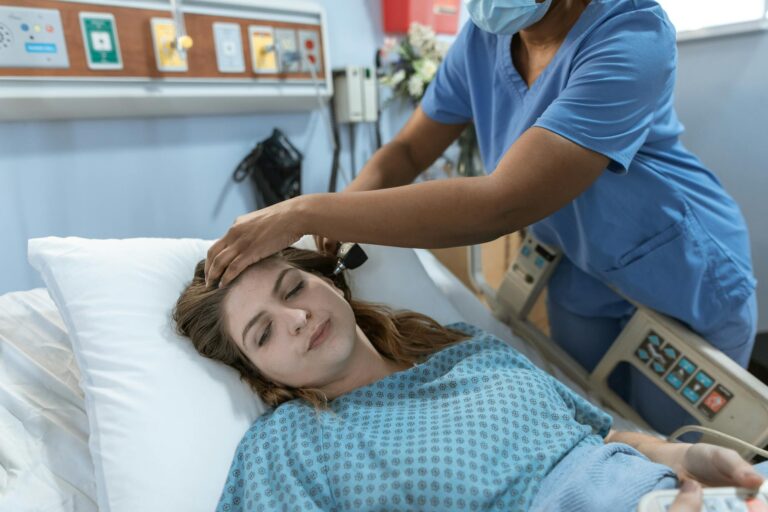
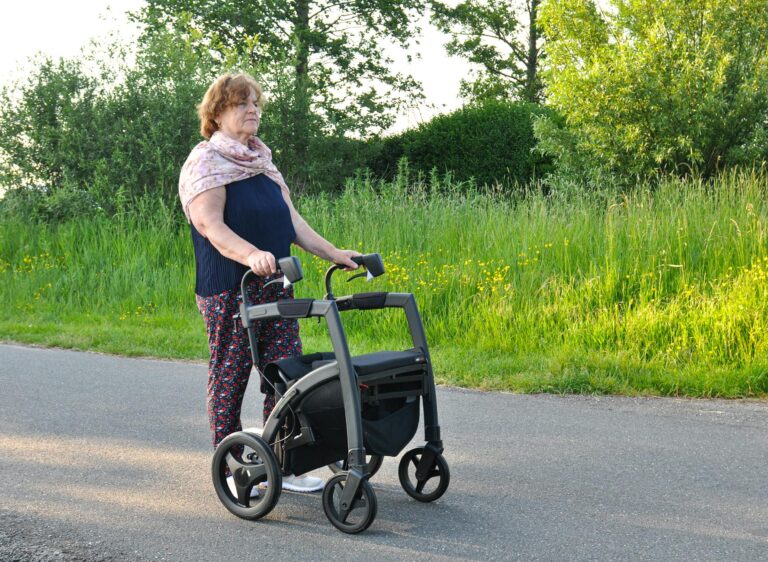
When Margaret Chen, a 67-year-old retired teacher, was diagnosed with Parkinson’s disease, her first major struggle wasn’t the tremor in her left hand””it was the sudden, overwhelming feeling that her own home had become dangerous. Within months of her diagnosis, she stopped cooking because she feared dropping hot pans, avoided the stairs she’d climbed for thirty years, and began sleeping in the living room recliner because getting in and out of bed felt precarious. Her story illustrates a profound but often overlooked consequence of Parkinson’s: the disease doesn’t just affect movement; it fundamentally reshapes how a person perceives and interacts with their environment, eroding their sense of safety in ways that can be as debilitating as the physical symptoms themselves. Margaret’s experience is far from unique.
Research suggests that up to 70 percent of people with Parkinson’s disease report significant anxiety related to falling or losing control of their bodies, even before they’ve experienced a serious fall. This psychological burden compounds the physical challenges, creating a cycle where fear of movement leads to reduced activity, which accelerates physical decline and increases actual fall risk. The loss of safety extends beyond physical concerns””many patients describe feeling unsafe in social situations, uncertain about their cognitive reliability, and anxious about their ability to respond to emergencies. This article explores the multifaceted ways Parkinson’s disease undermines a person’s sense of safety, drawing on Margaret’s journey and current research to examine the physical, psychological, and social dimensions of this experience. We’ll discuss practical strategies for rebuilding confidence, the role of caregivers in creating safe environments, and the important distinction between perceived danger and actual risk.
Table of Contents
- Why Does Parkinson’s Disease Shake a Person’s Fundamental Sense of Security?
- The Physical Realities Behind Feeling Unsafe with Parkinson’s
- How Cognitive Changes Compound the Sense of Vulnerability
- Building a Safer Environment Without Creating a Prison
- The Psychological Burden of Constant Vigilance
- When Safety Concerns Signal Something More Serious
- Looking Toward Better Approaches to Safety and Independence
- Conclusion
Why Does Parkinson’s Disease Shake a Person’s Fundamental Sense of Security?
parkinson‘s disease attacks the brain’s dopamine-producing cells, which are essential not only for smooth movement but also for processing risk, reward, and emotional regulation. When these systems malfunction, patients often experience heightened anxiety and an exaggerated perception of danger. The substantia nigra, the brain region most affected by Parkinson’s, has direct connections to the amygdala, which processes fear responses. This neurological reality means that feeling unsafe isn’t simply a reasonable reaction to physical limitations””it’s partially driven by changes in brain chemistry that amplify threat perception. The physical symptoms themselves create legitimate safety concerns that compound these neurological changes. Tremors make handling sharp objects or hot liquids genuinely risky.
Bradykinesia””the characteristic slowness of movement””means a person may not be able to catch themselves if they stumble or move quickly to avoid a hazard. Rigidity can cause sudden freezing in doorways or while crossing streets. Margaret described the experience as “losing the trust in my own body that I’d had my entire life.” She found herself constantly scanning rooms for potential dangers, a mental exhaustion that left her drained by mid-afternoon. Compared to other neurodegenerative conditions, Parkinson’s presents a particular challenge because patients often retain full cognitive awareness of their limitations, at least in early stages. Unlike someone with advanced dementia who may not recognize dangers, a person with Parkinson’s typically understands exactly what they can no longer do safely””and this awareness fuels anxiety. Studies comparing quality of life between Parkinson’s patients and those with similar mobility limitations from other causes found that Parkinson’s patients reported significantly higher levels of fear and perceived vulnerability, suggesting the disease itself, not just the disability, drives these feelings.

The Physical Realities Behind Feeling Unsafe with Parkinson’s
Falls represent the most concrete and measurable safety threat for people with Parkinson’s disease. Approximately 60 percent of patients will experience at least one fall per year, and many will fall repeatedly. However, the relationship between actual fall risk and perceived safety is complex and often misaligned. Some patients dramatically overestimate their danger, becoming essentially housebound despite having relatively stable mobility. Others underestimate their risk, attempting activities that lead to serious injuries. Neither response serves the patient well. Margaret fell into the first category. After one minor stumble in her kitchen””she caught herself on the counter and wasn’t injured””she stopped cooking entirely.
Her physical therapist later assessed her as having moderate fall risk that could be well-managed with simple modifications like wearing supportive shoes, removing throw rugs, and using a rolling cart to transport items. But her fear had generalized beyond the evidence. “I wasn’t just afraid of falling,” she explained. “I was afraid of being the kind of person who falls.” This distinction matters because it reveals how Parkinson’s threatens identity and independence, not just physical safety. The warning here is important: while excessive fear can be counterproductive, dismissing a Parkinson’s patient’s safety concerns as “just anxiety” is both inaccurate and potentially dangerous. The physical risks are real, and patients often perceive subtle changes in their balance or reaction time before these changes are measurable on clinical tests. If a patient says they feel unsafe performing a particular activity, that perception deserves serious consideration, even if it’s impossible to objectively verify the specific risk they’re describing. The goal is calibration, not dismissal””helping patients develop an accurate sense of what’s genuinely dangerous versus what feels dangerous due to neurological changes in fear processing.
How Cognitive Changes Compound the Sense of Vulnerability
Beyond motor symptoms, Parkinson’s disease frequently affects thinking, memory, and executive function. Even patients who don’t develop full Parkinson’s dementia often experience subtle cognitive changes that undermine their confidence in navigating daily life safely. Slowed processing speed means it takes longer to assess situations and make decisions. Working memory difficulties can cause someone to forget what they were doing mid-task, leading to dangerous situations like leaving the stove on or forgetting they’ve already taken medication. Margaret noticed she was having trouble following conversations in noisy environments and sometimes lost track of steps in familiar recipes. These changes weren’t severe enough to affect her daily functioning significantly, but they shattered her sense of herself as a competent, reliable person.
She began to question her own judgment: if she couldn’t trust her memory, how could she trust her assessment of what was safe? This cognitive self-doubt extended to her relationships. She stopped offering to watch her grandchildren, not because she was incapable, but because she feared she might forget something critical and harm them. For families, this situation requires delicate navigation. Reassuring a loved one that their fears are unfounded may seem supportive but can feel invalidating when the person is genuinely experiencing cognitive changes. A more helpful approach acknowledges the reality”””Yes, your memory isn’t what it used to be, and that’s scary”””while also providing concrete supports that rebuild confidence: written checklists, medication organizers, smart home devices that provide reminders. These tools don’t fix the underlying problem, but they can restore a sense of safety by reducing reliance on functions that have become unreliable.

Building a Safer Environment Without Creating a Prison
Home modifications can dramatically reduce fall risk and help someone with Parkinson’s feel more secure. Grab bars in bathrooms, improved lighting, removal of tripping hazards, and chairs at strategic resting points throughout the home are standard recommendations. However, there’s an important tradeoff to consider: an environment that’s too protective can actually accelerate decline by reducing the physical and cognitive challenges that keep a person functional. The goal is optimal challenge””an environment that’s safe enough to prevent serious injury but demanding enough to maintain strength, balance, and confidence. Margaret’s occupational therapist recommended grab bars near her bed to help with getting up, but specifically advised against installing a hospital-style bed rail. “If you make it too easy, your trunk muscles will weaken faster,” she explained.
Similarly, while a wheelchair might seem like the safest option for someone with Parkinson’s, premature wheelchair use typically leads to rapid deconditioning. Walking, even with assistance, maintains cardiovascular health, bone density, and the neural pathways involved in balance. The family who childproofs every aspect of their loved one’s environment may inadvertently speed the progression they’re trying to prevent. The comparison that helps here is rehabilitation versus protection. A rehabilitation mindset asks: how can we make this activity safe enough to continue? A protection mindset asks: how can we prevent this activity from happening? Both have their place, but families often default too quickly to protection. When Margaret’s daughter suggested she move in with her family “so we can keep you safe,” Margaret recognized that this well-meaning offer would mean surrendering the independence that made her feel most herself. Instead, they compromised on daily check-in calls, a medical alert device, and regular visits from a home health aide who provided both practical help and safety monitoring.
The Psychological Burden of Constant Vigilance
Living with Parkinson’s disease often means existing in a state of perpetual threat assessment. Will I freeze in this doorway? Can I make it to the bathroom in time? What if I fall and no one finds me? This hypervigilance is exhausting and can lead to depression, social withdrawal, and paradoxically, increased safety risks as mental fatigue impairs judgment and reaction time. Studies have found that the cognitive load of constant safety monitoring in Parkinson’s patients is comparable to the mental effort of performing a complex work task””but it continues all day, every day. Margaret described it as “never being able to relax in my own body.” She was always aware of her limbs, always planning her next movement, always scanning for hazards. This exhausting vigilance disrupted her sleep, reduced her enjoyment of activities she’d previously loved, and made social situations feel like navigating minefields.
Notably, her actual fall risk didn’t decrease because of all this mental effort””research suggests that hypervigilance can actually increase falls by interfering with the automatic balance adjustments that healthy people make unconsciously. The limitation of psychological interventions for this hypervigilance is that they can only partially address what is fundamentally a physical problem. Cognitive behavioral therapy can help patients challenge catastrophic thoughts and reduce excessive fear, but it can’t eliminate the real risks that drive the fear in the first place. Mindfulness practices may reduce the exhaustion of constant monitoring, but they require cognitive resources that Parkinson’s may have already depleted. The most effective approaches combine psychological support with practical risk reduction””addressing both the perception of danger and the actual danger simultaneously. Medication adjustments that reduce motor fluctuations can also help, since unpredictable symptom changes are a major driver of safety anxiety.

When Safety Concerns Signal Something More Serious
A sudden dramatic increase in safety fears or fall frequency can indicate something beyond normal Parkinson’s progression. Urinary tract infections, medication interactions, orthostatic hypotension, and depression can all manifest as increased instability or heightened anxiety in Parkinson’s patients. Families should be alert to changes that develop over days or weeks rather than months, as these often have treatable underlying causes. Margaret’s daughter noticed her mother had become suddenly much more anxious and unsteady over a two-week period.
Rather than assuming this was just Parkinson’s getting worse, she insisted on a medical evaluation. It turned out Margaret had developed a medication interaction between her new blood pressure drug and her Parkinson’s medication, causing severe orthostatic hypotension””her blood pressure dropped dramatically when she stood, making her feel faint and unsteady. Adjusting her medication schedule resolved most of the new symptoms. Without that investigation, she might have been placed in a more restrictive living situation based on problems that were actually fixable.
Looking Toward Better Approaches to Safety and Independence
The understanding of how Parkinson’s disease affects safety perception is evolving, and with it, approaches to intervention. Wearable sensors can now detect subtle gait changes that precede falls by weeks, potentially allowing for preemptive intervention. Virtual reality systems are being used to help patients practice navigating challenging environments in a safe, controlled setting, rebuilding confidence through successful experiences. Deep brain stimulation, while primarily used for motor symptoms, has shown promising effects on anxiety and fear responses in some patients. Perhaps most importantly, there’s growing recognition that safety and independence aren’t opposing values to be balanced but interconnected goals to be pursued together.
The safest Parkinson’s patient isn’t the one wrapped in bubble wrap but the one with strong muscles, good balance, appropriate environmental modifications, robust social support, well-managed medications, and an accurate understanding of their own capabilities and limitations. Margaret, now three years past her diagnosis, hasn’t eliminated her safety concerns, but she’s learned to distinguish between reasonable caution and excessive fear. She’s back to cooking””with a few modifications””and has returned to teaching, now as a volunteer literacy tutor. “I’m not safe the way I used to be safe,” she says. “But I’ve found a new kind of safety that includes Parkinson’s instead of pretending it isn’t there.”.
Conclusion
Parkinson’s disease undermines safety not through one mechanism but through many: physical instability, neurological changes in fear processing, cognitive decline that erodes self-trust, and the exhausting mental burden of constant vigilance. Margaret Chen’s story illustrates how these factors interweave to transform a person’s relationship with their own body and environment. Understanding these mechanisms is the first step toward addressing them effectively, moving beyond simple protection toward approaches that maintain independence while managing genuine risks.
For families and caregivers, the key takeaway is to take safety concerns seriously without being controlled by them. Work with healthcare providers to assess actual risks, make environmental modifications that reduce danger without eliminating healthy challenge, and address the psychological burden of living with constant uncertainty. Parkinson’s disease will inevitably change what safety looks like, but with thoughtful intervention, it doesn’t have to destroy the sense of security that makes a meaningful life possible.