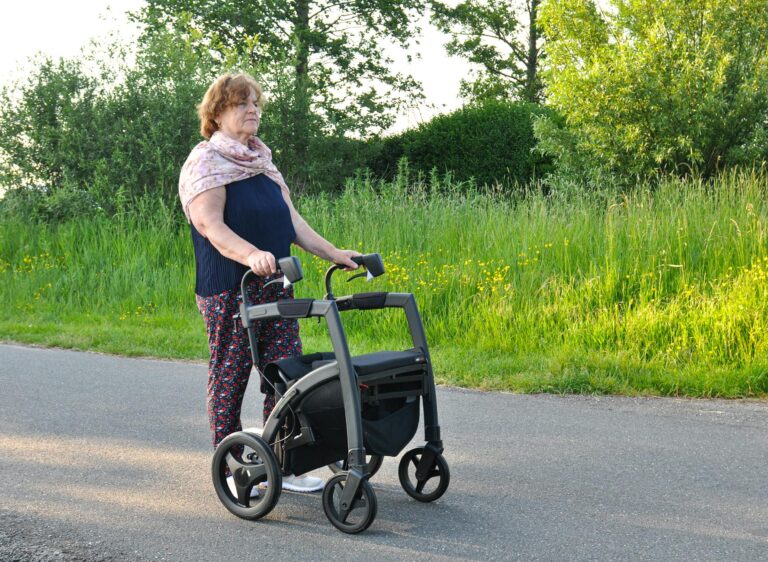
Parkinson’s disease fundamentally transforms daily life by slowing down nearly every activity a person once performed without thought. The change is not merely about moving more slowly””it is about relearning how to navigate a world that suddenly demands more time, more concentration, and more patience for tasks that used to be automatic. For Eric Simmons, who first noticed hand tremors at age 50, the disease progressed over nearly a decade until his feet would lock up while he was cooking, even while holding a hot pan over the stove. This kind of disruption””where the body simply refuses to cooperate in moments that require immediate response””captures how profoundly Parkinson’s alters the pace of everyday existence.
Research confirms what patients describe: everything takes more time. Academic studies document how people with Parkinson’s become “slower no matter what they were doing,” with walking becoming increasingly difficult due to stiffness and the growing challenge of moving legs and feet. Teresa Jackson, who authored “Thriving With Parkinson’s: Finding Joy After the Diagnosis,” described the fear of not being able to escape a building fire because getting down stairs had become so difficult. Her legs simply would not lift the way they once did. This article examines how Parkinson’s disease reshapes daily routines through the experiences of real patients, explores the physical and psychological dimensions of slowing down, discusses treatment options like deep brain stimulation, and considers how people find ways to adapt and even thrive despite these challenges.
Table of Contents
- What Does “Slowing Down” Actually Mean for Someone with Parkinson’s?
- The Physical Cascade: From Tremors to Freezing Episodes
- Beyond the Body: Cognitive and Psychological Changes
- Treatment Options: What Can Help Restore Some Speed?
- Living with Uncertainty: When Daily Plans Become Provisional
- Finding Meaning and Advocacy in Slowing Down
- Looking Forward: Adaptation as an Ongoing Process
- Conclusion
What Does “Slowing Down” Actually Mean for Someone with Parkinson’s?
The slowing associated with Parkinson’s disease””clinically termed bradykinesia””goes far beyond the gradual pace reduction that comes with typical aging. It affects the initiation of movement, the speed of execution, and the ability to perform sequential or repetitive motions. A person might think about lifting their foot to step forward, but the signal from brain to muscle travels through a system that no longer processes dopamine efficiently, resulting in hesitation, shuffling, or freezing in place. For Teresa Jackson, this meant losing her ability to move quickly or run down stairs. The problem was not pain or weakness in the traditional sense, but rather a fundamental disconnect between intention and action.
She described simply not being able to get her legs lifted””a sensation that left her genuinely worried about emergency situations. This kind of slowing is unpredictable, which makes it particularly disruptive to daily planning. However, it is important to note that Parkinson’s does not affect everyone identically. Symptoms can fluctuate throughout the day, with many patients experiencing “on” periods when medication is working well and “off” periods when movement becomes significantly more difficult. What looks like a good day from the outside may still involve careful planning around medication timing and energy conservation.

The Physical Cascade: From Tremors to Freezing Episodes
parkinson‘s often announces itself with tremors, but the disease‘s impact on daily pace typically worsens through stiffness, balance problems, and freezing episodes. Eric Simmons’s journey illustrates this progression clearly. His hand tremors at age 50 were the first sign, but by age 59, the disease had advanced to significantly affect his walking. His neurologist eventually recommended asleep deep brain stimulation surgery to help manage his symptoms. The stiffness associated with Parkinson’s””called rigidity””makes muscles feel tight and resistant to movement.
Combined with bradykinesia, this creates a situation where simply getting out of a chair or turning around in a hallway requires substantial effort and concentration. Balance deteriorates as the disease progresses, adding fall risk to the already challenging task of moving through space. Freezing episodes represent one of the most distressing symptoms. During these episodes, a person’s feet feel glued to the floor despite their intention to walk. This can happen at doorways, when approaching obstacles, or sometimes for no apparent reason. The unpredictability of freezing means that someone who walked across a room without difficulty moments ago might suddenly be unable to take a single step, creating both practical dangers and significant psychological distress.
Beyond the Body: Cognitive and Psychological Changes
Parkinson’s disease does not limit itself to motor symptoms. Research documents how deteriorating physical, psychological, and cognitive functioning affects most daily activities. The effort required to move through the day leaves many patients fatigued, and this fatigue extends beyond simple tiredness””it involves mental exhaustion from the constant attention required for tasks that were once automatic. Alison, diagnosed as a fit and active 50-year-old woman, was initially devastated, angry, and embarrassed by her diagnosis.
Her experience challenges the common perception that Parkinson’s primarily affects older men, and her emotional response reflects the psychological toll of receiving a life-changing diagnosis. The embarrassment she described speaks to the social dimension of slowing down””the self-consciousness of taking longer, of struggling with tasks others perform effortlessly. Cognitive changes can include difficulties with attention, planning, and memory retrieval. These are not the same as dementia but can compound the challenges of daily life. When someone needs more time to think through a task and more time to physically execute it, the cumulative effect on daily pace is substantial.
Treatment Options: What Can Help Restore Some Speed?
Medications remain the cornerstone of Parkinson’s treatment, with levodopa being the most effective drug for managing motor symptoms. However, medication effectiveness often fluctuates over time, and many patients experience wearing-off periods when their symptoms return before the next dose is due. Finding the right medication regimen requires ongoing adjustment and communication with neurologists. Deep brain stimulation surgery represents an option for patients whose symptoms are no longer well-controlled by medication. Eric Simmons underwent “asleep DBS” at his neurologist’s suggestion after his walking deteriorated significantly.
This surgical approach involves implanting electrodes in specific brain regions and using electrical stimulation to modulate the abnormal signals that cause Parkinson’s symptoms. The procedure does not cure the disease or stop its progression, but it can significantly improve motor function and reduce medication requirements for appropriate candidates. Physical therapy, occupational therapy, and speech therapy each play important roles in maintaining function and adapting to changes. Exercise has been shown to benefit Parkinson’s patients, though the specific type and intensity that works best varies by individual. The tradeoff with any treatment approach is balancing potential benefits against side effects, costs, and the effort required to maintain the regimen.
Living with Uncertainty: When Daily Plans Become Provisional
One of the most challenging aspects of Parkinson’s disease is its unpredictability. Symptoms can vary hour to hour, making it difficult to commit to plans or predict how much can be accomplished in a given day. This uncertainty affects not only the person with Parkinson’s but also their family members, caregivers, and employers. Teresa Jackson’s fear about building fires illustrates how this uncertainty extends to safety concerns. When you cannot reliably predict whether your legs will cooperate in an emergency, every environment requires reassessment.
Stairs become obstacles. Crowded spaces present collision risks. Time pressure of any kind becomes a source of anxiety rather than simple inconvenience. A warning for caregivers and family members: the temptation to rush someone with Parkinson’s can actually worsen their symptoms. Stress and time pressure often increase freezing episodes and motor difficulties. Patience is not merely a kindness””it is a practical necessity for helping someone with Parkinson’s navigate their day.
Finding Meaning and Advocacy in Slowing Down
Michael J. Fox’s journey since his 1991 diagnosis at age 29 demonstrates how Parkinson’s, while devastating, does not preclude meaningful contribution and achievement. After publicly disclosing his diagnosis in 2000 and founding his eponymous research foundation, Fox has become the most prominent advocate for Parkinson’s research funding.
He received the Presidential Medal of Freedom on January 4, 2025, and released his fifth book, “Future Boy: Back to the Future and My Journey Through the Space-Time Continuum,” in October 2025. Teresa Jackson channeled her experience into writing “Thriving With Parkinson’s: Finding Joy After the Diagnosis” and hosting a podcast to share resources with others living with the disease. These efforts represent one way people find purpose despite””or because of””their changed circumstances.
Looking Forward: Adaptation as an Ongoing Process
Adapting to Parkinson’s disease is not a one-time adjustment but a continuous process of recalibration as the disease progresses and circumstances change. What works at one stage may become insufficient later, requiring new strategies, treatments, or forms of support.
This ongoing nature of adaptation can be exhausting, but it also means that improvements are always possible as new treatments become available or new coping strategies are discovered. The experiences of patients like Eric Simmons, Teresa Jackson, and Alison remind us that Parkinson’s affects individuals with full lives, identities, and capabilities””not just motor functions. The slowing of daily pace is real and significant, but it does not erase who someone is or what they can contribute.
Conclusion
Parkinson’s disease changes daily pace in profound and pervasive ways, from the basic act of walking across a room to the complex planning required for any activity outside the home. Tremors, stiffness, bradykinesia, and freezing episodes combine to make nearly every task slower and more effortful. The psychological and cognitive dimensions of the disease compound these physical challenges, creating a situation where patients must continuously adapt their expectations and strategies.
Yet the stories of real patients also demonstrate resilience and the capacity to find meaning despite these challenges. Treatment options including medication, deep brain stimulation, and various therapies can help manage symptoms, though none offers a cure. For those newly diagnosed or caring for someone with Parkinson’s, understanding this changed relationship with time and movement is essential for developing realistic expectations and effective support strategies.