Reviewed by the Help Dementia Editorial Team — our editors review every article for accuracy against guidance from the National Institute on Aging, the Alzheimer’s Association, and peer-reviewed sources.
Modern medicine sits at the center of this dementia and brain health question.
Modern medicine is reshaping neurological disease management through four transformative advances: AI-powered diagnostic systems that can identify neurological disorders in seconds, disease-modifying treatments that actually slow cognitive and motor decline, precision medicine approaches tailored to individual genetic profiles, and remote monitoring technologies that track progression outside the clinic. These shifts represent a fundamental change from symptom management alone to early detection, targeted intervention, and continuous oversight. For example, an AI system developed by University of Michigan researchers can now read brain MRI scans and diagnose neurological disorders with accuracy rates above 99%, a capability that would have taken a human radiologist hours just a few years ago. This article explores how these advances are being implemented across Alzheimer’s disease, Parkinson’s disease, and other neurological conditions, along with the practical limitations and considerations patients and caregivers should understand.
Table of Contents
- What Is Driving the Revolution in Neurological Diagnosis and Detection?
- How Are Disease-Modifying Treatments Changing Alzheimer’s Management?
- What Role Does Genetic Testing Play in Precision Neurological Medicine?
- How Are Remote Monitoring and Wearable Technologies Transforming Disease Management?
- What Are the Limitations of New Treatments and Why Do Some Patients Not Respond?
- How Do Combination Therapies Represent the Future of Neurological Treatment?
- What Does the Future Hold for Neurological Disease Management?
- Conclusion
What Is Driving the Revolution in Neurological Diagnosis and Detection?
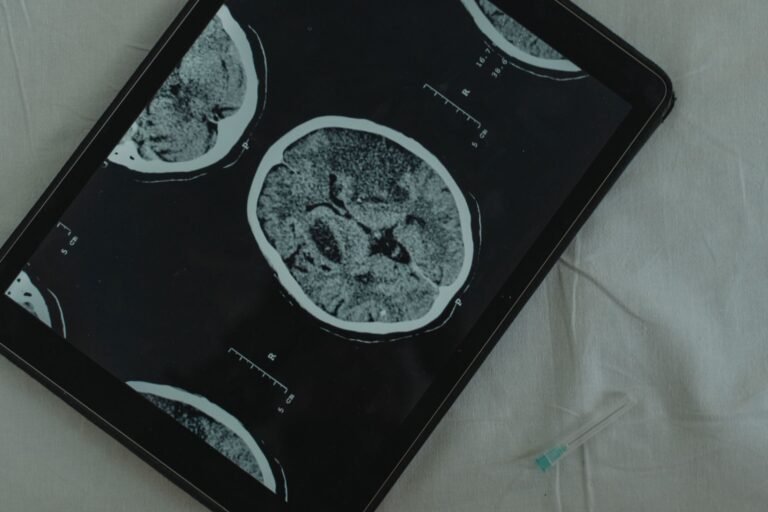
Artificial intelligence has fundamentally accelerated how neurological disorders are identified. The Prima system and similar frameworks combining Vision Transformers and Perceiver IO technology can analyze brain MRI scans across 50+ neurological disorders simultaneously, delivering results with 0.99 precision and perfect recall (1.00) in detecting abnormalities. The NeuroDiscovery AI platform, launched in 2026, provides deep learning capabilities specifically designed for neuroimaging, enabling earlier detection of conditions like Alzheimer’s and Parkinson’s before symptoms become pronounced. These systems work by identifying subtle patterns in brain structure and composition that human eyes might miss, particularly in early-stage disease when intervention has the greatest impact.
The speed advantage is not merely a convenience—it enables screening at scale. Clinics can now process imaging from large populations of at-risk patients (those with memory concerns, family history, or genetic risk factors) rather than waiting for symptoms to prompt imaging. However, AI diagnostic systems are tools, not replacements for clinical judgment. A positive AI finding still requires confirmation through cognitive testing, clinical evaluation, and patient history. Additionally, these systems require high-quality imaging and specialized infrastructure; they cannot compensate for motion artifacts, poor scan quality, or inadequate imaging protocols.

How Are Disease-Modifying Treatments Changing Alzheimer’s Management?
The Alzheimer’s treatment landscape has shifted from symptomatic medications (which temporarily mask decline) to disease-modifying therapies that address underlying pathology. Two FDA-approved monoclonal antibodies—Leqembi (lecanemab) and Kisunla (donanemab)—target amyloid plaques and have demonstrated the ability to slow cognitive decline by meaningful amounts in early-stage disease. These are not cures, but they represent the first genuine ability to alter disease trajectory rather than merely manage symptoms. Blarcamesine, a novel compound tested in the AD-004 trial, showed cognitive decline reduction of 27-36% when presented at the AD/PD 2026 Conference, demonstrating that multiple pathways to slowing progression are now available.
A critical shift is the introduction of at-home administration for Leqembi, allowing patients to self-inject rather than attending clinic infusions every few weeks. This improves treatment adherence and quality of life, though it places responsibility on patients and caregivers for proper injection technique and reporting side effects. The limitation here is significant: these treatments only work in early-stage Alzheimer’s disease, typically before significant cognitive decline is apparent. Patients must be identified before symptoms progress too far—hence why AI diagnostic systems and genetic screening (discussed below) are now essential components of modern Alzheimer’s care. Additionally, the 2025 Alzheimer’s pipeline contains 182 active trials targeting amyloid, tau, and neuroinflammation pathways, meaning new options will emerge, but it also means the treatment landscape will continue evolving rapidly.
What Role Does Genetic Testing Play in Precision Neurological Medicine?
Modern neurological care now integrates genetic profiling into treatment selection and monitoring strategies. The APOE ε4 allele has been identified as the most significant genetic risk factor for Alzheimer’s disease, and testing for this variant informs whether patients should receive genetic counseling, begin preventive monitoring, or consider early intervention with disease-modifying therapies. Carriers of the ε4 allele show different treatment responses and disease progression rates compared to non-carriers, making genetic information medically actionable rather than merely informational.
Clinical assessments increasingly combine traditional cognitive testing with genomic data, digital biomarkers (reaction time, speech pattern analysis), and imaging findings. The American Academy of Neurology’s 2025 conference emphasized pharmacogenomics—tailoring medication selection based on how an individual’s genetic makeup metabolizes drugs. This approach reduces trial-and-error medication switching and improves efficacy, particularly important in Parkinson’s disease management where multiple medication classes are available. The trade-off is that genetic testing requires informed consent conversations about implications for family members and the psychological weight of knowing one’s genetic risk, particularly for conditions like Alzheimer’s where family planning and long-term preparation may be necessary.

How Are Remote Monitoring and Wearable Technologies Transforming Disease Management?
Remote patient monitoring through wearable sensors and connected devices is becoming central to neurological care management. Advanced earpiece sensors can now forecast seizures minutes before occurrence, providing warning time for patients to seek safety. More broadly, non-invasive continuous monitoring through wearables captures real-time data on motor function, sleep, heart rhythm, and activity patterns—information that previously required office visits to measure. For Parkinson’s patients, tremor frequency and gait changes can be tracked continuously rather than assessed once per clinic visit, enabling more responsive medication adjustments.
This continuous oversight is particularly valuable for conditions where progression is variable and unpredictable. A patient with early Parkinson’s might be stable for months, then experience rapid motor decline; remote monitoring can flag this change within days rather than weeks. However, the volume of data generated creates its own challenge: clinicians must determine which data points matter and which represent normal variation or sensor artifacts. Additionally, remote monitoring introduces privacy considerations and potential for over-pathologizing normal fluctuations. The infrastructure for interpreting these data streams is still maturing, meaning that having a wearable device does not automatically translate to better outcomes—clinical teams must be trained to act on the information appropriately.
What Are the Limitations of New Treatments and Why Do Some Patients Not Respond?
Despite significant advances, modern neurological treatments have clear boundaries. Disease-modifying Alzheimer’s therapies require early diagnosis, amyloid positivity confirmed by biomarkers, and absence of significant amyloid-related imaging abnormalities (ARIA)—contraindications that exclude a substantial portion of patients with cognitive symptoms. Furthermore, these treatments show average benefits of 25-35% slowing of decline, not reversal; a patient taking Leqembi will still decline cognitively, just more slowly. Some patients experience amyloid-related side effects including amyloid-related imaging abnormalities (ARIA), requiring close monitoring and sometimes drug discontinuation.
Parkinson’s disease treatments, despite advances like the LRRK2 inhibitor BIIB122 and combination therapy funding from Cure Parkinson’s, remain primarily symptomatic in most cases. The SLEIPNIR trial launching in 2026 will evaluate whether truly disease-modifying therapies can slow progression, but results are uncertain. Patients must understand that medication optimization and symptom management remain the primary approach for most. The emerging gene therapy for rare conditions like late-onset Pompe disease (AB-1009, expected to enroll first patients in early 2026) represents genuine hope for rare disorders, but these approaches are not yet scalable to common conditions and will remain extremely expensive and limited in availability for years.

How Do Combination Therapies Represent the Future of Neurological Treatment?
The next frontier in neurological medicine is combining therapies that address multiple disease mechanisms simultaneously. Rather than targeting only amyloid in Alzheimer’s, emerging approaches combine anti-amyloid agents with tau-targeting compounds and neuroinflammation modulators. Cure Parkinson’s launched a £2 million funding initiative specifically for developing combination therapies in Parkinson’s disease, recognizing that single-target approaches have reached their ceiling for efficacy. The logic is sound: neurological diseases involve multiple pathological processes, so addressing multiple mechanisms should yield better outcomes.
However, combination therapy introduces complexity in monitoring for side effects, drug interactions, and adherence challenges. Patients taking multiple neurological medications must navigate scheduling, potential interactions, and multiple clinic visits for monitoring. The benefit-to-burden ratio depends on demonstrated efficacy gains, which require years of clinical trial data to establish. We are currently in the early stages of this paradigm shift, with most combinations still in research pipelines.
What Does the Future Hold for Neurological Disease Management?
The trajectory of modern neurological medicine clearly points toward earlier detection, more targeted interventions, and continuous monitoring. AI diagnostic systems will become faster, cheaper, and more accessible, moving from specialized centers to primary care. The 182 active Alzheimer’s trials and expanded Parkinson’s pipeline suggest that treatment options will proliferate, requiring even more sophisticated approaches to choosing which therapy suits which patient.
Precision medicine will advance beyond single genetic markers to polygenic risk scores and multi-omics profiling, enabling truly individualized treatment selection. The emerging challenge will not be lack of treatment options but rather rational deployment of increasingly complex medical technology. As AI systems, genetic testing, wearables, and multi-targeted therapies become standard, the healthcare system must evolve to integrate these advances meaningfully rather than creating expensive, data-rich but clinically disconnected care. Patients and caregivers will need clear guidance about which advances apply to their situation and which represent premature or unnecessary complexity.
Conclusion
Modern medicine has fundamentally reshaped neurological disease management through AI-accelerated diagnosis, disease-modifying treatments that slow progression, genetically-informed precision medicine, and continuous remote monitoring. These advances offer genuine hope for conditions like Alzheimer’s and Parkinson’s disease, particularly when interventions begin early.
However, these tools come with real limitations: treatments work best in early disease stages, genetic information raises complex questions about risk and family implications, and new monitoring technologies require skilled clinical interpretation to translate data into actionable care. If you or a family member faces a neurological concern, the modern approach is multi-faceted: pursue early diagnostic evaluation (potentially including advanced imaging and AI-assisted analysis), request genetic testing if relevant, and ask your neurologist whether disease-modifying treatments apply to your specific diagnosis and stage. These advances represent real progress, but they work best when combined with ongoing clinical care, realistic expectations about what treatment can achieve, and continuous communication with your medical team about how the evolving landscape applies to your individual situation.
You Might Also Like
- Federal Court Imposes Substantial Penalties; Scientific Community Advances Humane Approaches
- Why Rigid Conservatorship Laws Require Comprehensive Legal Restructuring Today
- Why Rigid Conservatorship Laws Require Comprehensive Legal Restructuring Today
For more, see National Institute on Aging.