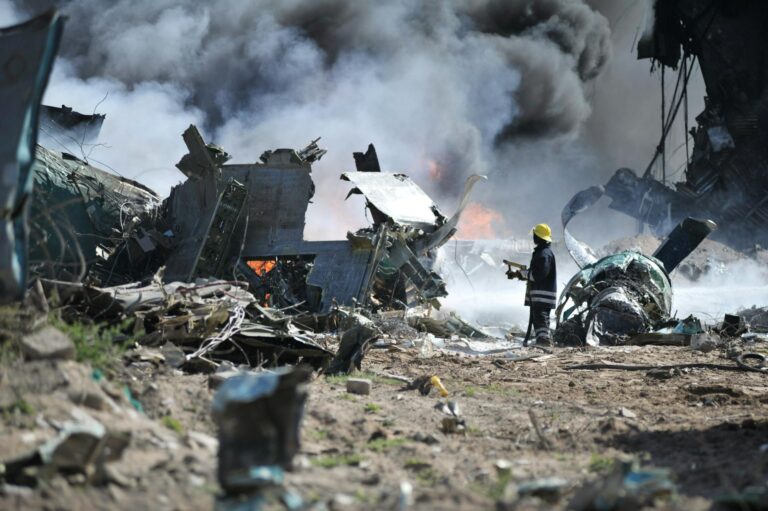
The United States did not lose a single manned fighter aircraft to Iranian forces during nearly four weeks of intense combat operations in early 2026, a remarkable achievement that reflects decades of investment in air superiority technology, pilot training, and operational doctrine. While the broader conflict resulted in aircraft losses, including a KC-135 refueling tanker that crashed on March 12, 2026, killing six airmen, and three F-15E Strike Eagles lost to friendly fire on March 1, 2026, none of these losses occurred due to Iranian military action. This article examines the technological, tactical, and strategic factors that enabled the U.S. military to maintain air dominance while flying hundreds of combat sorties over Iranian territory.
The answer lies in a combination of advanced aircraft technology, comprehensive air defense suppression tactics, widespread use of unmanned systems to absorb risk, and well-trained pilots operating under strict rules of engagement. Over the four-week period, the U.S. lost at least 16 aircraft total, but the vast majority were Reaper drones rather than manned fighters, revealing a deliberate strategy to protect expensive fighter jets and human lives. Understanding how this air superiority was achieved offers insights into modern military aviation and the evolution of combat tactics.
Table of Contents
- What Tactical and Technological Factors Prevented Manned Aircraft Losses to Iran?
- How Unmanned Aircraft Absorption Strategy Protected Manned Fighters
- Air Defense Suppression and Electronic Warfare Capabilities
- Stealth Technology and Detection Evasion
- The Reality of Losses: Friendly Fire and Operational Accidents
- Iran’s Air Defense Capabilities and Limitations
- The Future of Air Combat and Risk Management
- Conclusion
- Frequently Asked Questions
What Tactical and Technological Factors Prevented Manned Aircraft Losses to Iran?
The primary reason the U.S. avoided manned aircraft losses to Iranian forces was the overwhelming technological disparity between American fighter jets and Iran’s air defense systems. Modern U.S. fighter aircraft, including F-35 Lightning IIs, F-22 Raptors, and F-15E Strike Eagles, operate with advanced radar systems, electronic countermeasures, and stealth capabilities that can detect and evade Iranian surface-to-air missiles and interceptors before those systems can acquire a lock. The F-35, despite being damaged during one March 19 combat mission and forced to make an emergency landing, still managed to return safely—a testament to its survivability even when struck by enemy fire.
American pilots also benefit from decades of continuous air combat experience, rigorous training regimens, and access to real-time intelligence from satellites, airborne warning systems, and ground-based sensors. This information advantage allowed pilots to anticipate threats, select optimal flight paths, and employ defensive tactics that countered Iranian air defense capabilities. Additionally, the U.S. maintains air superiority through coordinated operations where dedicated defense suppression aircraft, electronic warfare platforms, and supporting fighters work together to neutralize threats before they can engage manned strike aircraft. The contrast with other losses is instructive: while the three F-15E fighters lost on March 1 represented a serious incident, they fell to a Kuwaiti F/A-18 in a tragic friendly fire accident, not to Iranian air defenses. This distinction underscores that the zero-loss record against Iranian forces specifically reflects superiority in air-to-air combat and air defense operations, not immunity from other hazards of warfare.

How Unmanned Aircraft Absorption Strategy Protected Manned Fighters
A deliberate operational choice contributed significantly to protecting manned aircraft: the U.S. relied heavily on unmanned Reaper drones for strikes and reconnaissance missions, accepting their loss as a cost of protecting more valuable and irreplaceable human pilots. Of the 16 aircraft lost during the four-week campaign, the majority were unmanned systems. While Reaper drones cost millions of dollars each, they can be replaced far more readily than fighter jets, and their loss carries no human casualty cost—a critical consideration for military leadership and public support. This strategy reflects a fundamental shift in modern military doctrine. Rather than exposing F-15Es and F-35s to every threat, commanders tasked drones with high-risk intelligence, surveillance, and reconnaissance missions and certain strike operations, thereby reducing the number of times manned aircraft had to penetrate contested airspace where Iranian air defenses remained active.
When manned aircraft did fly, they were typically tasked with missions where U.S. air superiority was most complete: bombing fixed targets, providing close air support, or conducting air defense suppression operations. However, this approach has limitations worth noting. Unmanned systems cannot match the adaptability and judgment of human pilots when unexpected threats emerge. The KC-135 that crashed on March 12 was a manned refueling aircraft providing essential support to combat operations—a mission that cannot yet be fully automated. The loss of six airmen in that accident demonstrates that even with the most advanced technology, military air operations carry inherent risks that affect real families.
Air Defense Suppression and Electronic Warfare Capabilities
The U.S. maintains specialized aircraft and tactics specifically designed to suppress or destroy enemy air defense systems before they can threaten manned fighters. These include electronic warfare aircraft that jam radar and communications, cruise missiles that target air defense installations, and strike aircraft equipped with anti-radiation missiles that home in on radar emissions. Before major air operations, the U.S. military conducts intensive air defense suppression campaigns to degrade Iran’s surface-to-air missile systems, radar networks, and command-and-control infrastructure.
This effort proved effective throughout the four-week campaign. Although the F-35 sustained damage on March 19 from suspected Iranian fire, the aircraft remained sufficiently intact to complete its mission and land safely. The fact that even a damaged aircraft could return suggests that Iranian air defenses, while capable, could not concentrate sufficient firepower to destroy modern American fighters with reliable consistency. The sophisticated electronic countermeasures and defensive maneuvers available to U.S. pilots reduce the probability that enemy missiles will achieve direct hits even when those systems manage to achieve target acquisition. The tradeoff here involves resource allocation: maintaining air defense suppression capabilities requires deploying additional aircraft, missiles, and personnel that could otherwise be used for offensive operations. Military commanders must continuously balance the risk of manned aircraft losses against the increased costs and operational complexity of comprehensive air defense suppression.

Stealth Technology and Detection Evasion
The F-35 Lightning II, despite its damage incident on March 19, represents a generation of aircraft designed specifically to avoid detection and engagement by enemy air defenses. Its low-observable or “stealth” design reduces its radar signature, making it difficult for Iranian systems to track and target. When Iran’s air defense systems cannot detect aircraft, they cannot shoot them down—a fundamental principle that has shaped American fighter development over the past three decades. The stealth advantage is not absolute, however.
Modern air defense systems use multiple radar frequencies, infrared detection, and other sensing methods to compensate for stealth technology. The March 19 incident where an F-35 sustained damage and required an emergency landing indicates that even advanced stealth aircraft remain vulnerable under certain conditions, particularly when they concentrate on a specific target or when they must operate repeatedly over the same area where defenders have time to set up additional sensors and weapons. Pilot skill and decision-making become critical when stealth advantages erode. American pilots receive training in tactical maneuvering, threat avoidance, and rapid decision-making that allows them to recognize developing threats and respond with defensive measures before those threats can materialize into successful engagements. This human element—the judgment and experience of trained pilots—cannot be entirely replaced by technology.
The Reality of Losses: Friendly Fire and Operational Accidents
While the U.S. lost zero manned aircraft to Iranian military action, the death of six airmen in the March 12 KC-135 crash and the loss of six F-15E pilots in the March 1 friendly fire incident remind us that combat operations carry multiple sources of risk beyond enemy fire. The three F-15E fighters lost to the Kuwaiti F/A-18 represented a tragic failure in the coordination systems that are supposed to prevent friendly forces from attacking each other, despite those systems being extensively studied and practiced.
These incidents reveal an important limitation of the narrative about “zero losses to the enemy”: while preventing losses to enemy action is a significant achievement, operational safety, coordination between allied forces, and accident prevention remain distinct and critical challenges. The loss of 12 airmen to these non-hostile incidents demonstrates that military aviation remains inherently dangerous and that technological superiority alone cannot eliminate all risks. The investigation into these incidents typically focuses on communications breakdowns, identification procedures, and coordination protocols. These are areas where human error, equipment malfunction, or momentary lapses in procedure can have catastrophic consequences regardless of how advanced the participating aircraft and weapons systems might be.

Iran’s Air Defense Capabilities and Limitations
Iran operates a layered air defense system that includes Russian-supplied S-300 surface-to-air missiles, domestically produced systems, and numerous radar installations. These systems are capable of engaging aircraft at significant ranges and have been upgraded and maintained over the years. However, they face significant disadvantages against American aircraft. Iranian air defenses operate under centralized command-and-control, making them vulnerable to disruption of communications or targeting of command centers. They rely on radar systems that can be detected, tracked, and jammed by American electronic warfare aircraft. The absence of manned aircraft losses to Iranian forces does not mean those forces posed no threat.
The damage to the F-35 on March 19 proves that Iranian air defenses achieved at least one engagement, inflicting damage serious enough to force an emergency landing. This incident indicates that while Iran’s systems are inferior to American air defense and fighter capabilities, they remain functional and occasionally successful. American pilots and commanders treat Iranian air defenses seriously and employ comprehensive tactics to minimize exposure. The gap between capability and achievement often determines outcomes in air warfare. Iran’s air defense systems have the potential to damage American aircraft, but American tactics, technology, and pilot training work together to minimize that potential in actual combat. Understanding this gap explains why the U.S. achieved zero manned aircraft losses despite Iran’s meaningful defensive capabilities.
The Future of Air Combat and Risk Management
The four-week campaign over Iran offers a preview of how modern air warfare may evolve. The emphasis on unmanned systems, air defense suppression, stealth technology, and coordinated operations will likely continue as military forces worldwide invest in these capabilities. However, the friendly fire incident and the KC-135 crash also demonstrate that human factors, coordination challenges, and operational complexity will remain central to military aviation for the foreseeable future.
The achievement of zero manned aircraft losses to Iranian forces during intense combat reflects the current technological dominance of Western air forces, but it should not encourage complacency about the remaining risks and challenges. As other nations develop more advanced air defense systems and as unmanned aircraft become more capable, the assumptions underlying current tactics may require reevaluation. Military aviation will likely remain a domain where technological advantage confers significant benefits, but where human judgment, training, and operational excellence ultimately determine outcomes.
Conclusion
The U.S. military prevented the loss of any manned aircraft to Iranian military action during four weeks of intensive combat through a combination of technological superiority, advanced pilot training, comprehensive air defense suppression tactics, and a strategic reliance on unmanned systems for higher-risk missions. Aircraft like the F-35, supported by decades of development and refinement, provided capabilities that Iranian air defenses could rarely counter effectively.
The deliberate strategy of using Reaper drones and other unmanned systems to absorb risk protected more valuable fighter aircraft and, crucially, the lives of American pilots. However, this achievement should be contextualized within the broader reality of military aviation operations. The loss of six airmen in a KC-135 crash and six pilots in a friendly fire incident remind us that combat remains dangerous and that preventing losses to enemy action is distinct from eliminating all risks. As military air operations continue to evolve, the balance between technological advantage, human judgment, operational coordination, and risk management will continue to shape outcomes in air warfare.
Frequently Asked Questions
Did the U.S. lose any manned aircraft to Iranian forces during the campaign?
No. The U.S. did not lose a single manned fighter aircraft to Iranian military action during the four-week period. While the U.S. lost at least 16 aircraft total, including a KC-135 tanker in a crash and three F-15E fighters in a friendly fire incident, none were shot down by Iranian forces.
What aircraft were lost during this period?
The losses included a KC-135 refueling tanker that crashed on March 12, 2026, killing six airmen; three F-15E Strike Eagles shot down by a Kuwaiti F/A-18 on March 1 in a friendly fire incident, with all six crew members recovering safely; and approximately 12 unmanned Reaper drones and other unmanned systems.
Was the F-35 that made an emergency landing on March 19 shot down?
No. The F-35 was damaged by suspected Iranian fire but remained sufficiently operational to complete its mission and make an emergency landing. The pilot safely recovered the aircraft, demonstrating both the survivability of the F-35 design and the limitations of Iranian air defenses in achieving kills against modern American fighters.
Why did the U.S. use so many unmanned drones?
The reliance on unmanned systems allowed the U.S. to conduct high-risk reconnaissance and strike missions while minimizing the risk to human pilots and manned aircraft. Drones are easier to replace than fighter jets and their loss does not result in pilot fatalities, making them strategically valuable for protecting more scarce and irreplaceable resources.
What made Iran unable to shoot down American manned aircraft?
Iranian air defenses faced significant disadvantages including technological inferiority relative to American fighters, limited detection and tracking capabilities against stealth aircraft, vulnerability to American electronic warfare and air defense suppression tactics, and the skill and training of American pilots operating advanced systems.