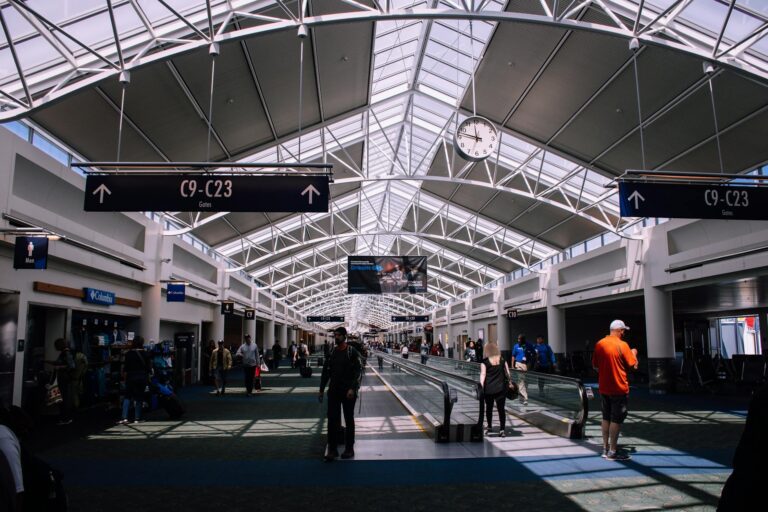
In March 2026, Border Czar Tom Homan announced that Immigration and Customs Enforcement agents would deploy to airport security lines across the United States. As of March 24, 2026, ICE personnel are now staffing checkpoints at major U.S. airports including Atlanta, JFK in New York, Houston, Newark, and Chicago O’Hare—thirteen to fourteen airports in total. The reason is straightforward: a government shutdown that began in mid-February 2026 left the Transportation Security Administration in crisis. TSA officers have been working without paychecks while managing security lines that stretched to more than three hours.
This article explains how we got here, what ICE agents are actually doing, and what this deployment means for travelers. The decision to deploy armed ICE agents to airport security reveals the scale of the staffing collapse. On a single Saturday during the crisis, more than 11.5 percent of TSA officers called out, unable to staff the checkpoints. Security lines became unmanageable. Rather than resolving the underlying shutdown—which was itself triggered by immigration-related disputes—the administration chose to deploy immigration enforcement personnel as a makeshift solution to keep passengers moving through airports.
Table of Contents
- Why Did a Government Shutdown Trigger an Airport Security Crisis?
- What Are ICE Agents Actually Authorized to Do at Airport Security?
- How Many ICE Agents Were Deployed and Where?
- What Do Travelers Actually Experience With ICE at Security Checkpoints?
- What Are the Concerns About Using Armed ICE Agents in Civilian Spaces?
- What Happens When the Government Shutdown Ends?
- Looking Ahead—Will This Become a Long-Term Solution?
- Conclusion
Why Did a Government Shutdown Trigger an Airport Security Crisis?
The mid-February 2026 government shutdown directly affected the Department of Homeland Security, which oversees both tsa and ICE. TSA officers continued showing up to work but received no paychecks. This created a compounding crisis: officers who depend on regular wages began calling in sick at higher rates. Some took additional jobs elsewhere. Others simply couldn’t afford to work without pay.
By mid-March, callout rates exceeded 11 percent on peak travel days—far above normal levels. Security checkpoint lines that typically moved in under twenty minutes stretched to three hours or more. The irony wasn’t lost on critics. The government shutdown itself was partially triggered by disputes over immigration enforcement, one of the central issues that ICE handles. Democrats pointed out that using immigration agents to cover for absent TSA officers because of an immigration-focused shutdown represented a circular failure of governance. Yet the immediate problem was real: passengers were missing flights, airports were becoming bottlenecks, and the TSA couldn’t maintain its screening mission with unpaid, exhausted staff.

What Are ICE Agents Actually Authorized to Do at Airport Security?
This is where the deployment becomes complicated. ICE agents are not certified airport security personnel. They have not received TSA training for baggage screening or operating X-ray machines and magnetometers. According to the deployment guidance, ICE personnel are authorized for crowd control, ID checking, and line monitoring—essentially managing the flow of passengers rather than performing actual security screening. They are equipped to do administrative and organizational tasks, not the technical security work.
However, ICE agents arrive at airports already trained and equipped for law enforcement. They carry firearms and have arrest authority. This creates a clear hierarchy of capability: they can handle physical security and passenger management but cannot perform the specialized screening that TSA officers do. The limitation is significant because it means ICE deployment does not actually restore full security screening capacity. Instead, it’s intended to speed up the movement of passengers through checkpoints managed by remaining TSA staff, potentially improving overall throughput even if individual screening remains unchanged.
How Many ICE Agents Were Deployed and Where?
At least fifty ICE personnel per shift were deployed to each of the affected airports. For a major hub like Atlanta or JFK, this represents a substantial mobilization of personnel from immigration enforcement to civilian airport security. The deployment was announced to occur at thirteen to fourteen airports, with San Diego Union-Tribune reporting on March 23 that ICE agents had not yet arrived at all locations, indicating a phased rollout was underway. This staggered approach prevented all airports from being affected simultaneously but extended the period of adjustment across the system.
The choice of airports focused on high-traffic hubs where crowding during the shutdown was most severe. Atlanta, Chicago O’Hare, and JFK are among the busiest airports in the nation. Houston, Newark, and others rounded out the list of locations facing the worst security delays. The concentration of forces at major hubs made sense from a logistics perspective: these airports serve the most passengers and have the greatest impact on national travel capacity when they become bottlenecks.

What Do Travelers Actually Experience With ICE at Security Checkpoints?
In practical terms, travelers should expect the same TSA screening but potentially with faster movement through lines. An ICE agent standing at a checkpoint is focused on managing the queue, ensuring passengers move efficiently, and verifying identification as it’s presented. They are not pulling passengers aside for secondary screening or making decisions about what can or cannot pass through security. Those decisions remain with TSA officers. For most travelers, the presence of armed ICE agents may feel unusual or even concerning, but functionally they are there to speed up the administrative flow.
The tradeoff for travelers is awkward but measurable. Security lines that previously took three hours might take ninety minutes to two hours with additional personnel managing crowds and checking IDs before passengers reach the actual screening technology. However, the actual security screening itself hasn’t improved. TSA officers are still exhausted, still unpaid, and still stretched thin. Adding crowd managers doesn’t fix the underlying staffing crisis—it papers over its symptoms temporarily.
What Are the Concerns About Using Armed ICE Agents in Civilian Spaces?
The American Federation of Government Employees, the union representing TSA officers, issued a sharp statement calling ICE agents “untrained, armed agents who have shown how dangerous they can be” as replacements for paid TSA staff. This criticism reflects both the training gap and the ideological difference between immigration enforcement personnel and airport security workers. TSA officers receive specialized civilian security training. ICE agents receive law enforcement and immigration enforcement training.
The two are not equivalent. There is also a practical risk that passengers will confuse ICE agents with TSA officers, or that the presence of armed federal agents will create anxiety in an environment meant to process large numbers of civilians efficiently. Some passengers may have legitimate concerns about encounters with ICE agents based on immigration status or past experiences. The deployment creates multiple points of potential friction that go beyond simple line management. Union leaders and Democrats have warned that this is a temporary patch on a much larger problem: the TSA needs funded staff, not borrowed law enforcement personnel.

What Happens When the Government Shutdown Ends?
As soon as funding is restored and TSA officers resume receiving paychecks, many of the incentives for calling out disappear. The callout rate should normalize, allowing the TSA to return to normal staffing levels.
ICE agents, having completed their temporary assignment, would redeploy to immigration enforcement tasks. However, the deployment demonstrates that in a crisis, the government will use unconventional staffing solutions rather than immediately resolve funding disputes. This sets a precedent that immigration agents can be redeployed to civilian security roles if convenient, even though it’s not their trained function.
Looking Ahead—Will This Become a Long-Term Solution?
The ICE deployment was framed as a temporary emergency measure to address the immediate shutdown crisis. However, the fact that it was announced and implemented relatively quickly suggests that if the shutdown is prolonged or if similar crises occur in the future, policymakers may be tempted to use the same tactic again. This could normalize the practice of using immigration agents in civilian spaces, blurring the lines between immigration enforcement and general security operations.
The more sustainable fix requires resolving the political impasse that triggered the shutdown in the first place. TSA officers need stable funding and regular paychecks to maintain their commitment to airport security. Relying on borrowed personnel from immigration enforcement is a workaround, not a solution.
Conclusion
ICE agents ended up patrolling airport security lines because a government shutdown left the TSA unable to maintain normal staffing and because wait times became politically untenable. The deployment was announced by Border Czar Tom Homan on March 24, 2026, in response to security lines stretching beyond three hours and TSA callout rates exceeding 11 percent. ICE personnel, at least fifty per shift per airport, were deployed to thirteen to fourteen major U.S. airports to manage crowd flow and assist with ID checking—functions within their capability even if outside their normal training.
This is a temporary solution to a funding problem. As soon as the government shutdown ends and TSA officers receive paychecks again, the ICE deployment is expected to end. However, the fact that immigration agents were mobilized to civilian airport security so quickly may have opened a door to future similar deployments. The underlying issue remains: the TSA needs stable, funded staffing to operate effectively, and that requires political resolution of the budget disputes that created this crisis in the first place.