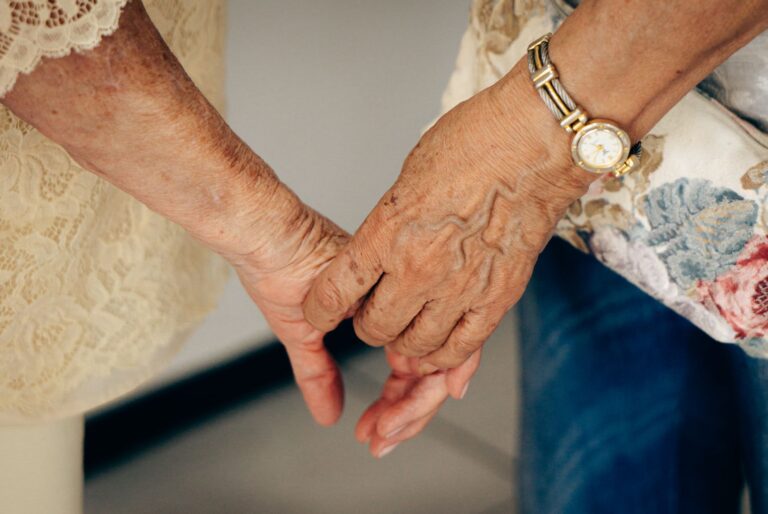
Dementia fundamentally changes how funeral planning happens because the person who should be making these deeply personal decisions may no longer be able to communicate their wishes clearly. When someone is diagnosed with dementia, they’re often still capable of expressing preferences, but as the disease progresses, verbal communication becomes difficult, memory fades, and the ability to make complex decisions deteriorates. This creates a situation where families must navigate funeral arrangements without clear direction from the person most affected—requiring difficult conversations to happen while the person with dementia can still participate, or proceeding with the best guesses of family members if that window has already passed.
For example, Margaret developed early-stage Alzheimer’s at 68 but didn’t discuss funeral preferences with her family until she was already struggling to find words. By the time she needed end-of-life care three years later, her family had only fragments of memory about what she’d once mentioned—she’d said something about cremation but was unclear about a service, and they were left making assumptions. This article explores how dementia affects funeral planning decisions, when to have these conversations, and what families can do to preserve dignity and honor the person’s wishes even when dementia prevents them from being directly involved.
Table of Contents
- When Does Dementia Make Funeral Planning Difficult?
- Preserving the Person’s Voice in Planning Decisions
- The Family Decision-Making Burden
- Early Planning While the Person Still Can Participate
- Financial and Legal Complexities
- Healthcare Providers’ Role in Documenting Wishes
- Honoring Individual Identity in Uncertain Situations
- Conclusion
- Frequently Asked Questions
When Does Dementia Make Funeral Planning Difficult?
Funeral planning becomes complicated by dementia at different points depending on disease progression and individual circumstances. In the early stages of dementia—such as mild cognitive impairment or early Alzheimer’s—the person may still be able to have conversations about preferences, though they might repeat themselves or forget they’ve already discussed the topic multiple times. However, the unpredictability is real: someone might have a clear day and express firm wishes about a small gathering, then have no memory of that conversation the following week. This variability makes it hard for families to know whether preferences expressed during a good moment truly represent the person’s deeper values or are influenced by that day’s mood and clarity.
As dementia progresses to moderate and severe stages, the window for direct communication closes significantly. The person may no longer understand questions about funeral arrangements, may not recognize family members well enough to have meaningful conversations, and may become anxious or upset when discussing end-of-life topics. At this point, families must rely entirely on prior conversations, any written documentation, or their best judgment about what the person would want. The challenge is that many people avoid planning discussions altogether, assuming they have time, or assuming their family “just knows” what they’d want—an assumption that often breaks down when decisions must be made quickly during a crisis.

Preserving the Person’s Voice in Planning Decisions
One significant limitation of dementia planning is that the authentic voice of the person with dementia is hardest to preserve precisely when it matters most. If someone is diagnosed at 72 and dies at 78, their funeral preferences may reflect the person they were in their early sixties—their values, religious beliefs, and social connections—which may have shifted before or alongside the dementia itself. However, families often treat documented preferences as final truth, even when circumstances have changed or the person’s life has taken turns they didn’t anticipate. A person might have wanted a large church funeral when healthy and socially active, but five years of dementia may have isolated them from that community, making a smaller gathering more realistic and possibly more appropriate.
Another reality is that dementia affects the person’s ability to update their preferences based on new information or changing circumstances. If someone completed funeral plans at 50 and develops dementia at 65, their documented wishes may not reflect changed relationships, financial situations, or beliefs that would naturally occur in a healthy aging process. Families sometimes struggle with guilt, wondering if they’re honoring the person or overriding their wishes when circumstances don’t match the original plan. The solution isn’t to abandon pre-planning—it’s to keep preferences flexible enough to adapt while still capturing core values like “simple and low-cost” or “religious service” rather than specifying exact details that may become impossible or irrelevant.
The Family Decision-Making Burden
When dementia prevents the person from participating in funeral planning, the burden shifts entirely to family members, often without clear guidance. Unlike a written will that provides explicit instructions, funeral preferences may exist only in fragments—a half-remembered comment at Thanksgiving, a casual mention that someone “didn’t want a fuss,” or opposing statements made at different times. Siblings often disagree about what the person would have wanted, and without a tie-breaker (the person themselves), these disagreements can escalate into family conflict during an already emotional time. For example, one adult child might want a traditional funeral service honoring their parent’s religious background, while another sibling believes the parent had moved away from religion and would prefer a memorial focused on celebration of life.
The legal framework offers limited help here. In most states, there’s a hierarchy of decision-makers—spouse, adult children, parents, siblings—but this legal structure doesn’t resolve disagreements about values. One sibling might want to spend $3,000 on an elaborate funeral, while another prioritizes using funds for the person’s medical debt. The person with dementia cannot resolve this, and the legal hierarchy doesn’t instruct families to be guided by the person’s documented wishes or values—it just designates who gets to decide. This creates situations where the person making the final decision carries lifelong guilt, wondering if they honored their loved one or imposed their own preferences.

Early Planning While the Person Still Can Participate
The most effective approach is to have funeral planning conversations while the person with dementia is still in early stages and capable of meaningful expression. This doesn’t require extensive detail—in fact, detailed planning can overwhelm someone with early dementia and make them anxious. Instead, focus on core values: Does the person want a large celebration or a quiet, private goodbye? Religious or secular? Burial or cremation? Would they want flowers, donations to a charity, a reception? Should certain people be notified first? These conversations work best in a casual, low-pressure way—not a formal “funeral planning meeting” but rather a natural discussion over coffee or during a car ride. Documentation matters significantly here.
When someone with early dementia expresses a preference, write it down immediately and share it with relevant family members. A simple email—”Mom said she’d like a small service with family only, and she’d prefer we donate to the Alzheimer’s Association in her name instead of flowers”—creates a reference point that prevents misremembering later. Some families use a video or voice recording of the person discussing their preferences, which can be powerful for family members during the grieving process and provides indisputable evidence of their wishes. However, video works best when kept to five to ten minutes—longer recordings may include contradictory statements as the person circles back to topics or changes their mind, which complicates rather than clarifies things.
Financial and Legal Complexities
Dementia complicates the financial side of funeral planning because medical costs often deplete the estate before death, and someone with dementia may not be capable of pre-paying funeral expenses or updating insurance beneficiaries. If the person didn’t purchase a funeral plan or set aside funds before cognitive decline, families face difficult choices: spend down remaining assets on a funeral, rely on life insurance if one exists, or choose a simpler arrangement. Medicaid, which often covers medical costs for people with dementia in long-term care, has specific rules about funeral plans—a pre-paid plan may affect Medicaid eligibility, and families often don’t realize this until too late. A critical limitation is that Medicaid-eligible individuals may not have assets to fund the funeral they would have wanted, forcing families to choose less expensive options.
This is not a moral failing on anyone’s part—it’s a structural reality of chronic disease in America. Someone might have hoped for a $5,000 service, but if dementia required ten years of nursing home care and depleted their savings to qualify for Medicaid, the realistic budget may be $1,000 or less. Families should understand this early and either pre-plan financially while the person is still capable, or accept that simplified arrangements may be necessary. Open conversation about financial realities—”Mom, if you develop a serious illness, we might not have funds for an expensive funeral, so let’s plan for something meaningful but simpler”—allows families to align on values before dementia makes planning impossible.

Healthcare Providers’ Role in Documenting Wishes
Most families don’t realize that healthcare providers can play a crucial role in documenting the person’s funeral preferences. When someone is diagnosed with dementia, their neurologist or primary care physician can note their preferences in the medical record: the person’s religious beliefs, family constellation, and stated wishes about end-of-life arrangements. This documentation becomes part of the clinical record and can carry significant weight for families later, particularly in medical settings where ethics committees or doctors need clarity about the person’s values.
Advance directive documents can include funeral preferences, though this is less common than documenting medical wishes like resuscitation preferences. Some elder law attorneys specifically include funeral and burial preferences in their estate planning documents, making them legally recognizable as the person’s wishes. If someone with early dementia meets with an elder law attorney, they should explicitly ask about documenting funeral preferences—it takes only a few minutes but can spare families months of guilt and disagreement later. The earlier this happens after diagnosis, the better, because the person’s capacity to make these decisions and express them clearly is strongest soon after dementia diagnosis when some cognitive function remains intact.
Honoring Individual Identity in Uncertain Situations
Even when funeral preferences aren’t clearly documented, families can honor the person with dementia by making choices that reflect their known values and personality. This requires looking beyond just funeral arrangements and asking: What mattered most to this person? What relationships were central to their identity? What brought them joy? Someone who was deeply religious but had lost the ability to articulate their faith should still have a service that honors that spirituality, chosen by family who knew them. Someone who loved nature and spent weekends hiking might be scattered on a mountain trail rather than buried in a cemetery, even if they never explicitly said so.
This approach—values-driven rather than preference-driven—requires more thoughtfulness from families but often results in funerals that feel more authentically meaningful. The person with dementia can no longer assert their wishes, so family members become the guardians of their values and identity. This is heavy responsibility, but it can also be an act of deep love and respect, particularly when family members have been involved in the dementia journey and understand the person’s core self beneath the disease. The goal shifts from “Did we do exactly what they said?” to “Did we honor who they were and what mattered to them?”.
Conclusion
Dementia complicates funeral planning by removing the person most affected from decision-making at the moment when clarity matters most. The most effective protection is early conversation—while the person is still capable of clear expression—about core values, basic preferences, and documented wishes. Even a few hours of conversation in the early stages of dementia, captured in writing or shared with family, prevents far more conflict and regret than waiting until crisis forces rushed decisions. Families should not wait for perfect health or assume time exists; dementia diagnosis is a clear signal to begin these conversations.
For families already navigating dementia without clear documentation, the focus should shift to honoring the person’s known values, consulting with healthcare providers about documented wishes, and accepting that practical constraints—financial, geographic, health-related—may prevent the originally imagined funeral. Guilt about imperfect planning is nearly universal in dementia caregiving, but it serves no one. The meaningful work now is ensuring the funeral reflects the person’s actual values and identity, as understood by those who loved them. If you’re facing this situation, consulting with an elder law attorney or a grief counselor can help families move through guilt and toward decisions that feel genuinely honoring of the person who is no longer able to speak for themselves.
Frequently Asked Questions
Is it ever too late to have funeral planning conversations with someone with dementia?
It depends on the stage. Even people with moderate dementia may have moments of clarity or be able to answer simple yes/no questions about preferences. Family members can ask, “Do you think you’d want a big party or something small?” or show pictures of different funeral settings. However, as dementia progresses to severe stages, the person may no longer understand the questions. If no documented preferences exist and the person can no longer communicate clearly, families must rely on what they remember about the person’s values.
What if family members disagree about what the person with dementia would have wanted?
Disagreement is extremely common, and there’s no perfect resolution when the person cannot decide for themselves. One helpful approach is to focus on what’s actually documented rather than competing opinions about what someone “probably would have wanted.” If no documentation exists, family decision-makers (legally defined by state law) should make the choice they believe honors the person’s values, then communicate that reasoning to other family members. Some families find it helpful to involve a mediator—a grief counselor, clergy member, or trusted friend—to facilitate discussion without escalating conflict.
Should we spend money on a pre-planned funeral if someone has early dementia?
Pre-planning can be valuable, particularly for documenting preferences, but check Medicaid implications first. If the person might eventually qualify for Medicaid (which covers nursing home costs), a pre-paid funeral plan could complicate eligibility. Consult with an elder law attorney before pre-paying. Alternatively, simply documenting wishes with your family and healthcare provider costs nothing and achieves most of the benefit.
Can someone with dementia change their funeral plans if they’ve already documented preferences?
Yes, if they still have capacity to make that decision, which is determined on a case-by-case basis. Someone with mild cognitive impairment might still be capable of changing preferences; someone with moderate to advanced dementia likely cannot. If the person expresses a different wish late in dementia, family members must determine whether this represents a new genuine preference or reflects confusion caused by dementia.
What should we do if the person with dementia becomes upset when funeral planning is discussed?
Stop that conversation for now. Not everyone can comfortably discuss death, and forcing the conversation may cause unnecessary distress. Instead, try smaller, less direct questions: “If something happened to you, who do you want there?” or “Do you like big parties or quiet times?” You can also speak with their healthcare provider about capacity for these conversations and ask for guidance. If direct conversation doesn’t work, family members may need to document their own understanding and move forward with that.