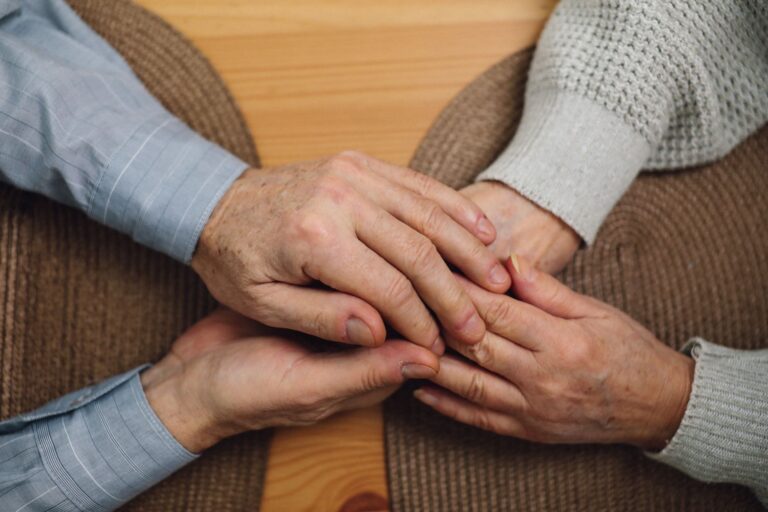
Aphasia is loss of ability to understand or express spoken or written language. Caregivers can communicate by securing attention in a quiet space, using short adult sentences and yes-or-no choices, and accepting gestures, pointing, drawing, and pictures.
In memory care, this matters because aphasia often overlaps with confusion and hearing difficulty. According to UF Health, it commonly follows stroke or brain injury but can also come from brain tumors or degenerative diseases affecting language areas UF Health communication guide. Fewer distractions, slower speech, and more time to respond reduce frustration for both sides.
Medical information disclaimer: This article is for general educational purposes only and does not provide medical advice, diagnosis, or treatment. Always consult a physician or other qualified health professional about symptoms, medications, tests, or treatment decisions.
Table of Contents
- How do you set up a conversation that works?
- What should you actually say and how?
- What if words do not come?
- How do you protect dignity in memory care?
How do you set up a conversation that works?
Get eye contact before you speak and ask for attention by name. Move to a quieter room, reduce background noise, and turn off the TV or radio, as recommended by UF Health UF Health communication guide.
Stay face to face at eye level. Keep paper, a pen, and pictures or a word book nearby so the person can point or draw.
- Say the person's name, wait for eye contact, then start
- Turn off TV and radio and close the door
- Keep glasses, hearing aids, and a picture book within reach
What should you actually say and how?
Use short, simple adult sentences at a slower rate. Ask yes-or-no questions, offer only two or three clear choices, break instructions into small steps, and allow extra response time. Say "Do you want tea or water?" rather than an open question.
Give one step, wait, then give the next step. The National Institute on Deafness and Other Communication Disorders supports this slowed, simplified approach in its April 2025 update NIDCD aphasia page. What you avoid matters too. Do not shout, pretend to understand, talk down as to a child, rush answers, or finish sentences unless asked.
What if words do not come?
Encourage and accept every communication mode. Gestures, pointing, drawing, writing, pictures, keywords, and a picture or word book with common topics and people all count. Keep the book personal and practical.
Include family photos, foods, clothes, bathroom needs, pain levels, daily routines, and favorite activities. Point to one item at a time and confirm with a nod or short repeat. If you do not understand, say so kindly and try another channel. Ask, "Can you show me?" or "Can you point to it?" rather than guessing.
How do you protect dignity in memory care?
Include the person in conversations and seek their opinions, especially on family matters. Family involvement is a crucial part of treatment, according to the National Institute on Deafness and Other Communication Disorders NIDCD aphasia page. Speak directly to the person, not only to staff or relatives.
Offer choices about meals, clothing, music, seating, and visits so they stay an active decision-maker. Adjust the goal to the cause. Post-stroke aphasia recovery can take up to two years and may be incomplete, while aphasia from Alzheimer-type decline will not improve, so prioritize participation and comfort over restoration.