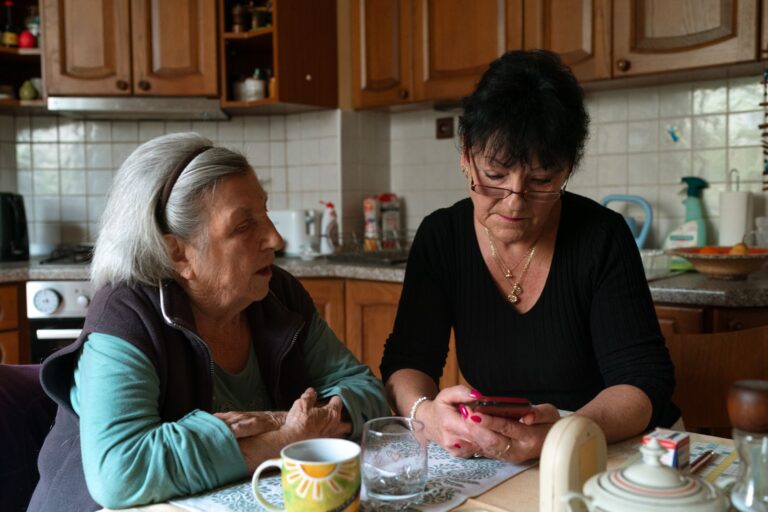
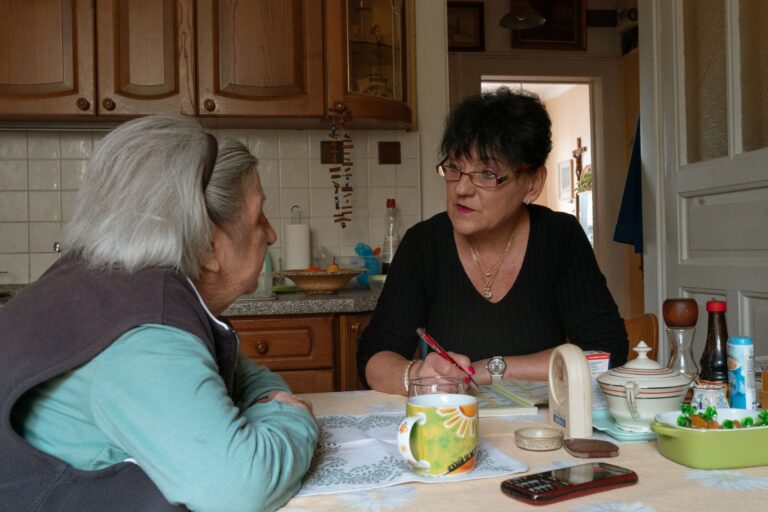
At-home dementia tests you can buy or download online are screening tools, not diagnostic instruments, and their accuracy varies considerably depending on the type of test. The free SAGE test from Ohio State University, for example, detects cognitive impairment with 79% sensitivity and only a 5% false positive rate — a reasonably solid number for a self-administered paper quiz. But that also means roughly one in five people with genuine cognitive decline could receive a falsely reassuring result. Paid commercial tests sold online tend to perform worse, and many experts consider them invalid or potentially exploitative.
The bottom line: no at-home test can tell you whether you or a loved one has dementia. What these tests can do is flag a pattern of responses worth discussing with a doctor. This article walks through what the accuracy data actually shows for different types of tests, from free self-administered cognitive quizzes to the newer blood-based biomarker tests that are now entering clinical settings. It also covers what the FDA has approved in 2025, why even clinical evaluations miss a significant number of cases, and how to tell a trustworthy screening tool from a commercial product designed primarily to take your money.
Table of Contents
- What Do the Numbers Actually Say About At-Home Cognitive Tests?
- Are Paid Online Dementia Tests Worth Buying?
- How Do Blood-Based Tests Compare, and Are They Available at Home?
- What Should You Actually Do If You’re Concerned About Memory?
- Privacy and Follow-Up Care Are Serious Concerns with At-Home Testing
- The Mini-Cog as a Practical Alternative
- Where At-Home Dementia Testing Is Headed
- Conclusion
- Frequently Asked Questions
What Do the Numbers Actually Say About At-Home Cognitive Tests?
When researchers and clinicians talk about test accuracy, they typically use two measurements: sensitivity (how well the test catches people who actually have a condition) and specificity (how well it avoids flagging people who do not). The SAGE test, which you can download for free from Ohio State University and complete in about 15 minutes with a pen and paper, has a reported 79% sensitivity for detecting cognitive impairment. That sounds reasonable until you consider the flip side — roughly 21% of people with early cognitive impairment would be missed entirely. The broader clinical picture is even more humbling. A 2018 study found that dementia is frequently misclassified when question-and-answer tests are the only means of diagnosis. Even in specialty memory clinics — environments with trained neuropsychologists, detailed patient histories, and access to imaging — cognitive-only clinical evaluations without biomarker testing are accurate only 73% of the time.
In primary care settings, that number drops to 61%. If the best doctors using the best in-person tools are wrong more than a quarter of the time without biomarker support, a 15-minute online quiz faces even steeper odds. This doesn’t mean these tools are worthless. A person who scores well into the impairment range on the SAGE test has meaningful information to bring to their physician. But it does mean a normal result on any at-home test should not be read as clearance. Early dementia is notoriously difficult to catch with cognitive questioning alone, and many people with genuine early-stage disease retain enough compensatory ability to score within a normal range.
Are Paid Online Dementia Tests Worth Buying?
The short answer is almost certainly not. Experts and dementia advocacy organizations consistently warn that many paid online dementia tests sold commercially have not been validated through peer-reviewed research and should be treated with serious skepticism. The business model for these products is straightforward: capitalize on the anxiety of families worried about a loved one, charge a fee for a quiz that produces a result, and provide no meaningful clinical pathway afterward. By contrast, the most reputable self-administered screening tools are available for free through universities and medical institutions. The SAGE test from Ohio State has published accuracy data. The Mini-Cog, a brief three-item test that combines a word recall task with a clock-drawing exercise, is widely used in primary care and also freely available.
These tools were developed in clinical settings and tested against diagnosed populations. That peer-reviewed foundation is exactly what most commercial online tests lack. However, it is worth being careful about where the free tools are administered as well. Several third-party websites have repackaged versions of validated tests within poorly designed interfaces or surrounded by misleading marketing language. Always source a test directly from the originating institution — Ohio State University for the SAGE, or a recognized medical institution’s patient portal for the Mini-Cog. A free test hosted on a site designed to upsell you into a premium “results analysis” is not meaningfully different from a paid test.
How Do Blood-Based Tests Compare, and Are They Available at Home?
The most significant development in dementia detection accuracy is not happening in the world of cognitive quizzes at all — it is in blood-based biomarker testing. Clinical studies have shown that blood tests measuring proteins associated with Alzheimer’s pathology dramatically outperform cognitive-question-based screening. A 2024 study found that blood tests predicted Alzheimer’s with 88 to 92% accuracy, substantially better than any cognitive-only evaluation. The p-tau217 test, which measures a specific form of tau protein associated with Alzheimer’s, demonstrated up to 96% accuracy in identifying elevated beta-amyloid and up to 97% accuracy in identifying tau tangles in the brain. In May 2025, the FDA approved Lumipulse, the first blood test cleared to help diagnose Alzheimer’s. Its accuracy is described as comparable to FDA-approved cerebrospinal fluid tests, which have long been considered the gold standard for biomarker confirmation.
Five months later, in October 2025, the FDA cleared the Elecsys pTau181 test from Roche for use in primary care settings — a significant step because it brought biomarker testing out of specialty neurology clinics and into the offices where most patients first present with memory concerns. Negative results on the Elecsys pTau181 are accurate nearly 98% of the time. These tests are not available for self-administration at home. They require a blood draw and laboratory processing, and critically, they must be ordered by a healthcare provider. They are also approved specifically for adults 50 and older who are already showing early memory or thinking symptoms — not for general population screening. The distinction between “a blood test exists that is very accurate” and “you can take an accurate dementia test at home” is an important one that commercial health marketing tends to blur.

What Should You Actually Do If You’re Concerned About Memory?
If you or someone you care for is worried about cognitive changes, the most useful first step is using one of the validated free tools — the SAGE test or the Mini-Cog — not to get a diagnosis, but to generate structured, concrete information to bring to a doctor. Take the test under conditions the instructions specify, score it honestly, and print or write down the results along with specific examples of the memory lapses or behavioral changes that prompted the concern. This gives a clinician something to work with and avoids the vague “I’ve been forgetting things” conversation that can be hard to act on. The tradeoff between self-administered tools and clinical evaluation is essentially a tradeoff between access and accuracy. A primary care appointment with cognitive screening and a referral to a memory specialist is significantly more accurate than any at-home tool, but it requires time, cost, and in many regions, a waiting period.
The SAGE test costs nothing and can be completed in an afternoon. For families who are uncertain whether their concerns warrant a medical appointment, a self-administered screen can serve as a useful threshold — a low score is a concrete reason to make the call rather than waiting. What you should not do is rely on a commercial online test, paid or free, that does not have published validation data, and you should not treat any self-administered result as a final answer in either direction. A reassuring score does not rule out early disease, and a concerning score is not a diagnosis. Both outcomes should lead to the same next step: a conversation with a physician.
Privacy and Follow-Up Care Are Serious Concerns with At-Home Testing
Beyond accuracy, experts have raised pointed concerns about what happens to the data collected by commercial at-home cognitive tests. Unlike a clinical encounter protected by healthcare privacy regulations, a third-party website administering a cognitive quiz may operate under a standard commercial privacy policy — meaning responses, user profiles, and outcomes could potentially be shared with data brokers, insurers, or advertisers. The Penn Leonard Davis Institute of Health Economics has specifically warned that the United States is not ready for direct-to-consumer at-home Alzheimer’s testing until problems of accuracy, privacy, and access to follow-up care are resolved. The follow-up care issue is equally significant. A clinical test exists within a system: a physician can order additional testing, make a referral, discuss medication options, and connect a patient with support services.
A commercial online test exists in a vacuum. Someone who receives a concerning result from an online test may have no clear path forward — no one to call, no protocol to follow, and potentially no clinical relationship in which to process the result. For an older adult living alone, a falsely alarming score with no support structure can cause serious harm without providing any medical benefit. Researchers have also identified a concerning gap in predictive research. A method developed in 2024 was shown to predict dementia onset up to nine years before an official diagnosis, with greater than 80% accuracy, according to reporting from ScienceDaily. This kind of longitudinal predictive tool — if it eventually becomes available commercially — raises profound questions about disclosure, insurance implications, and psychological harm that neither the healthcare system nor the regulatory environment is currently equipped to navigate.

The Mini-Cog as a Practical Alternative
For families who want something more structured than a general quiz but are not ready or able to see a physician, the Mini-Cog deserves specific mention. It involves two tasks: remembering three words and drawing a clock face showing a specific time. Despite its brevity — it takes three to five minutes — it has been validated in multiple populations and is used routinely in emergency departments and primary care offices as a first-pass screen.
It is less susceptible to education-level bias than some longer tests and has been studied in diverse ethnic and linguistic communities. The clock-drawing component is particularly useful because it is harder to compensate for than verbal recall. People with early executive function deficits often struggle to organize the clock correctly even when they can hold a conversation and manage day-to-day tasks. A family member administering the Mini-Cog at home will not have the clinical training to interpret edge cases, but a significantly distorted clock combined with failure to recall the three words is a result worth bringing to a physician regardless of how well the person otherwise seems to be functioning.
Where At-Home Dementia Testing Is Headed
The field is moving quickly, and the gap between what is possible in a clinical lab and what will eventually be available through a mail-order test is narrowing. The FDA approvals of Lumipulse in May 2025 and Elecsys pTau181 in October 2025 represent a shift in the regulatory and scientific consensus: blood-based biomarker testing is now considered accurate enough for clinical use. The logical commercial pressure that follows is toward home collection kits — finger-prick or venous blood draws administered at home and mailed to a laboratory, a model already established in direct-to-consumer genetic testing.
Whether that model becomes available for Alzheimer’s biomarker testing, and under what regulatory framework, remains an open question. The Penn LDI’s warning about readiness is specifically about this scenario — the technology may outpace the support infrastructure needed to handle it responsibly. In the meantime, the most defensible use of any at-home screening is as a prompt for clinical engagement, not as a substitute for it.
Conclusion
At-home dementia tests range from reasonably validated free tools like the SAGE test, which correctly identifies cognitive impairment about 79% of the time, to paid commercial products with no published accuracy data and real privacy risks. Even the best cognitive-only tools fall short compared to biomarker-based testing, and even clinical evaluations without biomarkers are accurate only 61 to 73% of the time depending on the setting. The new FDA-approved blood tests are substantially more accurate but are not self-administered and require a physician’s order.
The most useful way to think about any at-home dementia screen is as a starting point for a clinical conversation, not a finish line. If you or a family member scores in the concerning range on the SAGE test or Mini-Cog, that is a concrete reason to see a physician and ask about biomarker-based evaluation. If the score is reassuring, that is not a reason to dismiss ongoing concerns. Dementia is a medical diagnosis that requires medical evaluation, and no app, quiz, or website has yet changed that reality.
Frequently Asked Questions
Can an online test diagnose Alzheimer’s disease?
No. No online or at-home test can diagnose Alzheimer’s disease or any other dementia. These tools are screening instruments designed to flag patterns that may warrant clinical evaluation. A formal diagnosis requires a physician assessment and, increasingly, biomarker testing through blood or cerebrospinal fluid analysis.
Is the SAGE test accurate?
The SAGE test has a reported 79% sensitivity for detecting cognitive impairment, meaning it correctly identifies about four out of five people with genuine cognitive decline. Its false positive rate is approximately 5%. These are reasonable numbers for a self-administered tool, but they also mean roughly one in five affected people will receive a normal result.
Are paid online dementia tests better than free ones?
No. Reputable free tests from universities and medical institutions — the SAGE test and Mini-Cog — are more trustworthy than paid commercial products. Many paid online dementia tests have not been validated through peer-reviewed research and are considered invalid or potentially exploitative by dementia care experts.
What are the FDA-approved blood tests for Alzheimer’s, and can I use them at home?
The FDA approved the Lumipulse blood test in May 2025 and the Elecsys pTau181 test in October 2025. The pTau181 test has a negative predictive accuracy of nearly 98%. However, these tests require a blood draw and must be ordered by a healthcare provider. They are not self-administered at home.
What should I do if I’m worried about memory problems?
Start by taking a validated free screening tool like the SAGE test or Mini-Cog and documenting specific examples of the memory or behavioral changes you are concerned about. Then bring that information to a physician. A primary care doctor can conduct further evaluation and refer you to a memory specialist if needed.
Are there privacy risks with at-home cognitive tests?
Yes, particularly with commercial third-party websites. Unlike clinical encounters, which are protected by healthcare privacy laws, commercial websites may collect and share your test responses under standard data policies. Experts have specifically cited privacy as one of the unresolved issues with direct-to-consumer Alzheimer’s testing.