Reviewed by the Help Dementia Editorial Team — our editors review every article for accuracy against guidance from the National Institute on Aging, the Alzheimer’s Association, and peer-reviewed sources.
Second opinion sits at the center of this dementia and brain health question.
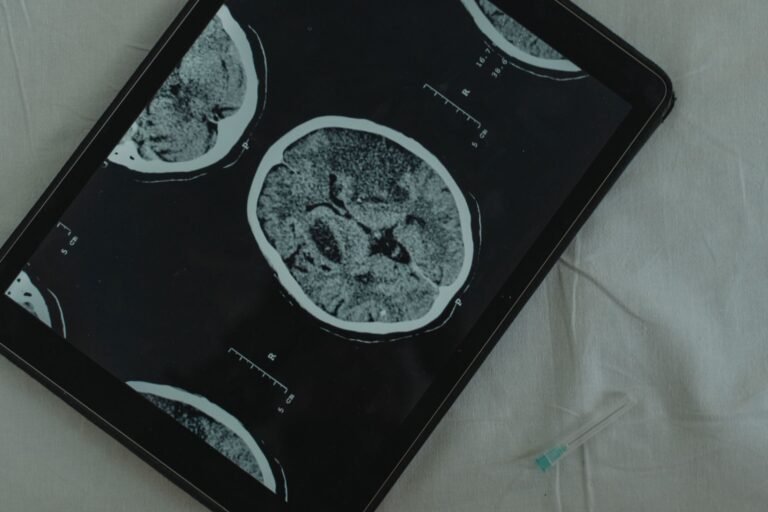
A recent major study found that approximately one in three patients with suspected dementia received a different diagnosis after getting a second opinion, fundamentally changing their medical care and outlook. When researchers reviewed cases using advanced imaging techniques, they discovered that 26% of patients had their diagnosis completely altered, and 75% had their treatment plans changed—a finding that underscores how subjective dementia diagnosis remains despite modern medical technology. This isn’t a rare occurrence or a failure of individual doctors; it reflects a systemic challenge in dementia medicine where early-stage symptoms overlap significantly across different neurological conditions, brain scans can be misinterpreted, and cognitive testing results are sometimes misread.
The stakes are high: a wrong dementia diagnosis means wrong medications, wrong lifestyle modifications, and years of uncertainty for patients and their families. Beyond the headline statistic, what matters is understanding why this happens and what you can do about it. This article examines the research on dementia misdiagnosis, explains the specific diagnostic mistakes most common in clinical practice, and provides practical guidance on when a second opinion could change your family’s entire care trajectory. The good news is that misdiagnosis, while common, is often preventable—and knowing the warning signs can help you advocate for more thorough evaluation.
Table of Contents
- Why Is Dementia So Frequently Misdiagnosed in Clinical Practice?
- How Second Opinions Dramatically Improve Diagnostic Accuracy
- What Kinds of Diagnostic Changes Do Second Opinions Reveal Most Often?
- When Should You Seek a Second Opinion on a Dementia Diagnosis?
- Why Do Patients with Psychiatric Histories Face Higher Misdiagnosis Risk?
- How Do Diagnosis Changes Affect Your Treatment Plan?
- The Future of Dementia Diagnosis and Blood Biomarkers
- Conclusion
- Frequently Asked Questions
Why Is Dementia So Frequently Misdiagnosed in Clinical Practice?
dementia diagnosis has no definitive blood test or single imaging marker that clinicians can point to and declare with certainty. Instead, neurologists and primary care doctors must synthesize information from cognitive testing (which can be affected by depression, anxiety, or poor sleep), brain imaging (which they interpret), patient history, and family observations. A systematic review of dementia misdiagnosis found that approximately 25% of patients initially diagnosed with Alzheimer’s disease actually had something else—and vice versa, with 25% having false negatives where early dementia was missed entirely. The culprits behind these errors are remarkably consistent: misinterpretation of PET scans and MRI findings, failure to administer standardized cognitive tests correctly, and insufficient consideration of the patient’s psychiatric history. One concrete example illustrates this clearly.
A 68-year-old woman presented with memory problems and her initial MRI showed some atrophy in the hippocampus—the brain region associated with Alzheimer’s. Her primary care doctor diagnosed probable Alzheimer’s and recommended donepezil, a common Alzheimer’s medication. Six months later, when she sought a second opinion, advanced PET imaging revealed no amyloid buildup in her brain at all. The diagnosis pivoted to primary age-related tauopathy, an entirely different condition with different treatment implications. The initial diagnosis wasn’t made carelessly; it was a reasonable interpretation of available evidence—but incomplete evidence.

How Second Opinions Dramatically Improve Diagnostic Accuracy
Research from neuroradiology specialists shows that 84% of second-opinion consultations were more accurate than the initial outside interpretations, suggesting that fresh eyes and more detailed analysis catch what was initially missed. When radiologists reviewed the same brain scans a second time—sometimes with additional imaging sequences or in collaboration with other specialists—they identified misread findings, detected subtle pathology the first reader overlooked, or recognized that findings were actually normal for that patient’s age. In some cases, the second opinion revealed the patient had never had amyloid pathology at all, redirecting them away from Alzheimer’s medications entirely.
However, it’s important to recognize that not every second opinion comes from equally qualified readers. The benefit of second opinions is most pronounced when they involve specialists in neuroradiology or behavioral neurology at major academic centers, where radiologists review hundreds of dementia cases annually and have seen the full spectrum of how different dementias appear on imaging. A second opinion from a neurologist in a busy general neurology clinic may not carry the same improvement in accuracy. Additionally, the best second opinions aren’t just re-reading the same images—they involve new imaging (sometimes higher-resolution MRI, PET imaging, or tau-specific scans), updated cognitive testing, and consideration of clinical changes since the original diagnosis.
What Kinds of Diagnostic Changes Do Second Opinions Reveal Most Often?
The most striking finding from recent research involves frontotemporal dementia (FTD), a relatively rare but devastating form of dementia that typically strikes people in their 50s and 60s. A 2025 University of Queensland study found that nearly 70% of patients initially suspected of having frontotemporal dementia actually did not have the disease at all when fully evaluated. Instead, they had Alzheimer’s disease, vascular dementia, or even depression mimicking dementia. This error is particularly consequential because FTD treatments and family implications differ substantially from Alzheimer’s, and families may prepare for an entirely different disease course than they actually face.
The second most common reclassification happens with patients initially diagnosed as having pure Alzheimer’s disease. Advanced imaging reveals they actually have mixed dementia—a combination of amyloid/tau pathology (Alzheimer’s) plus vascular changes, or Lewy body disease, or frontotemporal pathology. Mixed dementia is now recognized as the most common form of dementia in autopsy studies, yet it’s frequently underdiagnosed during life because doctors often anchor on the first pathology they identify and stop looking for others. A patient with both Alzheimer’s and Lewy body pathology, for instance, needs different medication management (because Alzheimer’s drugs can worsen Lewy body symptoms), yet they’re treated as if they only have Alzheimer’s.

When Should You Seek a Second Opinion on a Dementia Diagnosis?
A second opinion makes particular sense in several scenarios. First, if the diagnosis was made by a primary care doctor or geriatrician without specialist neurology input—especially if cognitive testing was limited to a brief office assessment like the Mini-Cog. Second, if imaging was performed but not reviewed by a neuroradiology specialist; many hospital radiologists are generalists who read hundreds of different body parts and may not have the specialized training to spot subtle dementia-related findings. Third, if the patient is young (under 65) at symptom onset, which narrows the differential diagnosis significantly and requires different imaging protocols. And fourth, if the initial diagnosis was made more than 18 months ago and symptoms have progressed differently than expected—dementia courses are variable, but if someone with presumed Alzheimer’s is showing sudden stepwise declines, that suggests vascular dementia instead.
The logistics of obtaining a second opinion are more straightforward than many families expect. You don’t necessarily need to repeat all testing. Request copies of the original brain imaging (MRI, PET, or CT scans) on a CD, along with all prior cognitive test results and the radiologist’s and neurologist’s original reports. These images can then be reviewed by a neuroradiology specialist or behavioral neurologist at an academic medical center, often through remote consultations. Major research centers specializing in dementia, including university hospitals with dedicated cognitive neurology or neuroradiology departments, frequently accept outside case reviews. Most charge a consultation fee ($200–$500 range), which is often less than repeating all testing from scratch.
Why Do Patients with Psychiatric Histories Face Higher Misdiagnosis Risk?
One of the most important—and under-recognized—risk factors for dementia misdiagnosis is an existing psychiatric history. Patients with prior depression, anxiety, or bipolar disorder are more likely to have early cognitive decline attributed to their psychiatric condition rather than recognized as an emerging dementia. A 60-year-old woman with a longstanding history of depression comes to her doctor complaining of memory problems and difficulty concentrating. The doctor attributes these to depression-related cognitive complaints (which are common) and adjusts her psychiatric medications. By the time true dementia is considered years later, significant brain pathology may have progressed. Similarly, a patient with bipolar disorder whose cognitive symptoms emerge might be attributed to residual effects from mood instability or medication side effects, delaying investigation.
This also works in reverse: cognitive symptoms from early dementia are sometimes misattributed to a new psychiatric condition. A 72-year-old man with no prior psychiatric history gradually becomes socially withdrawn, stops engaging in hobbies, and develops what appears to be depression. He’s prescribed an antidepressant and referred to therapy. What was actually happening was early behavioral variant frontotemporal dementia—a dementia type that strikes the emotional and behavioral brain regions before affecting memory. The psychiatric lens delayed a neurological diagnosis by years. The practical lesson here is that any significant new cognitive or behavioral change, even in someone with prior psychiatric diagnosis, deserves neurological evaluation, not just assumption that existing psychiatric conditions explain everything.

How Do Diagnosis Changes Affect Your Treatment Plan?
The 75% figure for treatment plan changes is worth emphasizing because it demonstrates that misdiagnosis isn’t just a label problem—it translates into different medications, different lifestyle recommendations, and different family planning. Consider the practical differences: Alzheimer’s disease is treated with cholinesterase inhibitors (donepezil, rivastigmine) and sometimes memantine, medications that provide modest cognitive slowing. Lewy body dementia, by contrast, requires careful medication selection because antipsychotic drugs—sometimes used for behavioral symptoms in Alzheimer’s—can trigger severe, life-threatening reactions in Lewy body patients.
A patient misdiagnosed with Alzheimer’s who is actually developing Lewy body dementia might receive an antipsychotic to manage confusion, which could trigger neuroleptic malignant syndrome, a medical emergency. Similarly, vascular dementia is fundamentally about preventing future strokes through aggressive blood pressure control, smoking cessation, and sometimes antiplatelet therapy—a very different intervention focus than cognitive decline management. A patient told they have Alzheimer’s might reasonably deprioritize cardiovascular risk factor management, yet if their actual diagnosis is vascular dementia, that’s precisely where treatment efforts should concentrate. The point here is not that the medications or approaches are wrong for the disease they’re intended for, but that matching the right treatment to the right disease is essential for any meaningful benefit.
The Future of Dementia Diagnosis and Blood Biomarkers
The field of dementia diagnosis is shifting toward blood-based biomarkers—tests that measure amyloid, tau, and other proteins directly from a simple blood draw, without needing expensive PET imaging or MRI. These biomarkers are becoming increasingly accurate at identifying the underlying pathology driving symptoms, which could reduce diagnostic errors substantially by moving away from interpretation-dependent imaging. Within the next 3–5 years, blood biomarker testing will likely become more accessible through standard clinical labs, making it easier for any neurologist (not just specialists at academic centers) to confirm the pathological basis of dementia.
However, even as biomarkers improve, they won’t completely eliminate the need for clinical judgment and second opinions. Some patients will have biomarker evidence of pathology without cognitive symptoms (a phenomenon increasingly recognized in autopsy studies), while others will have cognitive decline without classic Alzheimer’s or Lewy body pathology—revealing forms of dementia we don’t yet fully understand. The availability of more precise biomarkers actually makes second opinions even more valuable, because they can now confirm or refute initial impressions with objective testing rather than relying solely on imaging interpretation and clinical assessment.
Conclusion
The finding that one in three dementia patients receive a changed diagnosis upon second opinion isn’t a failure of modern medicine—it’s a reflection of how heterogeneous dementia truly is and how many overlapping conditions can masquerade as each other in their early stages. What the research clearly demonstrates is that seeking specialist evaluation and, when appropriate, a second opinion from a neuroradiology or behavioral neurology specialist can fundamentally change your family’s diagnosis and treatment approach.
Given the stakes—wrong medications, wrong lifestyle modifications, and years of uncertainty—a second opinion isn’t a luxury or a sign of distrust; it’s standard medical practice for a complex, progressive condition. If someone in your family has received a dementia diagnosis, ask yourself: Was it made by a neurologist or a primary care doctor? Did the imaging get reviewed by a specialist? Has the clinical course matched the expected progression, or have there been surprises? If any of those answers suggest the diagnosis might be incomplete, there’s strong evidence that pursuing a specialist second opinion could provide clarity, correct treatment, and more informed planning for the future ahead.
Frequently Asked Questions
How much does a second opinion typically cost?
Second-opinion consultations at academic medical centers usually range from $200 to $500, with some centers offering remote consultations that may be slightly less. This often costs less than repeating all imaging and cognitive testing from scratch. Some insurance plans cover second opinions, particularly if your primary doctor orders the consultation, so check your coverage before scheduling.
Can I get a second opinion without repeating the brain scans?
Yes. Radiologists can review your existing images from a CD or image file, which is often all that’s needed for a radiology second opinion. A neurological second opinion may or may not require new cognitive testing depending on how recent your original tests were and what the specialist wants to assess, but you can ask whether new testing is necessary or if they can work with your existing records.
My family member’s dementia has progressed for three years. Is a second opinion still worth getting?
Yes, potentially. If the clinical course has been atypical (faster or slower than expected, with unusual symptoms), a second opinion might reveal the diagnosis was incomplete or wrong, which could change medication management or family expectations. Even late in the disease, confirming the correct diagnosis can guide care decisions and help families prepare for the likely trajectory ahead.
How long does a neuroradiology second opinion take?
Most academic centers can provide a neuroradiology review within 2–4 weeks of receiving your images and relevant clinical history. Neurological consultations vary but typically require one in-person or remote visit. For urgent concerns, some major medical centers can expedite the process.
What if the second opinion disagrees with the first? How do I choose which diagnosis to believe?
When diagnoses conflict, the most helpful next step is a third opinion from another major center, or a multidisciplinary team consultation (neurology + neuroradiology together). Look for evaluation at an academic medical center with a specialized dementia clinic. The diagnosis that best explains the full clinical picture—imaging findings, cognitive test results, symptom progression, and family history—is usually correct.
You Might Also Like
- Why Getting the Correct Dementia Diagnosis Matters More Than Most Families Realize
- Why Getting the Correct Dementia Diagnosis Matters More Than Most Families Realize
- The Average Time Between First Symptoms and Dementia Diagnosis Is 3 Years and Here Is Why
For more, see NIH MedlinePlus — dementia.