research priorities for home-based dementia care focus on independence at home, safe mobility, simple trusted technology, social connection, and sustainable carer support. For working caregivers, United States policy now centers those same needs through caregiver support, home-based services, respite, and care planning.
Home-based dementia care means help with memory, safety, and daily tasks while the person keeps living at home. It affects work hours, sleep, and family plans. The priorities below show where research and services are moving next.
Medical information disclaimer: This article is for general educational purposes only and does not provide medical advice, diagnosis, or treatment. Always consult a physician or other qualified health professional about symptoms, medications, tests, or treatment decisions.
Table of Contents
- What do people with dementia want most at home?
- How is national policy shifting toward home?
- Why does home care strain working life so much?
- What practical support can you seek now?
What do people with dementia want most at home?
Heriot-Watt University reports that more than 300 people living with dementia and carers across Scotland set five 2026 priorities. The five are independence at home, safe mobility and getting out, simple stable trusted technology, social connection, and sustainable carer support. Those choices shift attention from devices alone to daily life. Independence means cooking, washing, and moving around the house with less help.
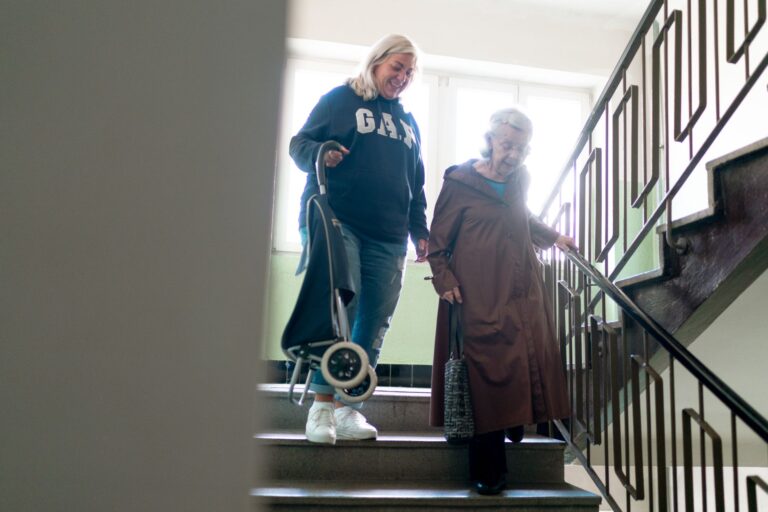
Mobility means leaving home safely and returning without fear. For a working caregiver, this means judging tools by fit, not features. A simple door sensor, clear routine card, or regular neighbor visit often helps more than a complex system. Stable support matters more than new support.
How is national policy shifting toward home?
The Department of Health and Human Services replaced six older goals with four lifespan goals in its national plan update. The goals are risk reduction, discovery and innovation, high-value care, and strengthened services. HHS names the source for both the structure and the home focus. The strengthened-services goal prioritizes caregiver support, long-term supports, home- and community-based services, respite, education, safety, and care planning.
The stated aim is to help families remain at home. That puts work and care on the same planning page. Temporary leave, shift changes, and backup coverage become care tools, not just job issues. A written care plan helps an employer, sibling, or paid aide see who covers each gap.
Why does home care strain working life so much?
The USC Schaeffer Center estimates 5.7 million United States adults over 50 live with dementia in 2026, supported by 5.2 million care partners, in its 2026 cost analysis. Total cost reaches $818 billion, driven largely by quality-of-life losses. The numbers describe one care partner per household cluster, not one-to-one care. A related study in Alzheimer's and Dementia breaks that total into about $320 billion in quality-of-life losses for people with dementia, $15 billion for care partners, and 6.8 billion unpaid hours.
The source frames it as modeled societal cost, not health-system spending alone. Unpaid time carries most of the weight. That helps explain lost focus, missed shifts, and reduced hours. Lost well-being does not appear on a medical bill. It appears in tired evenings and shortened workdays.
What practical support can you seek now?
The Centers for Medicare and Medicaid Services is testing the GUIDE Model from July 1, 2024 to June 30, 2032. The test pays for dementia care coordination, 24/7 access, caregiver education, and respite up to $2,500 per year to delay nursing-home placement. Ask a clinic or Medicare plan whether its practice takes part.
The Alzheimer's Association advises home-care teams to address home safety, communication and decision-making, behavioral symptoms, family caregiver support, and end-of-life and provider self-care. Use that list to guide one short care visit. Bring one problem per item and leave with one named action.
- Home safety: falls, cooking, doors, night waking, medications
- Communication: simple choices, written steps, decision roles
- Behavior: triggers, calm routine, sleep and pain checks
- Caregiver backup: respite hours, night coverage, work contact plan
You Might Also Like
- The 2026 NIA Workshop on Comprehensive Dementia Care Models: A Source-Checked Briefing for Working Dementia Caregivers
- UAS-CLEAR Dementia Care Research Data Priorities in 2026: What Researchers Still Need to Learn for Spouses and Partners
- The Long-Term Care Data Cooperative and Dementia Research in 2026: What Researchers Still Need to Learn for Spouses and Partners