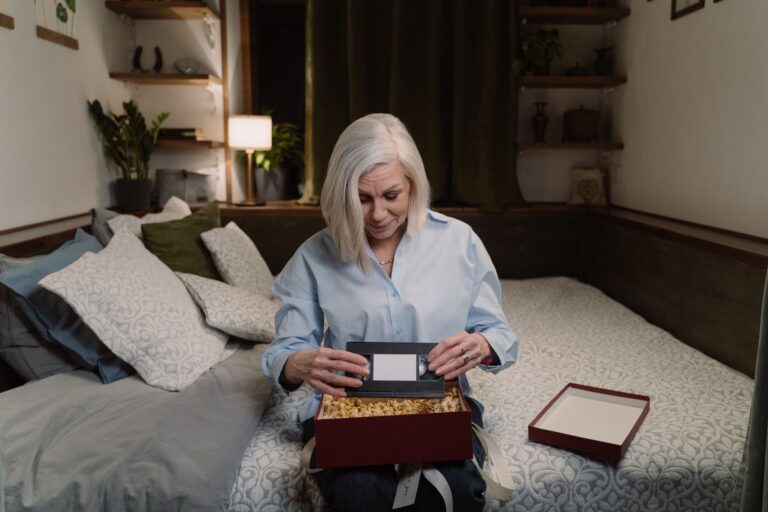
The granddaughter is said to have kept her grandmother's final loving note as a tangible reminder of their relationship. However, no reliable primary source verifies this family or note, so the story remains an unverified personal account. Alzheimer's disease is a progressive brain disorder that damages memory and thinking. It is the most common form of dementia and mainly affects older adults.
Medical information disclaimer: This article is for general educational purposes only and does not provide medical advice, diagnosis, or treatment. Always consult a physician or other qualified health professional about symptoms, medications, tests, or treatment decisions.
Table of Contents
- What the note can—and cannot—show
- How Alzheimer's changes language
- When a speech change needs medical attention
- Preserving communication before words become harder
- Can Alzheimer's treatment restore lost speech?
What the note can—and cannot—show
A handwritten note can preserve a person's words, humor, affection, and familiar handwriting. For relatives, that may make it emotionally valuable long after everyday conversation becomes difficult.
Without firsthand documentation, no one can confirm that this was literally the grandmother's last note. The story also does not show that Alzheimer's caused an abrupt loss of speech. Communication abilities usually change over time, although every person's course differs.
How Alzheimer's changes language
A person may struggle to find words, understand a conversation, or arrange thoughts into sentences. These difficulties can appear at different stages and do not follow one predictable schedule. In severe Alzheimer's, a person may become unable to communicate with words.
Even then, facial expressions, gestures, eye contact, touch, and tone may continue to carry meaning. Families should avoid treating every forgotten word as a milestone. A person may communicate more easily in a quiet setting, with familiar people, or when given enough time to respond.
When a speech change needs medical attention
A sudden communication change should not automatically be blamed on dementia. The Alzheimer's Association advises contacting a clinician because another medical problem or a medication side effect may be responsible. Before making that call, a caregiver can gather useful details:.
- Note when the change began and what became different.
- List current medications and any recent changes.
- Describe whether the problem affects speaking, understanding, or both.
- Avoid assuming that a new symptom is an inevitable part of Alzheimer's.
Preserving communication before words become harder
Families can save meaningful material early, without waiting for a "final" message. Keep handwritten notes, scan important pages, label recordings with dates, and document the gestures or cues a person prefers.
During conversation, the National Institute on Aging recommends eye contact, simple questions, extra response time, and nonverbal methods. Practical approaches include: A recording does not need to be profound to become meaningful. An ordinary greeting, family story, or explanation of a favorite photograph may preserve the person's voice and manner of speaking.
- Ask one question at a time.
- Reduce background noise and distractions.
- Wait instead of immediately supplying a missing word.
- Watch facial expressions and gestures.
- Use gentle touch only when the person welcomes it.
Can Alzheimer's treatment restore lost speech?
Current anti-amyloid treatments slow decline rather than cure Alzheimer's or restore speech that has already been lost. Kisunla, given by intravenous infusion every four weeks, and Leqembi were studied in early symptomatic disease—not advanced communication loss. In the 1,736-person TRAILBLAZER-ALZ 2 trial, donanemab slowed decline over 76 weeks. Participants had early symptoms plus confirmed amyloid and tau, so the results should not be extended to everyone with dementia. ARIA involving brain swelling or fluid occurred in 24% of treated participants and 2.1% of those receiving placebo, according to the JAMA trial report.
ARIA can involve serious and potentially fatal brain swelling or bleeding. The FDA says risk is higher for people with two copies of the APOE ε4 gene and recommends APOE testing before Leqembi treatment. Medicare coverage is not available solely because someone has an Alzheimer's diagnosis. Coverage requires amyloid-confirmed mild cognitive impairment or mild Alzheimer's dementia, qualifying treatment, follow-up, and registry participation. Patients and clinicians can consult the CMS National Patient Registry when evaluating those requirements.