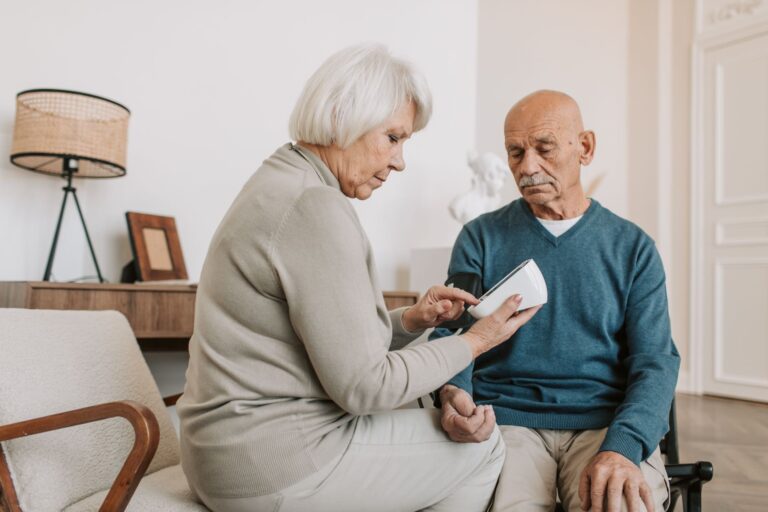
GPS watches and medical alert devices serve different purposes in managing wandering risk for people with dementia, and the best choice often depends on whether your priority is real-time location tracking or guaranteed emergency response. A GPS watch lets you see exactly where your loved one is at any moment and can send you alerts if they wander into a preset zone, making it ideal for someone who still goes out regularly and whose family wants to know their precise location. A medical alert device with fall detection and emergency button focuses less on location and more on immediate human response—when your loved one presses the button or when the device detects a fall, an operator connects them within seconds to emergency services or family members.
The choice isn’t always either-or. Someone with advanced dementia who still leaves the house might benefit from a GPS watch that also has an emergency button, while someone with earlier-stage dementia who still has good judgment might do better with just a medical alert pendant they wear at all times. A man living independently with mild cognitive impairment, for example, might wear a smartwatch-style GPS device to alerts his adult daughter when he leaves a certain neighborhood, giving her peace of mind without making him feel tracked; by contrast, his sister with moderate dementia who lives with family might only need a medical alert device with fall detection because the family is always present and the real risk is an unwitnessed fall or medical emergency.
Medical information disclaimer: This article is for general educational purposes only and does not provide medical advice, diagnosis, or treatment. Always consult a physician or other qualified health professional about symptoms, medications, tests, or treatment decisions.
Table of Contents
- How Wandering Patterns Differ Across Dementia Stages
- GPS Watch Technology and Its Realistic Limitations
- Medical Alert Devices and Emergency Response
- Cost, Practical Needs, and Device Tradeoffs
- Response Time, False Alarms, and Caregiver Burden
- Combining GPS and Medical Alert for Comprehensive Safety
- Matching the Device to Your Loved One’s Current Needs
- Frequently Asked Questions
How Wandering Patterns Differ Across Dementia Stages
Wandering behavior changes as dementia progresses, and this matters enormously for choosing between a GPS watch and a medical alert device. Early-stage dementia might involve someone leaving the house on purpose but then getting lost—they remember wanting to go to the store but forget their address or how to get home. Mid-stage wandering often becomes more purposeless and unpredictable, with the person leaving in search of a deceased spouse, their childhood home, or something they can’t articulate.
Late-stage wandering is often slower and more localized, happening during sundowning in the evening or when they’re confused about where the bathroom is within their own home. GPS watches work best for the mobile phase of dementia when your loved one can still walk, climb into a car, or access public transportation. If the goal is preventing your parent from boarding the wrong bus or walking ten blocks from home, a GPS device is essential. However, if your loved one is primarily at risk for falls, medication emergencies, or wandering only within the home or a care facility where staff are present, a GPS watch provides no added safety—a medical alert device would be far more valuable because it summons immediate help rather than simply showing location.
GPS Watch Technology and Its Realistic Limitations
GPS watches for dementia caregiving typically work by using GPS, cellular data, and sometimes GPS-connected apps on your smartphone to show your loved one’s location in real time on a map. Many devices also let you draw a virtual fence around an area—their home, their care facility, the neighborhood—and receive an alert if they leave it. Sounds perfect on paper, but GPS has real-world limitations that families often discover too late. GPS doesn’t work reliably indoors, in underground areas, or in dense urban canyon environments where tall buildings block satellite signals. If your parent wanders into a parking garage, a basement, or a subway station, you may lose their signal entirely.
The devices themselves are only useful if your loved one actually wears them consistently. Many people with dementia will remove a watch they don’t recognize, hide it, or forget it exists. Someone who is accustomed to not wearing jewelry or watches may find the device uncomfortable or strange. Battery life on GPS watches is typically one to three days, meaning you must remember to charge them daily—if you forget, your tracking goes dark at the exact moment you most need it. GPS watches also cost $30 to $80 per month in subscription fees on top of the $200 to $400 device cost, making them a significant ongoing expense for families already stretching budgets on care.
Medical Alert Devices and Emergency Response
A traditional medical alert system uses a wearable button or pendant that connects to a monitoring center 24 hours a day. When your loved one presses the button or when the device detects a fall, an operator answers within seconds—not minutes. The operator can see the person’s medical history, emergency contacts, and medications on their screen and can call 911, contact family members, or assess whether emergency services are actually needed. This creates an immediate human response chain rather than just transmitting location data. For someone at high risk of falls, stroke, heart attack, or other medical emergencies, this response speed can be the difference between recovery and permanent disability.
Modern medical alert devices go well beyond simple fall detection. Many include GPS as a secondary feature, meaning they can provide location if needed but don’t require GPS as their primary function. They work indoors and outdoors, use longer-lasting batteries (usually five to seven days), and function without requiring your loved one to remember to press a button—fall detection does it automatically. The downside is that fall detection has false alarms—someone sitting down hard or dropping something might trigger a call from the monitoring center, which can be startling. For someone with dementia who is confused by phone calls or interaction with strangers, repeatedly being contacted by a monitoring center operator could cause distress.
Cost, Practical Needs, and Device Tradeoffs
GPS watches typically run $35 to $80 monthly for service plus an initial hardware cost of $200 to $500, adding up to $600 to $1,400 in the first year alone. Medical alert services usually cost $25 to $50 per month for the monitoring and $150 to $300 for the device itself, totaling $450 to $900 annually. However, some medical alert companies offer discounts for family bundles—if you’re providing safety devices for both parents, bundling can reduce costs significantly. GPS watches may be more expensive over time, but they provide something medical alert devices don’t: you know where your loved one is at any moment, which many caregivers find deeply reassuring even if they never act on the information. The practical difference shows up in real situations.
If your parent wanders away from home and you need to know if they’re safe right now, a GPS watch tells you they’re at the grocery store three blocks away—you can go pick them up calmly. Without GPS, you’d call the police for a welfare check and potentially trigger a larger response. On the other hand, if your parent falls in the shower at 2 a.m., a medical alert device alerts someone immediately; a GPS watch sitting in the bedroom on the nightstand does nothing. One family cared for a grandmother with dementia who lived independently with a GPS watch—it worked beautifully for six months until she had a stroke while at home alone. The GPS showed she was there but provided no emergency response. After that incident, they added a medical alert device that could detect the fall and summon help automatically.
Response Time, False Alarms, and Caregiver Burden
Medical alert monitoring creates a specific risk: false alarms. Fall detection algorithms are improving but still generate false positives, especially for people who are active or who sit down quickly. Each false alarm means a monitoring center operator calls your loved one, which can confuse someone with dementia and potentially frighten them. Some people with dementia become anxious after multiple false alarm calls, associating the device with stressful interactions. The monitoring center will also call every emergency contact and potentially send emergency responders if no one answers, creating a chain reaction of worry for nothing.
GPS watches avoid false alarms because they simply report location—there’s no alert unless someone crosses a geofence boundary. However, GPS tracking creates a different psychological burden on caregivers. Knowing your loved one’s location in real time can actually increase anxiety rather than reduce it, especially if they frequently wander into neighborhoods you perceive as unsafe. Some adult children become hypervigilant, checking the app dozens of times daily and feeling unable to sleep or relax. The technology creates the illusion of total safety—”I know where they are”—but doesn’t actually prevent danger; it just delays your response by minutes. Your loved one could still be hit by a car, fall, have a medical emergency, or encounter someone who means them harm; GPS just makes you aware of it faster.
Combining GPS and Medical Alert for Comprehensive Safety
Many families find that using both systems together provides better safety than either alone, even though the cost doubles. A GPS watch or GPS-enabled smartwatch handles location tracking for outdoor wandering, while a medical alert device with fall detection and emergency response handles medical emergencies, falls, and indoor safety. This two-layer approach means you have real-time location data for wandering prevention and also have an automatic emergency response system for falls, heart attacks, or other acute medical events.
One daughter purchased a GPS smartwatch for her father who had early dementia and loved walking in the park, then added a medical alert pendant for her mother in late-stage dementia who was immobilized by arthritis and at high risk for falls. Each device addressed a different risk: the watch caught her dad when he walked toward the highway, and the medical alert pendant called for help when her mom fell getting out of bed. Combined, they cost about $100 monthly, but the daughter felt she could work and sleep without constant fear of missing a critical moment. The tradeoff is complexity—you’re managing charging schedules for two devices, two subscriptions, and two sets of alerts.
Matching the Device to Your Loved One’s Current Needs
The right choice depends on your specific situation, and that situation will likely change as dementia progresses. Someone in early dementia who still drives or takes public transportation needs a GPS device or GPS-capable medical alert watch; the mobility risk is high, and location tracking prevents lost-person searches. Someone in mid-stage dementia who is mobile but supervised most of the time might need GPS for the rare occasions they wander while you’re distracted, plus a medical alert device for fall or medical emergency backup.
Someone in late-stage dementia who is bedridden or lives in a memory care facility where staff are present all day might need only a medical alert device with fall detection, since they’re not at risk for getting lost but are at high risk for falls. Ask yourself what actually threatens your loved one’s safety: Is wandering the problem, or is falling and medical emergencies? Is your loved one physically capable of leaving unsupervised, or are they usually under supervision? Can they wear something consistently, or do they remove unfamiliar objects? Do they respond well to interaction with monitoring center operators, or would repeated phone calls distress them? The answers to these questions, not marketing claims or feature lists, should determine which device you choose. Many families shift from GPS watches to medical alert devices as dementia progresses and mobility declines, and that progression is normal and appropriate—what keeps someone safe in early dementia may not be what keeps them safe in later stages.
- —
Frequently Asked Questions
Can a medical alert device do everything a GPS watch does?
Most modern medical alert devices now include GPS as a secondary feature, but GPS is not their primary function. They’re designed to detect falls and connect to emergency responders rather than provide continuous location tracking. If real-time location monitoring is your main goal, a dedicated GPS watch is more reliable.
What if my loved one refuses to wear a device?
Refusal is extremely common with dementia. GPS watches designed to look like regular smartwatches may feel less strange than large medical alert pendants. Some families try multiple devices before finding one their loved one will tolerate. In advanced dementia, if someone consistently removes any wearable, you may need to rely on supervised care or environmental safety measures instead of tracking devices.
Do I need both a GPS watch and a medical alert device?
Not necessarily, but many caregivers find both worthwhile if budget allows. GPS addresses wandering risk; medical alerts address fall and medical emergency risk. If your loved one is primarily at risk for wandering, GPS alone may suffice. If they’re primarily at risk for falls, a medical alert device is more valuable.
How accurate is GPS for finding someone?
GPS accuracy is typically within 10 to 30 feet outdoors in open areas, but accuracy drops significantly in urban areas, near buildings, or indoors. GPS doesn’t work underground or in dense structures. GPS shows you where someone was, not where they’re going, so even if you see they’re near a highway, you still need to get there and find them in person.
Will a medical alert service call emergency responders automatically?
It depends on the service and the situation. If a fall is detected and your loved one doesn’t answer the operator’s call, most services will automatically dispatch emergency responders to their location. If a person simply presses the button, the operator will first try to assess the situation before calling 911. Some services require specific authorizations to dispatch without confirmation.