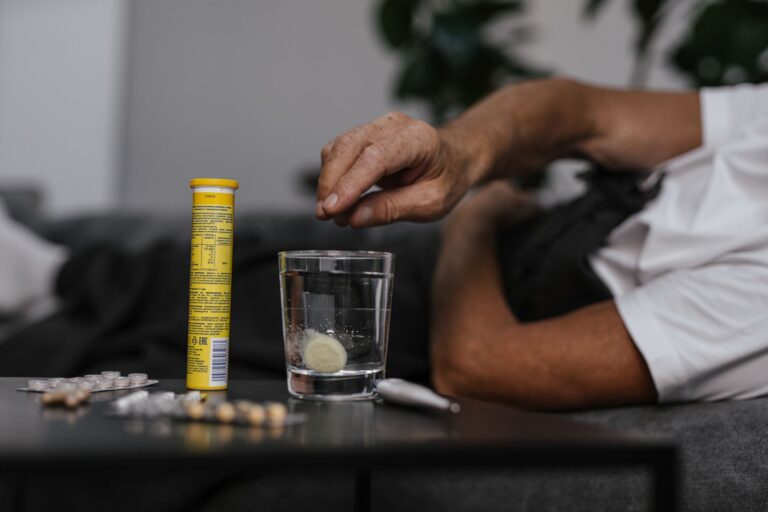
Taking ginkgo with daily aspirin has not been shown to increase bruising or major bleeding in randomized studies, but that does not prove the combination is risk-free. Ginkgo is also not supported as a way to prevent memory loss, and unexplained bruising or bleeding warrants prompt clinical advice. Ginkgo refers here to standardized Ginkgo biloba extracts sold as supplements. Ginkgo carries recognized interaction and bleeding concerns, while daily aspirin can itself cause stomach or brain bleeding.
Medical information disclaimer: This article is for general educational purposes only and does not provide medical advice, diagnosis, or treatment. Always consult a physician or other qualified health professional about symptoms, medications, tests, or treatment decisions.
Table of Contents
- What did aspirin-and-ginkgo studies find?
- What does the larger study tell us?
- Will ginkgo help with memory loss?
- What should someone with bruising or bleeding do?
What did aspirin-and-ginkgo studies find?
A 2007 randomized trial studied 55 older adults taking 325 mg of aspirin daily. Participants added either 300 mg of EGb 761 ginkgo extract or a placebo for four weeks. bruising and bleeding reports were infrequent and similar in both groups.
Researchers also detected no difference in platelet function, which helps the blood form clots, according to the Stanford investigators' aspirin-and-ginkgo trial. The trial offers some reassurance, but it cannot settle the question. With only 55 participants and four weeks of observation, it could easily miss rare or delayed serious bleeding.
What does the larger study tell us?
The Ginkgo Evaluation of Memory, or GEM, trial followed 3,069 adults aged 75 or older. Major bleeding did not differ between those assigned ginkgo and those receiving a placebo. Among aspirin users, bleeding rates were 1.98 events per 100 person-years with ginkgo and 1.76 with placebo.
The difference was not statistically significant, meaning it could reasonably reflect chance, as reported in the GEM safety analysis. These results do not establish that every ginkgo product, dose, or individual situation is safe. They show that the standardized extract tested did not produce a verified increase in major bleeding within this trial.
Will ginkgo help with memory loss?
The evidence does not support ginkgo for preventing dementia. In the GEM trial, 120 mg of ginkgo twice daily did not prevent dementia or Alzheimer disease in older adults with normal cognition or mild cognitive impairment, according to the GEM investigators' JAMA report. NCCIH says ginkgo has not shown conclusive benefit for any condition.
Studies suggesting modest symptom improvement in dementia have produced inconsistent results, while any benefit for milder cognitive impairment remains unclear. That balance matters when bleeding is a concern. A supplement with uncertain cognitive benefit may not justify an uncertain interaction risk without an individualized review.
What should someone with bruising or bleeding do?
Do not assume ginkgo caused the problem, but do not ignore it. Daily aspirin alone can cause serious bleeding, and the FDA advises using it under clinician guidance after weighing cardiovascular benefit against bleeding risk in its aspirin safety guidance.
Contact the prescribing clinician promptly about: Tell the clinician the exact aspirin and ginkgo products and daily doses. Do not stop prescribed aspirin without consulting the prescriber, even if ginkgo is also being taken.
- Unexplained or increasing bruising
- Bleeding that is new or difficult to explain
- Black or bloody stools
- Vomiting blood
- Faintness