Reviewed by the Help Dementia Editorial Team — our editors review every article for accuracy against guidance from the National Institute on Aging, the Alzheimer’s Association, and peer-reviewed sources.
Approach fluticasone sits at the center of this dementia and brain health question.
Fluticasone is an inhaled corticosteroid medication that works by reducing inflammation in the airways, making it one of the most commonly prescribed treatments for asthma patients. For someone diagnosed with moderate persistent asthma, fluticasone can mean the difference between managing symptoms throughout the day and experiencing frequent flare-ups that interfere with work, exercise, and sleep. A practical example: a 45-year-old with allergic asthma who starts fluticasone propionate inhaler twice daily often notices within two to three weeks that they no longer need their rescue inhaler as frequently, can walk up stairs without wheezing, and experience fewer nighttime awakenings related to asthma symptoms.
Fluticasone comes in several formulations and strengths, designed to work as a controller medication that prevents asthma symptoms before they start, rather than treating an active attack. Unlike quick-relief inhalers like albuterol, which provide immediate relief during an asthma attack, fluticasone is taken regularly on a schedule to maintain baseline control and reduce airway inflammation over time. Understanding how to use fluticasone correctly, what to expect in terms of improvements, and what side effects to monitor for is essential information for anyone managing asthma.
Table of Contents
- How Does Fluticasone Work to Manage Asthma Symptoms?
- The Benefits and Important Limitations of Fluticasone Therapy
- Proper Inhaler Technique and Administration for Maximum Effectiveness
- Managing Side Effects and Monitoring Your Response to Treatment
- Drug Interactions and Important Medication Considerations
- Comparing Fluticasone to Other Asthma Controller Medications
- Long-Term Asthma Management and Evolving Treatment Options
- Conclusion
How Does Fluticasone Work to Manage Asthma Symptoms?
Fluticasone reduces inflammation by entering the airways and binding to glucocorticoid receptors in immune cells, essentially calming the overactive immune response that characterizes asthma. In people with asthma, the airways are chronically inflamed and overly sensitive to triggers like allergens, cold air, or exercise. When fluticasone is inhaled directly into the lungs twice daily, it reduces the number of inflammatory cells in the airway tissue and decreases the production of inflammatory chemicals.
This means fewer swollen airways, less mucus production, and a significantly reduced risk of asthma attacks. The medication typically takes several days to reach full effectiveness, which is why doctors emphasize that fluticasone is not a quick-relief medication and that patients should not stop taking it just because they feel better. A comparison to help explain this: if asthma is like a fire burning in your airways, albuterol is the fire extinguisher you use when flames appear, while fluticasone is the sprinkler system running continuously to prevent fires from starting in the first place. Different formulations include fluticasone propionate (most common for maintenance inhalers) and fluticasone furoate (found in newer combination inhalers), each with slightly different absorption rates and potency.

The Benefits and Important Limitations of Fluticasone Therapy
The primary benefit of fluticasone is substantial: studies show that people who take daily inhaled corticosteroids have approximately 50 percent fewer asthma exacerbations requiring emergency care compared to those relying only on rescue inhalers. For people with moderate to severe asthma, this medication can be life-changing, allowing them to participate in sports, maintain regular work schedules, and reduce healthcare costs associated with emergency room visits and hospitalizations. Many patients report improved sleep quality, increased exercise tolerance, and a general sense of having their asthma “under control” for the first time.
However, fluticasone does have limitations that patients should understand. Some people experience a sore throat or hoarseness due to local irritation from the inhaler itself, which typically resolves with proper technique and rinsing the mouth after each use. Another important limitation is that fluticasone may take two to four weeks to show maximum benefit, which frustrates patients who expect immediate relief like they get from their rescue inhalers. Additionally, for some people with very mild asthma or intermittent symptoms, the daily commitment and cost of a maintenance inhaler may not be necessary, and a controller medication prescribed only during allergy season or before anticipated triggers might be more appropriate.
Proper Inhaler Technique and Administration for Maximum Effectiveness
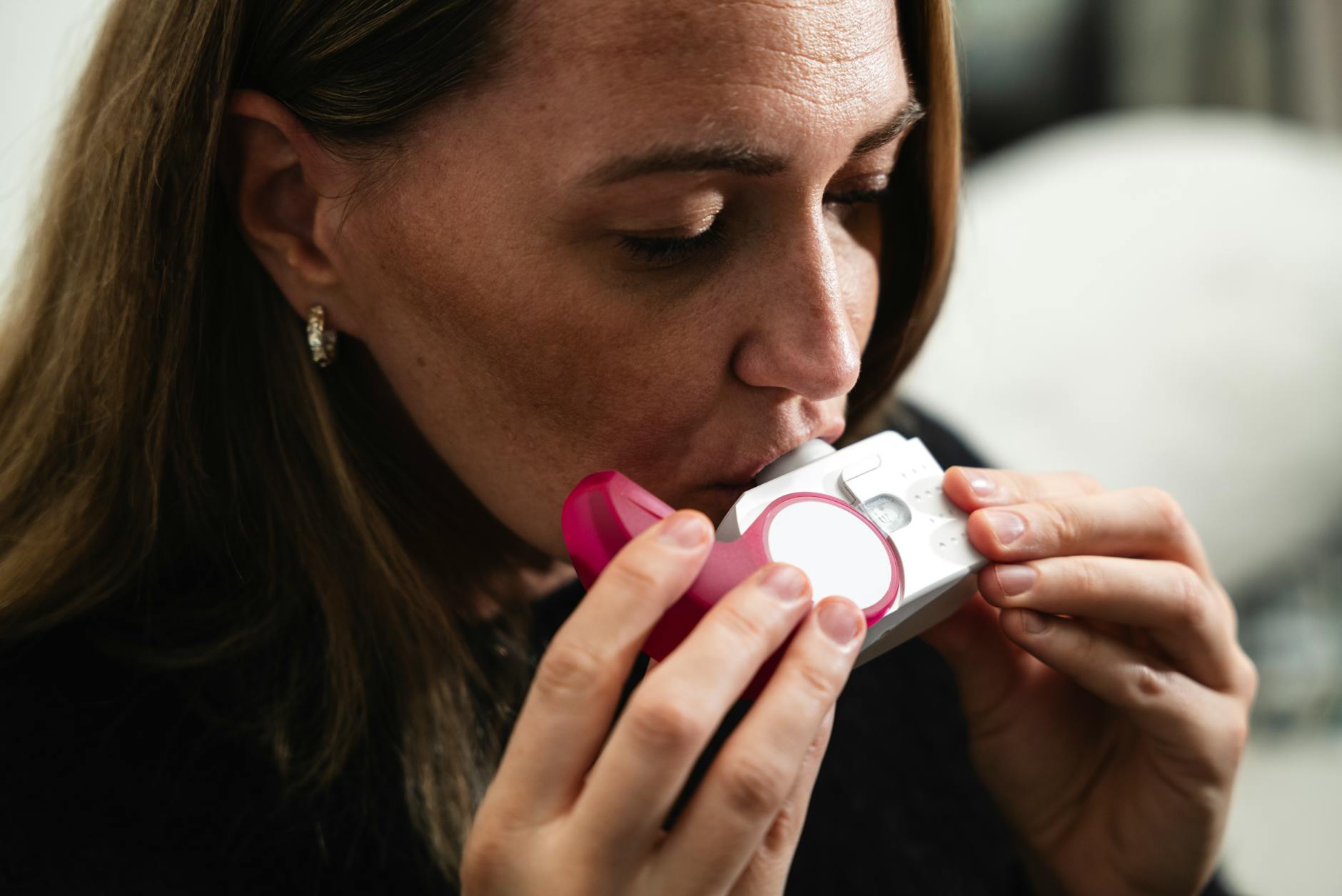
Correct inhaler technique is absolutely critical for fluticasone to work effectively, yet studies show that 50 to 70 percent of people using inhalers have technique problems. To use a metered-dose inhaler (MDI) properly, the patient should exhale fully, place the inhaler in the mouth with lips sealed tightly around the mouthpiece, press down on the canister while beginning to inhale slowly and deeply, hold their breath for 10 seconds, and then exhale slowly. Many people make the mistake of inhaling too quickly, which causes the medication to deposit in the mouth and throat rather than reaching the smaller airways where it’s needed. For patients who struggle with MDI technique, a spacer device is highly recommended.
A spacer is a tube that attaches to the inhaler and serves as a holding chamber, allowing the medication particles to slow down and become more respirable. A practical example: an elderly patient or someone with arthritis who has difficulty with coordination can benefit enormously from using a spacer, as they no longer need to precisely time inhalation with pressing the canister. The spacer holds the medication until they breathe in, making the technique much easier and more forgiving. Some patients use combination inhalers like Fluticasone/Vilanterol (Breo Ellipta), which use a dry powder inhaler that requires a different technique—a forceful inhalation—so patients switching from an MDI to a dry powder inhaler need education on the different method.
Managing Side Effects and Monitoring Your Response to Treatment
The most common side effect from fluticasone is a mild sore throat or hoarseness, which can be almost completely prevented by rinsing your mouth with water immediately after each use—a simple but essential step that many patients skip. Some people report a slight cough when they first start the medication, which usually subsides within a few days as the airways adjust. The tradeoff to understand here is that while these local side effects are annoying, they are mild and temporary for most people, and they need to be weighed against the very significant benefit of preventing asthma exacerbations.
Systemic side effects from fluticasone used as an inhaler are rare because most of the medication deposits in the lungs and only a small amount is absorbed into the bloodstream. However, at high doses or in sensitive individuals, there is a potential for effects like bone density loss (particularly important to monitor in postmenopausal women), increased blood sugar levels, or effects on growth in children—though this last concern has become less prominent as research shows that most children grow normally on inhaled corticosteroids. Patients starting fluticasone should have a follow-up appointment with their doctor within two to four weeks to assess how well the medication is working and whether the dose needs adjustment. If a patient finds they still need their rescue inhaler more than twice a week, this is a sign that the fluticasone dose is insufficient or that the asthma is more severe than initially thought.
Drug Interactions and Important Medication Considerations
Fluticasone itself has relatively few dangerous drug interactions, but patients taking other medications should still inform their doctor and pharmacist. If someone is also taking strong CYP3A4 inhibitors like ritonavir (an HIV medication), the fluticasone levels in the body can increase significantly, potentially leading to systemic corticosteroid effects. This is a warning that applies specifically to people on certain HIV or fungal infection medications, where doctors may need to choose a different asthma controller or monitor more carefully. For most people on common medications like blood pressure drugs, diabetes medications, or other inhalers, there are no significant interactions to worry about.
One important limitation to note is that using fluticasone does not mean a patient should stop carrying and using their rescue inhaler. This is a common misunderstanding—the rescue inhaler remains essential for acute symptoms. If someone finds they need their rescue inhaler frequently even while taking fluticasone regularly, it indicates their asthma is not well controlled and they should contact their doctor. Additionally, patients should not suddenly stop fluticasone without speaking to their doctor, as this can lead to rebound inflammation and worsening asthma control within days or weeks of discontinuation.

Comparing Fluticasone to Other Asthma Controller Medications
Fluticasone is generally considered a first-line or preferred initial treatment for persistent asthma, but it’s not the only option. Other inhaled corticosteroids like budesonide or beclomethasone work similarly and may be chosen based on cost, availability, or individual response.
For patients who do not respond adequately to fluticasone alone, doctors typically add a second medication like a long-acting beta-agonist (creating a combination inhaler like Fluticasone/Salmeterol) or a leukotriene receptor antagonist like montelukast. A specific example: a patient with asthma triggered mainly by allergies might benefit from combining fluticasone with montelukast, whereas a patient with exercise-induced asthma might do better with fluticasone combined with a long-acting beta-agonist that helps relax airways during exertion.
Long-Term Asthma Management and Evolving Treatment Options
For many patients, fluticasone provides excellent long-term control when used consistently, with some patients maintaining stable asthma for years or even decades on the same dose. However, asthma is a dynamic condition that can worsen with age, change with environmental factors, or improve if triggers are successfully avoided or managed.
Forward-looking newer treatments include biologic medications like omalizumab for allergic asthma or mepolizumab for eosinophilic asthma, which target specific immune pathways and may provide better control for patients who don’t respond adequately to traditional inhaled corticosteroids. These newer options represent an important evolution in asthma care, though they are typically reserved for moderate to severe cases and are considerably more expensive than fluticasone.
Conclusion
Fluticasone is an effective, well-established treatment for asthma that works by reducing airway inflammation and preventing symptoms before they start, making it an essential medication for millions of people managing persistent asthma. The key to success with fluticasone is proper inhaler technique, consistent daily use, and regular follow-up with a healthcare provider to ensure the dose is appropriate and symptoms are well controlled.
While side effects are generally mild, patients should understand that this medication is a maintenance tool, not a quick-relief option, and that their rescue inhaler remains important even while taking fluticasone regularly. If you have asthma, a conversation with your doctor about whether fluticasone is appropriate for your specific situation is the next practical step. Your doctor can assess your asthma severity, explain how fluticasone fits into your overall treatment plan, and ensure you receive proper education on correct inhaler technique—a small investment in learning the right way to use your inhaler can make the difference between good asthma control and ongoing struggles with symptoms.
You Might Also Like
- Why Pharmacists Often Recommend Generic Neo-Synephrine
- Triamcinolone: Can It Be Used to Reduce Allergy Symptoms?
- Dry Winter Months Survival: Why Levocetirizine Keeps Coming Up
For more, see Alzheimer’s Association — medical tests.