Physical activity is one of the most powerful, accessible, and well-studied interventions available for reducing the risk of dementia and supporting brain health across the lifespan. According to the World Health Organization, physical inactivity is estimated to contribute to approximately 5 percent of dementia cases worldwide, making it one of the key modifiable risk factors alongside hypertension, diabetes, and social isolation. Yet despite this compelling evidence, fewer than one in four adults over the age of 65 meets the recommended guidelines for weekly physical activity. This guide exists to bridge that gap between what the science tells us and what individuals and caregivers can realistically do each day. This pillar guide is designed to serve as the most comprehensive resource on this site for understanding how exercise and physical activity relate to dementia prevention, symptom management, and overall brain health.
Whether you are a middle-aged adult looking to reduce your long-term risk, a caregiver supporting a loved one who has already received a diagnosis, or a healthcare professional seeking evidence-based recommendations to share with patients, this guide provides the depth and breadth of information you need. We draw on peer-reviewed research, clinical guidelines, and practical wisdom from dementia care specialists to present a complete picture. The relationship between physical activity and cognitive health is not a simple one. Different types of exercise affect the brain through different biological mechanisms. Aerobic activity improves cardiovascular function and promotes the growth of new neurons.
Resistance training strengthens neural pathways involved in memory and executive function. Balance and coordination work reduces fall risk, which is one of the leading causes of hospitalization and accelerated cognitive decline in older adults. Mind-body practices like yoga and tai chi address the stress, anxiety, and sleep disruption that often accompany or exacerbate dementia. Each of these modalities has a role to play, and this guide explores all of them in detail. Throughout the sections that follow, you will find specific research findings, practical exercise recommendations for every stage of cognitive ability, strategies for overcoming common barriers, and guidance for building routines that last.
We also link extensively to related articles on this site that explore individual topics in greater depth. Our goal is not to overwhelm you with information but to equip you with the knowledge and confidence to take meaningful action, whether that means lacing up walking shoes for a daily stroll or helping a parent with moderate dementia participate in a seated exercise program.
What This Guide Covers
- The Scientific Evidence Linking Exercise to Brain Health
- Aerobic Exercise and Cognitive Protection
- Strength Training and Balance for Dementia Patients
- Walking Programs and Their Brain Benefits
- Chair Exercises and Seated Activities
- Yoga, Tai Chi, and Mind-Body Approaches
- Exercise Programs for Different Dementia Stages
- Overcoming Barriers to Physical Activity
- Social Engagement Through Group Exercise
- Creating a Sustainable Exercise Routine
- Conclusion
- Frequently Asked Questions
The Scientific Evidence Linking Exercise to Brain Health
The evidence connecting regular physical activity to improved brain health and reduced dementia risk has grown substantially over the past two decades. Large-scale longitudinal studies, randomized controlled trials, and meta-analyses have consistently demonstrated that physically active individuals have a significantly lower risk of developing Alzheimer’s disease and other forms of dementia compared to their sedentary counterparts. A landmark 2020 meta-analysis published in the journal Neurology, encompassing data from over 400,000 participants, found that individuals who engaged in regular moderate-to-vigorous physical activity had a 30 to 35 percent lower risk of cognitive decline compared to those who were inactive. The biological mechanisms underlying these benefits are multifaceted and continue to be the subject of active research. Exercise increases blood flow to the brain, which ensures that neurons receive the oxygen and glucose they need to function optimally.
Physical activity also stimulates the release of brain-derived neurotrophic factor (BDNF), a protein that supports the survival of existing neurons and encourages the growth of new ones, particularly in the hippocampus, the brain region most closely associated with learning and memory. For a deeper exploration of these cardiovascular and neurological connections, see The link between cardiovascular exercise and brain health. Beyond BDNF, exercise reduces chronic inflammation, lowers cortisol levels, and improves insulin sensitivity, all of which are implicated in the pathology of Alzheimer’s disease. Research has shown that regular physical activity helps reduce the accumulation of amyloid-beta plaques and tau protein tangles, the hallmark biomarkers of Alzheimer’s. A 2023 study from the University of Southern California demonstrated that adults who maintained consistent exercise habits over a ten-year period had measurably lower concentrations of these toxic proteins in their cerebrospinal fluid.
It is also worth noting that the cognitive benefits of exercise are not limited to those who begin exercising early in life. While the greatest protective effects are associated with lifelong physical activity, research has shown that even individuals who begin exercising in their 60s and 70s can experience meaningful improvements in cognitive function, processing speed, and memory. This is an encouraging finding for those who may feel that it is too late to start. The brain retains a remarkable capacity for adaptation throughout the lifespan, and physical activity is one of the most effective ways to harness that plasticity. As explored in Investigating the Connection Between Cardiovascular Exercise and Cognitive Function, the relationship between physical fitness and mental acuity holds across age groups and fitness levels.

Aerobic Exercise and Cognitive Protection
Aerobic exercise, sometimes called cardiovascular or cardio exercise, refers to any sustained physical activity that elevates the heart rate and increases oxygen consumption. Walking, swimming, cycling, dancing, and jogging are all common examples. Of all the exercise modalities studied in the context of dementia prevention, aerobic exercise has the most robust evidence base. A 2022 systematic review published in the British Journal of Sports Medicine concluded that aerobic exercise was the single most effective type of physical activity for improving global cognition in older adults, with particularly strong effects on executive function and processing speed. The protective mechanism of aerobic exercise centers on its effects on the cardiovascular system and, by extension, the cerebrovascular system. The brain accounts for approximately 20 percent of the body’s total oxygen consumption despite representing only about 2 percent of body weight.
Maintaining healthy blood vessels and efficient cardiac output is therefore essential for sustaining cognitive function as we age. For more on this relationship, How Does Cardiovascular Fitness Affect Dementia provides a detailed examination of the evidence. Regular aerobic exercise strengthens the heart, reduces arterial stiffness, lowers blood pressure, and improves the health of the endothelial cells that line blood vessels throughout the brain. Research from the Mayo Clinic and other institutions has shown that higher levels of aerobic fitness, often measured by VO2 max, are associated with greater hippocampal volume and better performance on memory tests. A 2019 study found that for every one-unit increase in VO2 max, the risk of dementia decreased by approximately 7 percent. These findings underscore the importance of not just being active but working toward measurable improvements in cardiovascular fitness.
To learn about training methods that build this capacity, see How VO2 Max Workouts Improve Cardiovascular Capacity. Current guidelines recommend that adults aim for at least 150 minutes of moderate-intensity aerobic activity or 75 minutes of vigorous-intensity aerobic activity per week. For older adults, this might look like 30 minutes of brisk walking five days per week, or three 25-minute sessions of swimming or cycling. The key is consistency over time rather than occasional bursts of intense activity. Research comparing different frequencies and durations suggests that spreading exercise throughout the week provides more sustained neurocognitive benefits than concentrating the same total volume into one or two sessions. It is also worth understanding how the aging process itself interacts with exercise capacity, a topic covered in How does aging impact cardiovascular health and exercise tolerance.
For individuals who are navigating the intersection of hormonal changes and cardiovascular health, it is important to recognize that menopause, for example, can affect exercise tolerance and cardiac risk. This is addressed in How Does Menopause Influence Cardiovascular Fitness, which discusses how women can adapt their exercise strategies during this transitional period.
Strength Training and Balance for Dementia Patients
While aerobic exercise receives the majority of attention in discussions about brain health, resistance training and balance exercises offer distinct and complementary benefits that are essential for individuals with dementia or those at risk of developing it. Strength training, which involves working muscles against some form of resistance such as weights, bands, or body weight, has been shown to improve cognitive function independently of aerobic exercise. A 2022 randomized controlled trial published in the Journal of the American Geriatrics Society found that older adults who participated in resistance training twice per week for six months demonstrated significant improvements in attention, associative memory, and conflict resolution compared to a stretching-only control group. For a comprehensive overview of this evidence, see Strength Training for the Brain: How Resistance Training Supports Memory. The mechanisms by which resistance training benefits the brain differ somewhat from those of aerobic exercise. While aerobic activity primarily improves cerebrovascular function and BDNF levels, resistance training appears to work in part through the regulation of insulin-like growth factor 1 (IGF-1), the reduction of inflammatory cytokines, and improvements in hormonal balance.
These pathways are explored further in How Resistance Training Strengthens the Brain. One important practical consideration is that many older adults, particularly those with cognitive impairment, can safely perform resistance exercises with appropriate guidance. Resistance bands, for instance, are a low-cost, portable, and highly adaptable tool for building strength. Learn more about this approach in Can exercise bands be used to strengthen muscles for fall prevention?. Balance and coordination training deserve special emphasis in the context of dementia care. Falls are one of the most common and serious complications of dementia, with individuals who have Alzheimer’s disease being two to three times more likely to fall than cognitively healthy peers.
The consequences of falls, including hip fractures, head injuries, hospitalization, and loss of independence, can accelerate cognitive decline dramatically. For this reason, incorporating exercises that specifically target balance and coordination is not optional but essential. More detail on this topic is available in What types of exercises strengthen balance and coordination in seniors?. When comparing the relative benefits of aerobic and resistance training, the evidence increasingly suggests that a combined approach is superior to either modality alone. A 2021 study comparing participants who did aerobic exercise only, resistance training only, or a combination found that the combined group showed the greatest improvements in global cognition, memory, and functional independence. For a detailed analysis of these findings, see Comparing Aerobic and Resistance Training for Brain Health.

Walking Programs and Their Brain Benefits
Walking is arguably the most accessible and sustainable form of exercise for older adults, and the evidence for its cognitive benefits is compelling. Unlike gym-based activities that may require equipment, memberships, or transportation, walking can be done almost anywhere, at any time, with no special gear beyond a comfortable pair of shoes. For individuals with dementia or mild cognitive impairment, walking programs offer a low barrier to entry and can be adapted to virtually any level of physical ability. A 2020 study published in JAMA Neurology followed more than 78,000 adults over a seven-year period and found that those who walked at least 9,800 steps per day had a 50 percent lower risk of developing dementia compared to sedentary individuals.
Even those who walked as few as 3,800 steps per day showed a 25 percent risk reduction. The study also found that walking speed mattered: participants who walked at a pace of at least 40 steps per minute, roughly equivalent to a purposeful walk, had the strongest protective effects regardless of total step count. Structured walking programs have been implemented in care settings around the world with positive results. In assisted living facilities, daily guided walks have been shown to reduce agitation, improve sleep quality, and slow the decline in activities of daily living among residents with dementia.
Outdoor walking programs offer the additional benefits of sunlight exposure, which supports vitamin D synthesis and circadian rhythm regulation, and exposure to natural environments, which has been independently associated with reduced stress and improved mood. Walking in groups adds a social dimension that further supports cognitive engagement, a topic discussed in the section on social exercise below. For caregivers looking to establish a walking routine with a loved one who has dementia, practical considerations include choosing familiar and safe routes, walking during the time of day when the person is most alert and cooperative, and gradually increasing distance and pace as tolerated. Using landmarks and conversation during walks can provide additional cognitive stimulation.
It is also helpful to frame walking not as exercise but as an enjoyable shared activity, such as walking to a favorite coffee shop or through a nearby park. For guidance on encouraging physical activity in a loved one with dementia, see How do I help my loved one understand that routine physical activity is important for their mobility?.
Chair Exercises and Seated Activities
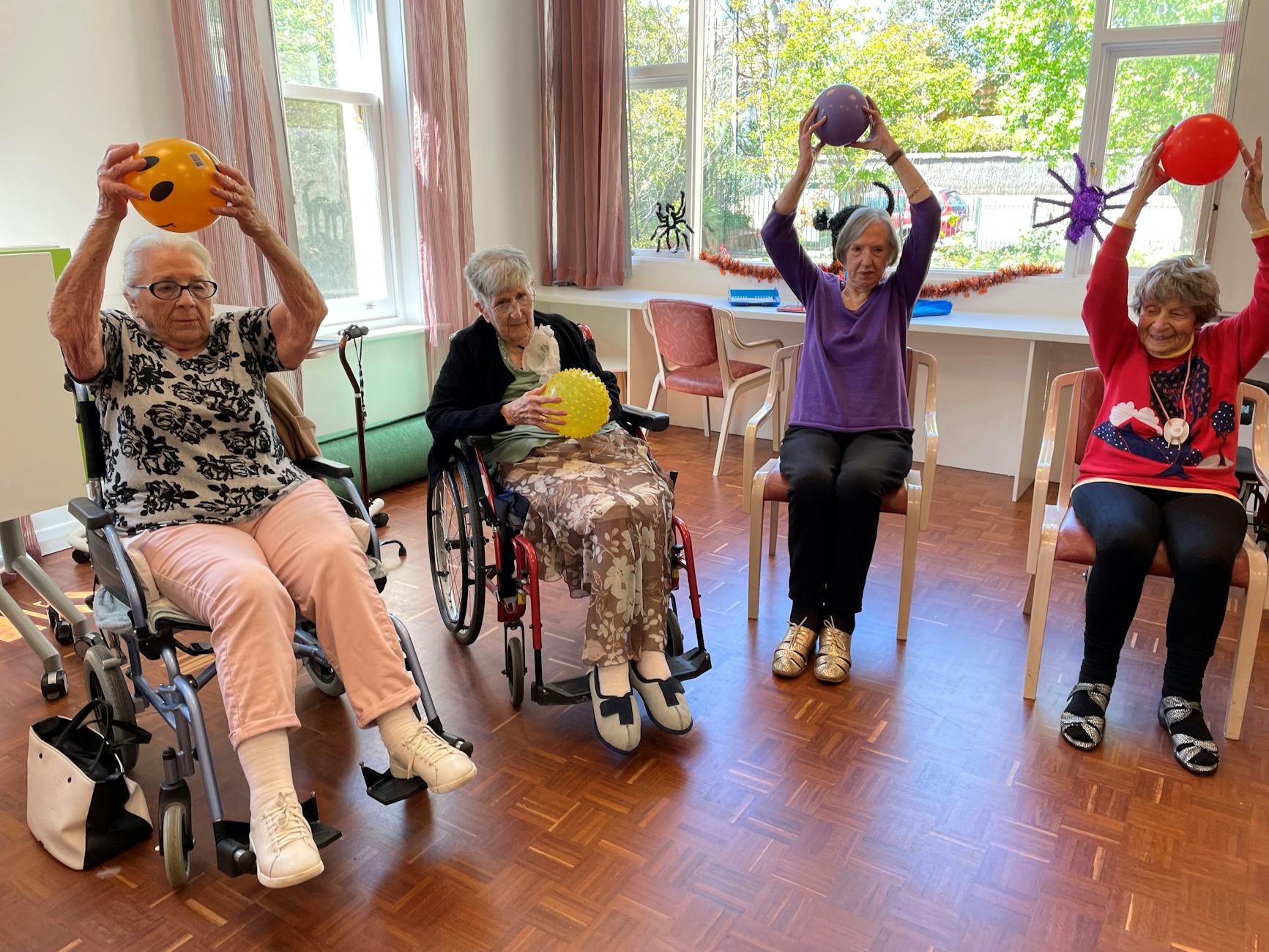
Not all individuals with dementia are able to participate in standing or ambulatory exercise. For those with advanced mobility limitations, significant fall risk, wheelchair dependence, or other physical constraints, chair-based exercises provide a viable and beneficial alternative. Seated exercise programs can improve upper body strength, maintain joint range of motion, enhance circulation, and provide meaningful cognitive and emotional benefits. A typical chair exercise session might include seated marching, arm raises with or without light weights, ankle circles, seated torso rotations, and gentle stretching of the neck, shoulders, and back.
These movements can be performed independently or with the guidance of a caregiver, exercise professional, or video program. Research published in the Journal of Aging and Physical Activity found that older adults who participated in chair-based exercise programs three times per week for 12 weeks showed significant improvements in grip strength, shoulder flexibility, and self-reported well-being compared to a non-exercising control group. For individuals with dementia, the structure and familiarity of a seated exercise routine can be particularly valuable. Repetition helps compensate for memory difficulties, and the predictability of the activity can reduce anxiety and confusion.
Music can be incorporated into chair exercise sessions to improve engagement and enjoyment. Studies have shown that exercising to music, even at a seated level, activates brain regions associated with memory, rhythm processing, and emotional regulation, areas that are often relatively preserved even in moderate-to-advanced dementia. Caregivers and activity coordinators should prioritize safety during chair exercises by ensuring that the chair is stable and positioned on a non-slip surface, that movements are performed slowly and within a comfortable range, and that the person is not experiencing pain or dizziness. Simple modifications, such as using a towel or resistance band for stretching assistance, can make exercises more accessible.
For broader information on the benefits of flexibility work for older adults, see What are the benefits of regular stretching or flexibility exercises for older adults. The goal is not performance but participation, maintaining the habit of moving the body in a purposeful and enjoyable way.
Yoga, Tai Chi, and Mind-Body Approaches
Mind-body practices such as yoga, tai chi, and qigong represent a unique category of exercise that integrates physical movement with breath control, mental focus, and meditative awareness. These practices have deep historical roots in Eastern traditions, and modern research has increasingly validated their benefits for cognitive health, emotional well-being, and physical function in older adults. For individuals with dementia or at risk of developing it, mind-body exercises address several dimensions of health simultaneously, making them particularly well suited to holistic dementia care. Yoga, when adapted for older adults, emphasizes gentle postures, controlled breathing, and relaxation techniques. A 2020 meta-analysis published in the International Journal of Geriatric Psychiatry found that regular yoga practice was associated with significant improvements in attention, processing speed, and executive function in adults over 60.
Yoga has also been shown to reduce cortisol levels, improve sleep quality, and decrease symptoms of depression and anxiety, all of which are common in individuals with cognitive impairment. For practical guidance on incorporating yoga into a care routine, see Practice gentle exercises like yoga or tai chi to improve balance and coordination. Those interested in yoga’s specific role in preventing falls will find valuable information in Can yoga support balance and flexibility for fall prevention?. Tai chi, a slow-motion martial art characterized by flowing sequences of movements, has an equally strong evidence base. A 2019 randomized controlled trial involving 300 older adults found that those who practiced tai chi three times per week for six months had significantly better balance, lower rates of falls, and improved cognitive scores compared to those who performed conventional stretching.
Tai chi’s emphasis on weight shifting, turning, and coordination challenges the neuromuscular system in ways that are directly relevant to fall prevention. A detailed look at these benefits is available in The Benefits of Tai Chi for Balance and Flexibility. One of the greatest advantages of mind-body practices is their adaptability. Yoga and tai chi can both be performed standing, seated, or even lying down, making them accessible to individuals across the spectrum of physical and cognitive ability. Many community centers, senior centers, and memory care facilities now offer classes specifically designed for older adults or individuals with dementia.
For those unable to attend in-person classes, numerous video-guided programs are available. The social and meditative aspects of these practices provide benefits that extend well beyond the physical, supporting the emotional resilience and sense of purpose that are so important for people living with or at risk for dementia.
Exercise Programs for Different Dementia Stages
One of the most important principles in exercise programming for dementia is that physical activity should be adapted to the individual’s current abilities, preferences, and stage of cognitive impairment rather than applied as a one-size-fits-all prescription. What is appropriate and beneficial for someone with mild cognitive impairment may be unsafe or impractical for someone with advanced Alzheimer’s disease. Understanding how to modify exercise across the dementia continuum is essential for caregivers, healthcare providers, and the individuals themselves. In the early or mild stage, many individuals retain substantial physical and cognitive capacity. They may be able to follow multi-step instructions, exercise independently or with minimal supervision, and participate in a wide range of activities including walking, swimming, cycling, group fitness classes, and light resistance training. The primary goal at this stage is to establish a consistent routine that the person finds enjoyable and sustainable, as this increases the likelihood that the habit will persist as the disease progresses.
This is also the optimal time to build cardiovascular fitness. Understanding the broader relationship between fitness and cognitive aging is discussed in The link between cardiovascular fitness and mental aging. In the moderate stage, individuals may begin to experience difficulties with complex or unfamiliar tasks, reduced attention span, and increased confusion in new environments. Exercise programs should be simplified, with shorter sessions, fewer steps per exercise, and more verbal and visual cueing from a caregiver or instructor. Familiar activities are preferable to new ones, and the environment should be calm, uncluttered, and free of hazards. Walking programs, simple resistance band exercises, and guided chair exercises are often well tolerated at this stage.
For broader strategies on maintaining physical activity during the middle stages, see Strategies for supporting mobility and physical activity in dementia. In the advanced or severe stage, the focus shifts from structured exercise to supported movement and sensory engagement. Gentle range-of-motion exercises performed by a caregiver, seated rhythmic movement to music, hand squeezing with a soft ball, and assisted standing or walking with support can all contribute to maintaining circulation, preventing contractures, and providing positive sensory experiences. Even at this stage, the benefits of movement should not be underestimated. Research has shown that individuals with advanced dementia who receive regular physical stimulation have lower rates of agitation, fewer sleep disturbances, and better nutritional intake compared to those who remain sedentary. The impact of balance and coordination work across the spectrum of Alzheimer’s care is explored in Exploring the impact of balance and coordination exercises on Alzheimer’s care.
Overcoming Barriers to Physical Activity
Despite the clear benefits of physical activity for brain health, numerous barriers prevent older adults and individuals with dementia from engaging in regular exercise. Understanding these barriers and developing practical strategies to address them is essential for translating research findings into real-world improvements in health and quality of life. Fear of falling is one of the most commonly cited barriers to physical activity among older adults, and this fear is often heightened in individuals with dementia who may already have experienced a fall or who have impaired spatial awareness. Paradoxically, the best way to reduce fall risk is to exercise regularly, particularly with activities that improve balance, strength, and coordination. Starting with chair-based exercises or supported standing activities and gradually progressing to more challenging movements can help build confidence. Incorporating exercises that specifically target balance and coordination is critical, as discussed in Stay physically fit by incorporating exercises specifically targeting balance and coordination.
Apathy and lack of motivation are hallmark behavioral symptoms of many forms of dementia, particularly frontotemporal dementia and moderate-to-advanced Alzheimer’s disease. Individuals may not initiate physical activity on their own even if they previously enjoyed it. Caregivers can address this by providing gentle prompting, establishing a consistent routine at the same time each day, using music or social engagement to make activity more appealing, and focusing on activities the person has historically enjoyed. It is also important for caregivers to manage their own expectations and recognize that even a few minutes of movement is better than none. Physical comorbidities such as arthritis, heart disease, chronic pain, and peripheral neuropathy can make exercise uncomfortable or seem risky. However, most chronic conditions are improved rather than worsened by appropriate physical activity.
Working with a physician or physical therapist to develop a safe exercise plan that accounts for these conditions is strongly recommended. For individuals whose exercise capacity is affected by the aging process itself, understanding these physiological changes can be empowering, as explored in How does aging affect cardiovascular health and exercise tolerance. Caregiver burden is an often-overlooked barrier. Family caregivers may be physically exhausted, emotionally drained, or simply unaware of how to facilitate exercise for someone with cognitive impairment. Connecting with local dementia support organizations, adult day programs, and community exercise classes designed for individuals with cognitive challenges can provide much-needed respite and practical support. It is also worth noting that exercise benefits caregivers themselves, and engaging in physical activity alongside a loved one can improve both parties’ health and strengthen their relationship.
Social Engagement Through Group Exercise
The intersection of physical activity and social engagement is a particularly powerful area for dementia prevention and care. Social isolation is itself a significant risk factor for cognitive decline, and group exercise addresses both physical inactivity and social disconnection simultaneously. Research from the Global Council on Brain Health has identified social engagement as one of the most important modifiable factors for maintaining cognitive health in later life, and group exercise provides a structured, accessible way to achieve it. Group exercise classes designed for older adults or individuals with cognitive impairment are increasingly available in community centers, YMCAs, churches, and memory care facilities.
These classes typically include activities such as group walking, chair fitness, dance, water aerobics, tai chi, and gentle yoga. The social component of these activities, including shared laughter, verbal encouragement, and the simple presence of peers, activates brain regions associated with reward, language processing, and emotional regulation. For individuals with early-stage dementia, the social stimulation provided by group exercise may be as beneficial as the physical activity itself. Dance-based exercise programs deserve particular mention for their combination of physical, cognitive, and social demands.
Dancing requires participants to remember sequences, coordinate movements with music and with a partner, and make real-time spatial decisions, all while engaging in an inherently social and emotionally expressive activity. A 2017 study published in Frontiers in Human Neuroscience found that older adults who participated in a six-month dance program showed greater improvements in hippocampal volume and balance compared to those who performed conventional repetitive exercise. For caregivers, facilitating social exercise opportunities may involve researching local programs, arranging transportation, and providing emotional support during the initial adjustment period. Some individuals with dementia may be reluctant to participate in group activities due to embarrassment about their cognitive difficulties or anxiety about unfamiliar settings.
In these cases, starting with small, familiar groups or one-on-one exercise partnerships and gradually expanding to larger settings can be helpful. The role of hormonal health in supporting the physical capacity for these activities is another consideration, discussed in Physical activity, exercise, and hormonal health in aging.
- What types of exercises strengthen balance and coordination in seniors?
- What are the benefits of regular stretching or flexibility exercises for older adults
- The link between cardiovascular exercise and brain health
- Stay physically fit by incorporating exercises specifically targeting balance and coordination.
Creating a Sustainable Exercise Routine
The most effective exercise program is one that is maintained consistently over months and years, not one that is ambitious but abandoned after a few weeks. Creating a sustainable exercise routine for an older adult or a person with dementia requires attention to individual preferences, realistic goal-setting, environmental design, and ongoing adaptation as abilities change over time. Start by identifying activities that the individual enjoys or has enjoyed in the past. A former gardener may respond well to outdoor walking or stretching activities. Someone who loved music may be more engaged by dance or rhythmic movement. A person who valued strength and independence may find resistance training motivating. Aligning exercise with personal identity and history increases intrinsic motivation and reduces the need for external prompting.
Understanding how cardiovascular fitness connects to memory function can also provide motivation for those in early stages; see Investigating the Connection Between Cardiovascular Fitness and Memory. Set modest, achievable goals and build gradually. For a previously sedentary individual, a goal of five minutes of gentle movement per day is more appropriate and more likely to lead to long-term adherence than a goal of 30 minutes of moderate-intensity exercise. As the person’s confidence and fitness improve, duration and intensity can be increased incrementally. Tracking progress with a simple calendar or chart provides positive reinforcement and helps caregivers identify patterns in energy levels and engagement. Build exercise into the daily routine at a consistent time. Morning exercise can help set a positive tone for the day and take advantage of the time when many individuals with dementia are most alert and cooperative.
Alternatively, late-morning or early-afternoon sessions may work better for those who need time to wake up and eat breakfast first. Consistency of timing helps establish the activity as a habit, reducing the cognitive effort required to initiate it each day. Finally, plan for adaptation. Dementia is a progressive condition, and the exercise routine that works today may need to be modified in six months or a year. Regular reassessment of physical and cognitive abilities, in consultation with healthcare providers, ensures that the exercise program remains safe, appropriate, and beneficial. The ability to scale activities up or down, to shift from walking to seated exercise, or from independent activity to supported movement, is what makes an exercise program truly sustainable across the arc of the disease. Additional insights on how aging broadly affects the capacity for exercise are available in How does aging affect cardiovascular health and exercise capacity.
Conclusion
The evidence is clear and continues to grow: regular physical activity is one of the most effective strategies available for reducing the risk of dementia, slowing its progression, and improving the quality of life for those already living with cognitive impairment. From aerobic exercise that strengthens the cardiovascular system and promotes neurogenesis, to resistance training that supports memory and executive function, to balance and coordination work that prevents the devastating consequences of falls, to mind-body practices that address the emotional and psychological dimensions of brain health, every form of movement contributes meaningfully to cognitive protection. The benefits extend across the lifespan and across the spectrum of cognitive ability, from prevention in midlife to supported movement in advanced dementia. The practical message of this guide is one of empowerment.
You do not need to be an athlete or a fitness enthusiast to benefit from physical activity. Walking for 20 minutes a day, performing chair exercises to music, practicing tai chi in a community center, or simply standing up and stretching at regular intervals throughout the day, all of these activities contribute to a healthier brain. The most important step is the first one, and the second most important step is the one you take tomorrow, and the day after that. Consistency matters more than intensity, and something is always better than nothing.
For caregivers, the challenge of incorporating exercise into the life of a person with dementia is real, but so are the rewards. A structured, enjoyable, and appropriately adapted exercise routine can reduce behavioral symptoms, improve sleep, enhance mood, and preserve functional independence for longer. It can also provide shared moments of connection and accomplishment that enrich the caregiving relationship. We encourage you to explore the many related resources available on this site, consult with healthcare providers, and begin, or continue, the journey of making physical activity a daily part of life.
Frequently Asked Questions
How much exercise is needed to reduce dementia risk?
Current evidence suggests that 150 minutes of moderate-intensity aerobic activity per week, equivalent to about 30 minutes five days per week, is associated with significant reductions in dementia risk. However, even smaller amounts of activity provide benefit. A large 2022 study found that as few as 3,800 steps per day was associated with a 25 percent lower risk of dementia. The key is regularity rather than reaching a specific threshold.
Is it too late to start exercising if someone already has dementia?
No. While the greatest risk reduction comes from lifelong physical activity, research consistently shows that starting an exercise program after a dementia diagnosis can still improve cognitive function, reduce behavioral symptoms, enhance mood, and slow functional decline. Exercise programs should be adapted to the individual’s current abilities, but it is never too late to benefit from movement.
What is the best type of exercise for brain health?
Aerobic exercise has the strongest evidence base for cognitive protection, but resistance training and balance exercises provide complementary benefits. The most effective approach combines multiple types of activity. For a detailed comparison, see Comparing Aerobic and Resistance Training for Brain Health. The best exercise is ultimately the one the individual will do consistently.
Can exercise replace medication for dementia?
Exercise should not be viewed as a replacement for prescribed medications. However, it is a powerful complementary intervention. Some research suggests that the cognitive benefits of regular exercise are comparable in magnitude to those of certain dementia medications, particularly in the early stages. Always consult with a healthcare provider before making any changes to a treatment plan.
How can I motivate a loved one with dementia to exercise?
Focus on activities the person has enjoyed in the past, exercise at the same time each day to build routine, use music to enhance engagement, and keep sessions short and positive. Avoid framing the activity as exercise and instead present it as something enjoyable, such as going for a walk together or listening to music and moving. For more detailed guidance, see How do I help my loved one understand that routine physical activity is important for their mobility?.
Are chair exercises effective for people who cannot stand?
Yes. Chair-based exercise programs have been shown to improve upper body strength, flexibility, circulation, and well-being in older adults with limited mobility. For individuals with advanced dementia or significant physical limitations, seated exercises may be the most appropriate and beneficial form of physical activity available.
Is walking enough exercise for dementia prevention?
Walking is one of the most studied and effective forms of exercise for brain health. Research has shown that regular walking, particularly at a brisk pace, is associated with significant reductions in dementia risk and improvements in hippocampal volume. While adding resistance training and balance exercises provides additional benefits, a consistent walking program is an excellent foundation.
How does exercise affect the brain biologically?
Exercise increases cerebral blood flow, stimulates the release of brain-derived neurotrophic factor (BDNF) which promotes neuron growth, reduces chronic inflammation, lowers cortisol levels, improves insulin sensitivity, and may help reduce the accumulation of amyloid-beta plaques associated with Alzheimer’s disease. These mechanisms collectively support brain structure and function across the lifespan.
What exercises are safest for someone with moderate dementia?
For individuals with moderate dementia, the safest exercises are those that are simple, familiar, and supervised. Walking on flat, familiar routes with a companion, seated exercises, gentle stretching, and guided tai chi or yoga are all appropriate options. Exercises should involve minimal equipment and simple, repetitive movements. Always ensure the environment is free of hazards and that the individual is not experiencing pain or distress.
Should I consult a doctor before starting an exercise program for someone with dementia?
Yes. A medical evaluation is recommended before starting any new exercise program, particularly for individuals with dementia who may have coexisting conditions such as heart disease, arthritis, or a history of falls. A physician or physical therapist can help design a safe and appropriate program, identify any precautions or contraindications, and provide guidance on monitoring for adverse effects. This professional input ensures that the exercise program supports rather than compromises overall health.
Explore More on This Topic
- Practice gentle exercises like yoga or tai chi to improve balance and coordination.
- Can yoga support balance and flexibility for fall prevention?
- What types of exercises strengthen balance and coordination in seniors?
- Can exercise bands be used to strengthen muscles for fall prevention?
- What are the benefits of regular stretching or flexibility exercises for older adults
- The link between cardiovascular exercise and brain health
- Investigating the Connection Between Cardiovascular Exercise and Cognitive Function
- How does aging impact cardiovascular health and exercise tolerance
- How does aging affect cardiovascular health and exercise tolerance
- How does aging affect cardiovascular health and exercise capacity
- The link between cardiovascular fitness and mental aging
- Strength Training for the Brain: How Resistance Training Supports Memory
- Stay physically fit by incorporating exercises specifically targeting balance and coordination.
- Investigating the Connection Between Cardiovascular Fitness and Memory
- How VO2 Max Workouts Improve Cardiovascular Capacity
- How Resistance Training Strengthens the Brain
- How Does Menopause Influence Cardiovascular Fitness
- How Does Cardiovascular Fitness Affect Dementia
- Exploring the impact of balance and coordination exercises on Alzheimer’s care
- Comparing Aerobic and Resistance Training for Brain Health
- The Benefits of Tai Chi for Balance and Flexibility
- Strategies for supporting mobility and physical activity in dementia
- Physical activity, exercise, and hormonal health in aging
- How do I help my loved one understand that routine physical activity is important for their mobility?
- How do I help my loved one understand that routine physical activity is important for their mobility?