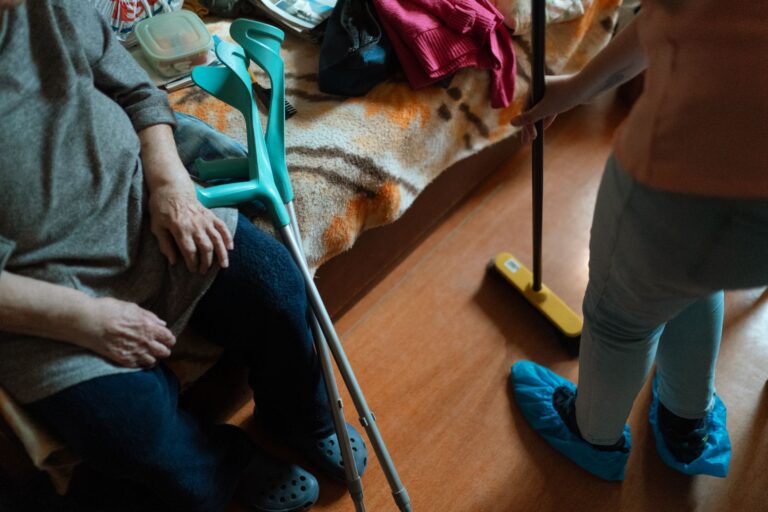
Yes, caring for a spouse with Alzheimer's can exempt you from work requirements for SNAP food aid and Medicaid coverage. You qualify when your spouse meets the program's disabled or incapacitated standard and you provide the daily care.
SNAP, the federal food program, excuses a responsible caregiver from work registration and training. Medicaid's new community-engagement rule has a similar caregiver exclusion. You must claim it and show proof, or time limits still apply.
Medical information disclaimer: This article is for general educational purposes only and does not provide medical advice, diagnosis, or treatment. Always consult a physician or other qualified health professional about symptoms, medications, tests, or treatment decisions.
Table of Contents
- How SNAP treats a spouse caregiver
- What is Medicaid's 80-hour rule for caregivers
- Why an Alzheimer's diagnosis alone is not enough
- What to file to keep the exemption
How SNAP treats a spouse caregiver
Federal SNAP rules excuse a household member responsible for caring for an incapacitated person from work registration and employment-and-training participation, according to the USDA Food and Nutrition Administration in its USDA work-requirements page. That language fits many Alzheimer's spouses who need supervision, meal help, and medication help. State guidance reads the rule broadly.
North Carolina says its ABAWD caregiver exemption covers care for a child under 6 or an incapacitated person of any age, even if that person is not in the caregiver's household, according to the NC Department of Health and Human Services. Washington says its Basic Food work-registration exemption does not require the person to be related to or live with the caregiver, according to the State DSHS. A spouse living at home therefore can qualify. A spouse caring from nearby can also qualify where the state allows out-of-household care.
What is Medicaid's 80-hour rule for caregivers
CMS requires certain nonpregnant Medicaid expansion adults ages 19-64 to complete 80 hours per month of work, education, or community service, with states generally implementing by Jan. 1, 2027, according to CMS in its CMS fact sheet. That rule affects expansion adults, not every Medicaid group. Caregivers have a clear exclusion.
An analysis of the CMS interim final rule from SpecialNeeds.com notes the June 3, 2026 interim final rule at 42 CFR 435.554(c)(3) makes community engagement not a condition of eligibility for a parent, guardian, caretaker relative, or family caregiver of a disabled individual of any age. In plain terms, covered family caregiving removes the 80-hour condition. That matters for Alzheimer's care because needs often rise fast. Full-day supervision, wandering risk, and help with bathing and eating can keep a caregiver from outside work.
Why an Alzheimer's diagnosis alone is not enough
A diagnosis does not by itself prove disability or incapacity under program rules. The spouse must meet the program's own disabled or incapacitated definition, and the caregiver must be the responsible person. TANF shows how narrow the test can be.
The federal TANF rule text from Cornell Legal Information Institute excludes only a parent caring for a disabled family member living at home when medical documentation supports remaining home to provide care. SNAP and Medicaid use their own terms, but the same point holds. Ask the doctor to document limits, not only the disease name. Useful notes describe unsafe wandering, inability to manage medicines, and need for daily supervision.
What to file to keep the exemption
You must affirmatively claim the exemption and supply proof at application or renewal, according to NC DHHS and the CMS fact sheet above. Without that step, work rules and time limits still apply.
Keep copies of each letter, form, and receipt with dates. Bring the doctor's letter to your renewal interview and keep one copy with your case number.
- Tell the caseworker you claim the caregiver exemption for an incapacitated or disabled spouse.
- Provide a doctor's statement or disability records that name the limits and care need.
- File at application and again at renewal, and report changes in care promptly.