Reviewed by the Help Dementia Editorial Team — our editors review every article for accuracy against guidance from the National Institute on Aging, the Alzheimer’s Association, and peer-reviewed sources.
Normal aging sits at the center of this dementia and brain health question.
Memory loss is not a natural part of aging, and that’s the most important distinction between dementia and normal aging. While everyone experiences occasional forgetfulness—misplacing keys, forgetting why you walked into a room—dementia involves progressive, irreversible decline in cognitive abilities that interferes with daily life. A 75-year-old who occasionally forgets an acquaintance’s name but remembers them an hour later is experiencing normal aging; someone with dementia who doesn’t remember their spouse or forgets how to prepare meals they’ve cooked for decades is experiencing something fundamentally different.
The differences between normal aging and dementia are profound and observable across multiple dimensions of thinking, memory, and function. While normal aging brings physical and cognitive changes that most people adapt to successfully, dementia represents a disease process that progressively strips away the cognitive foundation people have built over a lifetime. Understanding these key distinctions helps families recognize when changes warrant medical evaluation and helps caregivers provide appropriate support.
Table of Contents
- How Does Memory Loss Differ Between Normal Aging and Dementia?
- Cognitive Decline and Problem-Solving Abilities
- Changes in Language and Communication
- Ability to Manage Daily Living Tasks
- Awareness, Insight, and Recognition of Changes
- Changes in Mood, Behavior, and Personality
- Medical Understanding and Prognosis
- Conclusion
- Frequently Asked Questions
How Does Memory Loss Differ Between Normal Aging and Dementia?
Normal age-related memory changes are usually minor and don’t significantly impact quality of life. A 70-year-old might take longer to recall a name or need to write down a shopping list more frequently than they did at 40. Importantly, they recognize the lapse and remember the information with prompting or additional time. Someone with dementia, by contrast, experiences memory loss that is pervasive and progressive—they forget conversations that happened hours ago, lose track of important appointments repeatedly, and struggle to remember how to perform routine tasks they’ve done for decades.
The pattern of memory loss also differs notably. In normal aging, recent memory remains strong—an older adult can vividly recall grandchildren’s names and recent family gatherings. With dementia, recent events disappear quickly from memory while older memories may persist longer. A person with early Alzheimer’s might not remember breakfast but can recall details from their childhood. Additionally, memory loss in dementia is accompanied by a lack of awareness—the person with dementia often doesn’t realize they’ve forgotten, whereas someone experiencing normal aging is acutely aware of their occasional lapses.

Cognitive Decline and Problem-Solving Abilities
Normal aging doesn’t significantly impair the ability to solve problems, manage finances, or handle complex decisions. A 75-year-old can still prepare taxes, manage a household budget, or follow the plot of a complex television show, even if they need reading glasses or rewind a scene occasionally. Dementia progressively erodes these executive functions—the higher-level thinking skills that allow us to plan, organize, and make decisions. Someone with mild cognitive impairment or early dementia might begin making poor financial decisions, failing to manage medications correctly, or struggling to follow recipes they’ve used for years.
A critical warning: cognitive decline in dementia is noticeable to others. Family members often spot the changes before the person with dementia does. If a spouse or adult child says they’re concerned about changes in thinking ability, judgment, or the ability to manage daily tasks, medical evaluation is warranted. Normal aging doesn’t typically cause these kinds of concerns in loved ones because the changes are subtle and don’t interfere with functional abilities.
Changes in Language and Communication
Healthy older adults may occasionally search for a word or repeat themselves more often, but their language ability remains intact. They can engage in meaningful conversations, understand complex ideas, and express themselves clearly. Language changes in dementia are more profound and progressive. Someone with dementia may struggle to find common words, speak in vague ways (“the thing with the handle in the kitchen” instead of “spatula”), or lose the thread of conversations mid-sentence.
In advanced dementia, language can become severely impaired. A person might become unable to recognize the names of family members or objects, struggle with grammar and word order, or speak in ways that are difficult for others to understand. The progression is noticeable over weeks and months, whereas normal aging produces minimal change in language ability over years. Some people with dementia also experience repetitive speech, asking the same question multiple times in an hour without remembering they’ve already asked it.

Ability to Manage Daily Living Tasks
One of the clearest practical distinctions is the ability to perform activities of daily living—bathing, dressing, cooking, managing medications, paying bills. Healthy older adults can generally continue doing these tasks independently, even if they adapt methods (using a shower chair, taking medications with a written list). These are not signs of cognitive decline. Dementia, however, progressively impairs the ability to perform these essential tasks.
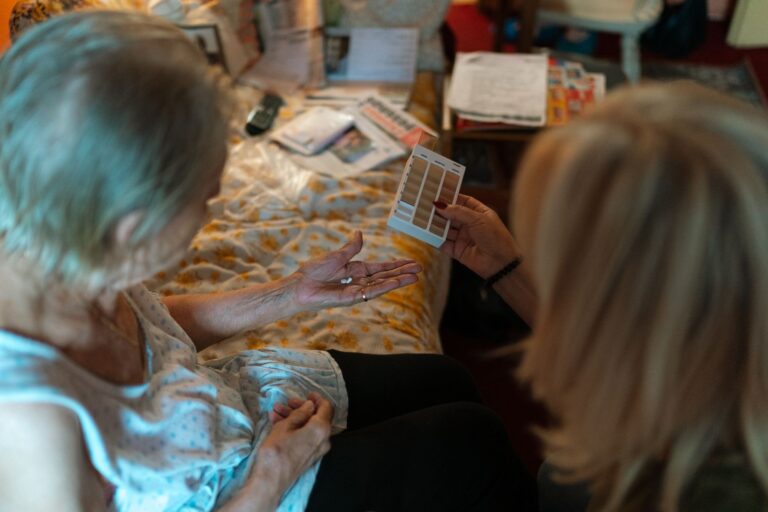
Someone with mild dementia might struggle to remember the steps in their normal morning routine or have difficulty managing multiple medications. As dementia progresses, individuals may forget how to dress appropriately, forget to eat, or become unable to use familiar appliances safely. The comparison is significant: a normal aging adult might use a medication reminder app or written schedule to stay organized—a helpful adaptation. Someone with dementia may forget to take medications despite reminders, lose awareness of what medications they take, or forget they’ve already taken a dose and take it again. The difference between normal aging and dementia often comes down to whether someone can still execute a task with minor accommodations (normal aging) or whether the task becomes progressively impossible despite support (dementia).
Awareness, Insight, and Recognition of Changes
People experiencing normal aging are typically aware of and troubled by their occasional memory lapses. They might joke about needing reading glasses or a hearing aid, and they notice when they forget something. This awareness is actually protective—it helps them compensate by writing things down, using alarms, or seeking reminders. In dementia, particularly in the early to moderate stages, there’s often a lack of insight. The person with dementia may deny that any cognitive changes are occurring, even when the evidence is clear to everyone around them.
This lack of awareness (called anosognosia) is a neurological feature of dementia, not simply denial. A critical limitation of this distinction: lack of awareness varies depending on the type of dementia and its progression. Someone with vascular dementia might have better insight than someone with Alzheimer’s. Additionally, the person with dementia is not being stubborn or uncooperative when they lack insight—their brain damage is affecting their ability to accurately perceive their own cognitive status. This can make dementia particularly challenging for caregivers, who may struggle with repeatedly re-explaining or redirecting someone who doesn’t recognize their own limitations.

Changes in Mood, Behavior, and Personality
Normal aging doesn’t dramatically alter personality or behavior. A calm older adult remains calm; an outgoing person remains social. Some normal changes include becoming more cautious, less risk-taking, or more withdrawn from certain social activities—changes that often reflect realistic adjustments to physical limitations. Dementia, however, frequently brings striking changes in personality and behavior. Someone who was always gentle and patient might become irritable or aggressive.
A modest person might lose social inhibitions. Changes can include inappropriate behavior, wandering, aggressive responses to care, or extreme anxiety. An example: a retired teacher known for being soft-spoken and kind develops Alzheimer’s and begins speaking to people harshly, accusing family members of stealing, or becoming agitated during personal care. These behavioral changes are neurological effects of the disease, not character changes. Mood disorders—particularly depression and anxiety—also frequently occur with dementia, sometimes preceding obvious cognitive decline.
Medical Understanding and Prognosis
Normal age-related cognitive changes are not a disease and don’t have a predictable progression. Someone might maintain relatively consistent cognitive abilities into their 90s or might experience gradually slower processing speeds. There’s no medication to prevent normal aging, because normal aging isn’t a medical condition—it’s the expected result of living a long life. Dementia, by contrast, is a progressive disease with a known trajectory.
Early, moderate, and advanced stages follow a pattern, and there’s a progressive decline in function and independence. The outlook matters significantly for planning and care. Normal aging allows people to maintain independence and control of major life decisions well into advanced age. Dementia eventually requires increasing support, and in later stages, full-time care. Early diagnosis of dementia, while there’s still no cure for most types, allows families to plan, seek treatments that slow progression, and prepare for future needs.
Conclusion
The key differences between normal aging and dementia come down to this: normal aging is part of living a long life and doesn’t prevent people from functioning independently or enjoying life, while dementia is a progressive disease that increasingly impairs thinking, memory, and the ability to care for oneself. The changes in dementia are noticeable to others, progressive over time, and interfere significantly with daily functioning—these red flags distinguish dementia from normal aging. Memory loss alone doesn’t indicate dementia; what matters is whether the memory loss (or other cognitive changes) is interfering with the person’s ability to manage their life and whether the changes are progressing.
If you or a family member are experiencing cognitive changes that concern you, medical evaluation is the essential first step. Many conditions that mimic dementia—including vitamin deficiencies, thyroid disease, depression, and medication side effects—are treatable. A thorough evaluation can clarify whether changes represent normal aging or a condition that needs intervention. Early detection of actual dementia also opens doors to medical treatments, behavioral strategies, and planning that can significantly improve quality of life for both the person with dementia and their caregivers.
Frequently Asked Questions
Is it normal to forget why I walked into a room?
Yes. Occasional lapses like this are extremely common in normal aging. What’s not normal is repeatedly forgetting entire conversations or losing the ability to remember where you live or who family members are.
Can stress and anxiety cause dementia symptoms?
Stress and anxiety can cause memory difficulties and concentration problems, but these usually improve when the stress is addressed. True dementia continues to progress regardless of stress levels. A medical evaluation can distinguish between reversible causes and true dementia.
At what age should I start worrying about dementia?
Dementia is not a normal part of aging at any age, though it’s more common after 65. Changes in thinking, memory, or behavior at any age that concern you or your loved ones warrant medical evaluation. Age alone isn’t the relevant factor—the nature and severity of changes are.
If my parent had dementia, will I definitely develop it?
No. Some types of dementia have genetic components, but genetics is only one factor. Many people with family histories of dementia never develop it. Talk to your doctor about your specific risk factors and what preventive measures might be relevant for you.
Can memory loss in dementia be reversed?
Most forms of dementia involve progressive, irreversible decline, though the rate of progression varies. However, some conditions that cause dementia-like symptoms—such as normal pressure hydrocephalus or B12 deficiency—can be treated and reversed if diagnosed early.
You Might Also Like
- Dementia vs Normal Aging: 7 Key Differences
- Dementia vs Normal Aging: 5 Key Differences
- Dementia vs Normal Aging: 3 Key Differences
For more, see NIH MedlinePlus — cognitive testing.