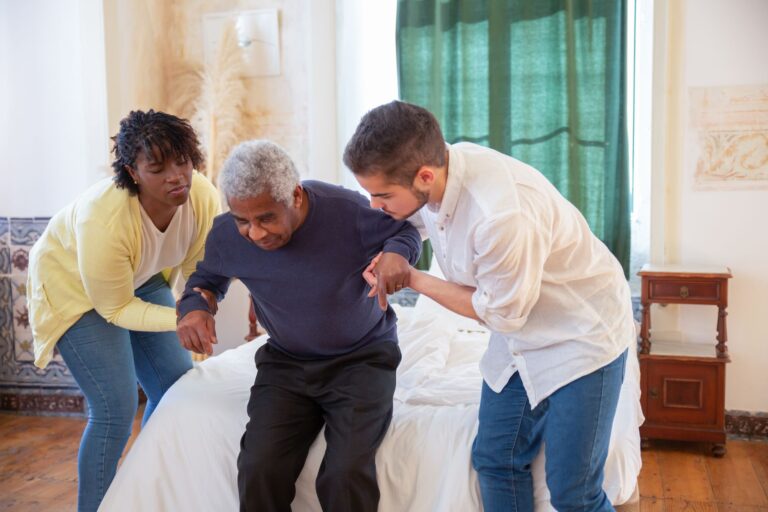
Dementia evacuation planning means packing a familiarity kit to reduce distress and a care summary to guide new helpers. A familiarity kit is a small bag of known comfort objects and personal supplies, while a care summary is a one-place file of medical and contact facts. Keep both ready before a warning, because evacuation moves a person with dementia into noise, crowds, and unfamiliar routines. A ready kit lets a caregiver offer comfort fast and hand clear instructions to shelter staff.
Medical information disclaimer: This article is for general educational purposes only and does not provide medical advice, diagnosis, or treatment. Always consult a physician or other qualified health professional about symptoms, medications, tests, or treatment decisions.
Table of Contents
- What belongs in the care summary?
- What calms in the familiarity kit?
- Where do you keep the kit ready?
- How do you handle wandering in a shelter?
What belongs in the care summary?
A care summary gives a new helper medical facts and legal permission at a glance. The Alzheimer's Association handout lists what to copy for evacuation in its Disaster Preparedness handout. Include power of attorney, diagnosis, drug names with doses, insurance and Social Security cards, doctor name and phone, and a recent photo.
CDC guidance directs caregivers to seal written instructions, emergency contacts, medical information, and a recent photo in a plastic bag in the kit. Add water, a fan, and electrolytes for heat outages and warm clothing and ready-to-eat food for cold outages. Missed dementia and psychotropic drugs can bring confusion and behavior changes, so CDC advises extra medication, equipment batteries, and document copies. Update the file after each prescription change and show all helpers where supplies are kept.
- Copy photo ID, insurance, and Social Security cards
- Copy power of attorney and medication list with doses
- Add doctor name, phone, diagnosis note, and recent photo
- Seal one set in plastic and give one set to a backup helper
What calms in the familiarity kit?
A familiar object can lower agitation when surroundings change. The National Institute on Aging states that people with dementia need extra evacuation help and benefit from comfort items such as a favorite pillow or blanket in its disaster preparedness page for older adults. The Alzheimer's Association handout also points to a pillow, toy, or object the person can hold, plus favorite snacks and high-nutrient drinks.
Pack incontinence undergarments, wipes, lotions, and hand lotion to soothe distress during waiting and transport. Choose items the person already uses and likes. A worn pillowcase, soft blanket, or familiar cup often works better than a new item bought for the trip.
Where do you keep the kit ready?
Store the kit where you can grab it in minutes. The Alzheimer's Association advises caregivers to store a dementia emergency kit in a watertight container in an accessible location in its disaster-preparedness guidance. Cover both personal needs like prescriptions, documents, and chargers and dementia-specific needs.
Keep the container near the exit you will use, not in a back closet or high shelf. Check chargers, snacks, drinks, and incontinence supplies every few months and replace expired items. Give duplicates of drugs, batteries, and papers to a backup caregiver. Walk each helper to the container so night or weekend help can find it without calling you.
How do you handle wandering in a shelter?
Unfamiliar halls, noise, and disrupted sleep raise wandering risk. CDC warns that even people with dementia who do not usually wander may do so in unfamiliar evacuation settings, so caregivers should use an ID bracelet and enroll in the 24-hour MedicAlert wandering-support program in its Public Health Matters post on Alzheimer's. The MedicAlert Foundation explains that a person wearing MedicAlert ID lets responders call the toll-free number on the bracelet to identify the person and reach emergency contacts and share medical facts.
Keep the bracelet on during travel, intake lines, meals, and bathroom trips. Tell shelter staff on arrival that wandering is possible and share the recent photo and contact sheet. Show every helper where the ID, photo, and contacts are before you leave the intake desk.