A dementia caregiver’s weekly checklist includes essential tasks to monitor safety, health, medication adherence, nutrition, and behavioral changes in your loved one. These reviews—conducted consistently each week—create an early warning system that catches problems before they become crises.
For example, during a Tuesday medication check, you notice your mother’s blood pressure medication is still mostly full in the bottle three weeks after the pharmacy refill, signaling she may have stopped taking it, which could lead to serious complications if left unchecked. Weekly caregiving tasks prevent small oversights from escalating into emergencies while also giving you structured time to assess what’s working and what isn’t in the current care arrangement. Rather than reacting to crises, you’re building a rhythm of gentle but thorough observation that keeps your loved one stable and helps you feel more in control of the caregiving role.
Table of Contents
- What Should Dementia Caregivers Check Each Week?
- Monitoring Health Changes and Medication Compliance
- Home Safety and Environmental Assessment
- Building an Effective Weekly Routine for Caregiver Tasks
- Warning Signs That Require Immediate Attention
- Documentation and Communication with the Care Team
- Advanced Planning and Tracking Care Transition Points
- Frequently Asked Questions
What Should Dementia Caregivers Check Each Week?
The core weekly tasks fall into five categories: health and medication, safety, nutrition and hydration, behavior and mood, and care coordination. During your weekly review, spend 10–15 minutes on medication verification (checking that pills were actually taken, not hidden or forgotten), vital signs if applicable (blood pressure, weight), and any signs of new pain or discomfort. Safety checks involve inspecting the home for new hazards, testing door locks, checking that assistive devices (walkers, grab bars) are secure, and confirming that emergency contacts are still accurate. Nutrition and hydration often deteriorate quietly in dementia.
A person living alone may forget to eat, or someone with late-stage dementia may refuse meals without being able to explain why. Your weekly check includes a quick assessment of whether food in the refrigerator is fresh, whether weight is stable (weigh weekly at the same time of day if the person lives with you), and whether intake seems adequate. Behavioral and mood changes—increased aggression, withdrawal, or accusations—can signal pain, infection, medication side effects, or environmental stress. A written log of these observations gives you data to share with the doctor, not just a vague report.
Monitoring Health Changes and Medication Compliance
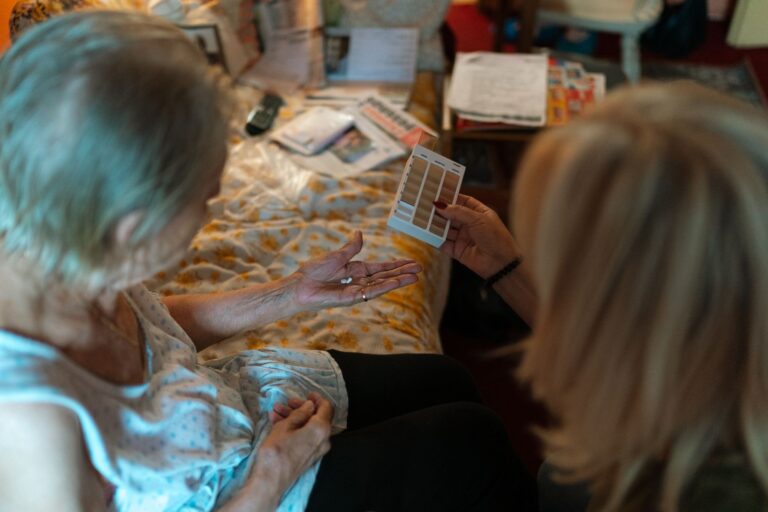
Medication compliance is often the single biggest hidden problem in dementia care. A person with moderate dementia may appear to take their medications but actually pocket them, flush them, or store them in an unsafe place. Visual inspection of the pill bottle, checking the blister pack (if applicable), or asking the pharmacist for a refill count are direct ways to verify compliance. If your loved one is on a medication management system—a timed dispenser or a pill organizer—check that the previous week’s compartments are empty. Watch for medication side effects that can mimic dementia progression: sedation, confusion, tremors, constipation, or urinary incontinence.
One caregiver noticed her father becoming unusually drowsy after his doctor added a new blood pressure medication, and she assumed his condition was worsening. In fact, the drug was causing excessive sedation; a dose adjustment resolved it. Keep a running list of any new symptoms and when they started, because this timeline is invaluable to the doctor. Vital signs (blood pressure, weight, temperature) should be checked weekly if the person has any chronic condition. A weight drop of 5 or more pounds in a month can indicate inadequate nutrition, infection, or thyroid problems. Some people with dementia are unable to report their own symptoms, so these objective measurements become your primary window into their health status.
Home Safety and Environmental Assessment
Home accidents—falls, medication errors, wandering, fire hazards—account for a significant portion of dementia-related hospitalizations and injuries. During your weekly walk-through, look for new trip hazards, check that night lights are functioning, verify that bathroom grab bars are still firmly anchored, and confirm that door locks work. If your loved one is at risk of wandering, check that doors are locked and that GPS devices or identification bracelets are in place and functional. One limitation of weekly inspections is that they capture a snapshot of safety at one moment.
A person can move a chair into a walkway, or a caregiver can inadvertently leave a medication bottle on the nightstand after the week’s checklist is complete. For this reason, weekly checks are a baseline, not a complete guarantee of safety. Pay special attention to the bathroom—falls in the bathroom are among the most common and most serious. Test that the toilet seat is secure, that the shower floor is not slippery, and that the person can safely enter and exit the tub or shower. If balance is declining, discuss grab bars or a shower chair with the care team.
Building an Effective Weekly Routine for Caregiver Tasks
Consistency matters more than perfection. Choose a specific day and time—say, Tuesday morning—and stick to it. This routine signals to yourself and to the person you’re caring for that observation time is normal and expected. Create a simple written checklist that takes 20–30 minutes to complete: three questions about medication, two about safety, one about meals, one about mood or behavior, and one about any doctor appointments or medication changes. Laminate it or keep it in a note on your phone so you can reference it every week.
The comparison between sporadic observation and weekly routine is dramatic. A caregiver who checks in once a month might miss medication non-compliance for three weeks, might not notice a slow weight loss trend, and might react with alarm to changes that are actually gradual. A caregiver on a weekly schedule sees the trajectory: weight stable, medication compliance 90%, increased agitation on days after family visits. This baseline allows you to spot real changes against normal variation. If you live far away or share caregiving with others, your weekly check can be done by phone, video call, or a brief in-person visit. The structure is what matters.
Warning Signs That Require Immediate Attention
Some findings during your weekly review warrant prompt contact with the doctor, not just documentation. A temperature over 100.4°F, sudden refusal to eat or drink, new or severe confusion, unusual aggression, or inability to walk without falling should be reported the same day. A urinary tract infection (UTI) in a person with dementia often presents as confusion, incontinence, or behavioral changes rather than dysuria, so any unexplained mental decline or behavior shift should raise the possibility of infection. Medication side effects can also emerge suddenly.
If a person becomes unusually sedated, experiences tremors, develops a rash, or refuses to take a medication due to a reported bad taste, contact the prescriber before the next weekly check. One major limitation of a home-based checklist is that it cannot detect serious internal problems—infection, organ damage, cancer—that require blood work or imaging. Your observations give the doctor clues, but they are not a substitute for professional evaluation. If something feels wrong even if it doesn’t fit a specific checklist item, trust that instinct and call the doctor.
Documentation and Communication with the Care Team
Written documentation transforms vague concerns into actionable information. Instead of telling the doctor, “Mom seems worse,” you can say, “Her weight has dropped from 142 to 136 pounds over six weeks, her appetite seems lower, and she’s sleeping 12 hours a day.” This specificity prompts investigation. Keep a simple log: date, medication counts, weight if available, any injuries or falls, behavioral observations, and any unusual symptoms. Digital notes on your phone or a paper notebook both work, as long as you update it weekly.
Share your weekly observations with the primary care doctor, the neurologist (if one is involved), and any other caregivers. Some doctors have patient portals where you can upload notes; others prefer email or a call during office hours. If you’re managing care remotely, consider using a shared care app or group chat where household staff, visiting family, and healthcare providers can see the same information. An example: a home health aide notices that Dad forgets to eat lunch even though breakfast is fine, and you log this detail. At the next doctor visit, it triggers a conversation about early-stage dysphagia (swallowing difficulty), which requires dietary changes and monitoring.
Advanced Planning and Tracking Care Transition Points
As dementia progresses, weekly tasks may shift or expand. Early on, you might focus on safety and medication compliance; in later stages, you’ll monitor nutritional intake, pressure wound risk, and swallowing function. Your weekly checklist can evolve, adding items as the person’s needs change.
When considering transitions—such as moving to assisted living or adding paid caregivers—your weeks of detailed observations provide a baseline of current function that helps professionals understand what the person can and cannot do. A specific example: a caregiver who kept four months of weekly notes showing gradual cognitive decline, stable medication compliance, and one minor fall could present that data to an eldercare coordinator to argue for a gradual transition to assisted living rather than an emergency placement after a serious accident. Without the documentation, the recommendation might have been an immediate move to a facility. The checklist also serves as a teaching tool for new caregivers—a hired aide or a family member stepping in to help can see what was observed the previous week and continue the pattern consistently.
- —
Frequently Asked Questions
How long should a weekly caregiver checklist take to complete?
A basic checklist typically takes 15–30 minutes per week. This time can be condensed if you’re checking in remotely by phone or video, or extended if you’re doing physical tasks like measuring blood pressure or weighing the person. The goal is consistency, not speed.
Should I write down every observation, or only significant changes?
Write down routine observations (weight, medication compliance, mood) so you have a baseline. When you report something unusual to the doctor, the baseline helps illustrate whether it’s a gradual trend or a sudden shift. Small daily notes prevent you from forgetting details between doctor visits.
What if my loved one refuses to participate in weekly checks or becomes angry?
Reframe the checklist as part of routine care, not as surveillance. Instead of saying, “I’m checking on you,” approach it during an activity they already do—medication time, mealtime, or a regular visit. For someone resistant to medical monitoring, coordinate with the doctor or a trusted family member to normalize the routine.
Can I skip a week if nothing seems different?
Consistency is important because it establishes a pattern. Skipping weeks makes it harder to spot gradual changes. Even if nothing obvious has changed, a five-minute check confirms that stability and notes it. This data is valuable.
Who else should see my weekly notes—my loved one, other family members, healthcare providers?
Share detailed observations with healthcare providers and other primary caregivers. Whether to share with the person themselves depends on their cognitive level and personality. Some people with early-stage dementia benefit from transparency; others experience anxiety or resistance. Consult with the doctor if you’re unsure. —