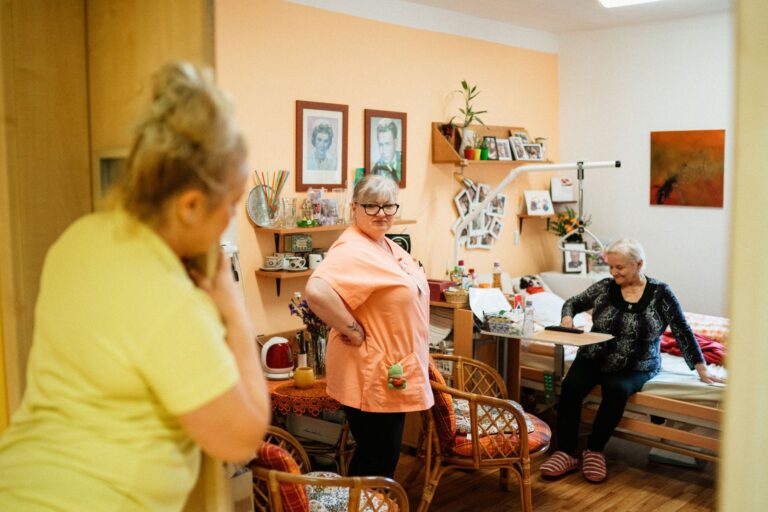
Families affected by dementia face a total lifetime care cost of approximately $400,000 from diagnosis to death, with families themselves paying between $225,000 and $280,000 out of pocket. This staggering burden represents one of the largest financial challenges families encounter, and it unfolds over an unpredictable timeline that can span 8 to 12 years or more. Consider a family with a parent diagnosed with early-stage dementia at age 72: they might spend the first 2 years managing part-time in-home care around $26,500 annually, transition to full-time care or a memory care facility for the middle years at $77,000 to $96,000 annually, and potentially require skilled nursing care at the end.
Add funeral and end-of-life costs of $8,000 to $16,000, and the total financial impact becomes overwhelming—especially when families discover that Medicare and insurance cover only a fraction of these expenses. This article breaks down the complete financial timeline of dementia care, from early diagnosis through end-of-life expenses, so families can understand what costs to expect, when to expect them, and how to prepare. We’ll examine costs by care setting, show you how expenses peak at specific points in the disease progression, and explain the national funeral cost landscape that families face after their loved one passes.
Table of Contents
- How Much Does Dementia Care Cost From Diagnosis to End of Life?
- Breaking Down Dementia Care Costs by Setting and Services
- The Financial Impact—How Dementia Costs Affect Family Finances Over Time
- Planning for Peak Costs—When Dementia Care Becomes Most Expensive
- The Hidden Burden—Unpaid Caregiving and Family Financial Strain
- Funeral and End-of-Life Costs After Dementia Care
- Regional Differences and Planning for Your Location
- Conclusion
How Much Does Dementia Care Cost From Diagnosis to End of Life?
The lifetime cost of dementia care—from diagnosis through death—averages approximately $400,000 in total U.S. health and long-term care spending. However, families bear the heaviest load: about 70 percent of these costs fall directly on the patient and their relatives, meaning the out-of-pocket expenses typically range from $225,000 to $280,000 per person. This is not a small co-pay or a manageable deductible—this is a fundamental reshaping of a family’s finances, often forcing decisions about retirement savings, home equity, and long-term financial security.
Nationally, dementia care spending totals $781 billion in 2025, a number projected to grow significantly in 2026. This massive figure reflects not just the care itself, but also the unpaid labor of family caregivers. The estimated value of unpaid family caregiving for dementia reached $247 billion in 2026 alone, according to the Alzheimer’s Association. In other words, families are not just paying out of pocket for professional services—they’re also providing care themselves at a cost that, if charged at professional rates, would add another quarter-billion dollars annually to the nation’s dementia care bill.

Breaking Down Dementia Care Costs by Setting and Services
The cost of dementia care varies dramatically depending on where and how the care is delivered. In-home care, which allows people to stay in familiar surroundings, ranges from $26,500 annually for part-time care (15 hours per week) to $296,796 annually for round-the-clock in-home care (24/7 live-in services). For families with limited resources, part-time in-home care at roughly $2,208 per month can help someone maintain independence while family members manage other aspects of care. However, as dementia progresses, families often discover that 15 hours per week is insufficient—a person in moderate dementia may need 40+ hours weekly, pushing costs to $77,732 annually, or approximately $6,478 per month. Memory care facilities—specialized settings designed specifically for people with dementia—cost $96,228 per year on average, or about $8,019 monthly.
These facilities handle medication management, meals, hygiene assistance, and structured activities, which can be a relief for families managing care alone. Traditional nursing homes with semi-private rooms average $111,325 annually ($9,277 monthly), and this figure is rising 4-6 percent annually. The hourly rate for non-medical home care assistance—such as help with bathing, dressing, and meal preparation—ranges from $29 to $33 per hour, typically requiring 20 to 40 hours per week. One critical limitation: these costs assume standard care. If a person requires specialized dementia care (sundowning management, behavioral interventions, skilled nursing), costs increase further.
The Financial Impact—How Dementia Costs Affect Family Finances Over Time
Dementia’s financial toll isn’t a one-time expense; it’s a compounding burden that intensifies year after year. Research from the University of Michigan School of Public Health found that out-of-pocket spending doubles within the first 8 years following a dementia diagnosis. More dramatically, a person’s net worth declines by approximately 60 percent compared to their peers without dementia. A person who might have accumulated $100,000 in assets before diagnosis typically sees that shrink to $30,500 or less within 8 years, while their peers without dementia maintain their wealth.
This financial devastation drives families toward Medicaid enrollment—the federal-state health program for low-income individuals. Nearly double the number of dementia-affected families enroll in Medicaid within 8 years of diagnosis compared to families unaffected by dementia, not because of declining health alone, but because dementia care costs force families into poverty. The caregiving burden compounds this: families dedicate an average of 45 hours per month to dementia caregiving (compared to 13 hours monthly for non-dementia cases) for 8 or more years. This represents a significant loss of work productivity, retirement savings, and financial stability.

Planning for Peak Costs—When Dementia Care Becomes Most Expensive
Dementia doesn’t follow a linear cost curve. Instead, costs spike at specific points, with peak annual spending reaching $89,900 approximately 5 years after diagnosis. This timing coincides with moderate dementia stage, when cognitive decline is significant enough that independent living becomes unsafe, yet the person requires extended care that can last several more years. For families, this 5-year mark is when many transition from in-home care to facility-based care or increase in-home services dramatically.
Understanding this peak helps families plan. If you are currently managing a loved one’s early dementia care with part-time in-home services at $26,500 annually, you should prepare for the possibility of costs tripling or quadrupling by year 5. This is not a worst-case scenario—it’s the documented average. Some families mitigate this by planning for long-term care insurance earlier in the disease progression, exploring Medicaid planning strategies, or arranging family care rotation. However, if your family is geographically dispersed or has limited caregiving capacity, the climb toward facility care becomes nearly inevitable.
The Hidden Burden—Unpaid Caregiving and Family Financial Strain
One of the most overlooked aspects of dementia’s cost is the value of unpaid family care. The World Health Organization estimates that unpaid caregivers bear 50 percent of the global dementia care burden, with caregivers providing an average of 5 hours of care daily. When converted to hourly rates, this unpaid labor is worth hundreds of thousands of dollars over the course of someone’s dementia journey. This hidden cost comes with profound personal consequences.
Family caregivers often reduce work hours, leave jobs, or forgo promotions to provide care. They experience higher rates of depression, anxiety, and physical health decline. The financial impact extends beyond direct care costs: lost wages, missed retirement contributions, and deferred career advancement compound over decades. A family member who steps out of the workforce for 5 years to provide dementia care faces not just 5 years of lost income, but also reduced Social Security benefits at retirement, lower pension values, and diminished savings growth. Families should understand that the published dementia care costs ($400,000 lifetime) do not fully capture the economic reality of caregiving—they capture the direct expenses but not the opportunity costs of foregone earnings and career progression.

Funeral and End-of-Life Costs After Dementia Care
After dementia care expenses end with the death of a loved one, families face funeral and burial costs that represent another substantial burden. The average traditional funeral with burial costs $7,000 to $9,000, with a national median of $8,300. A cremation with a traditional service costs $6,280 on average, while a direct cremation (cremation without a service) costs approximately $2,202. This represents a significant difference: choosing direct cremation over burial can save approximately $6,390, or roughly 74 percent of the cost. Regional and state variations are substantial.
Funeral costs in the Northeast average $8,985—34 percent more expensive than the South, where the average is $6,700. Maine has the highest state-level average at $8,675, while Florida has the lowest at $5,875. When including cemetery burial plot costs, the total expense varies wildly: metropolitan burial plots cost $4,800 or more, while rural cemetery plots may cost less than $950. For a family already financially strained by years of dementia care, these end-of-life costs can push total family out-of-pocket spending to $240,000 or beyond. Choosing cremation, selecting a less expensive cemetery, and opting for a simpler service can significantly reduce this final financial burden.
Regional Differences and Planning for Your Location
Where you live in the United States fundamentally affects both dementia care costs and funeral expenses. A family in the Northeast will pay roughly 34 percent more for both care and final arrangements than a family in the South. This isn’t just a minor variation—it translates to tens of thousands of dollars difference over an 8-year care timeline. Memory care facilities in high-cost urban areas can exceed $120,000 annually, while rural facilities may cost $60,000 or less.
These regional differences should inform your planning. If you live in a high-cost state or region, exploring options in adjacent lower-cost areas, investigating in-home care as a primary strategy, or planning Medicaid eligibility earlier may be necessary. Conversely, families in lower-cost regions have more flexibility to maintain private-pay care longer without depleting assets. Understanding your specific regional costs—not just national averages—is essential for realistic family financial planning.
Conclusion
The journey from dementia diagnosis to funeral represents a profound financial and emotional challenge for families. Total lifetime costs average $400,000, with families bearing $225,000 to $280,000 out of pocket. Costs double within 8 years, peak at around $89,900 in year 5, and force most families toward Medicaid enrollment and facility-based care.
When funeral and end-of-life costs are added, families often spend more than $240,000 directly, draining retirement savings, forcing career changes, and creating lasting financial instability. Planning is essential. Understand the specific costs in your region, explore both in-home and facility-based care options, begin conversations about Medicaid planning and long-term care insurance early, and recognize that the financial burden extends beyond medical bills—it includes lost wages, foregone career advancement, and unpaid caregiving labor. Speaking with an elder law attorney, a financial planner experienced in dementia care, and a social worker can help your family navigate these decisions and preserve as much financial security as possible for caregivers and the person with dementia.