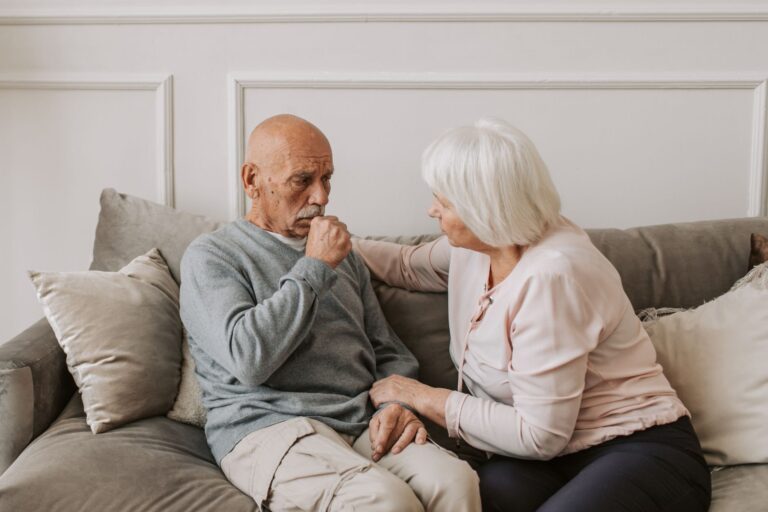
The most common dementia care mistakes fall into two buckets: medical missteps, like reaching for antipsychotics without knowing the risks, and protection failures, like leaving finances open to fraud. You avoid them by asking what a behavior is really caused by, questioning any drug carrying a death warning, and locking down money before judgment declines. Dementia is a group of conditions that erode memory, reasoning, and behavior severely enough to disrupt daily life, with Alzheimer's the most common form. The scale is large: the Alzheimer's Association reports that an estimated 6.9 million Americans age 65 and older live with Alzheimer's dementia, supported by roughly 11 to 13 million unpaid caregivers who face these decisions daily.
Medical information disclaimer: This article is for general educational purposes only and does not provide medical advice, diagnosis, or treatment. Always consult a physician or other qualified health professional about symptoms, medications, tests, or treatment decisions.
Official resources:
- FBI Internet Crime Complaint Center (report elder financial fraud) — Use this primary source to review the complete report.
- Read the official notice from FDA — Use this primary source to verify the official announcement.
Table of Contents
- The antipsychotic mistake caregivers rarely hear about
- Approved versus off-label — know the difference
- Behavior is a signal, not just the disease
- Protect the money before judgment slips
- Make the home safer before an injury forces it
- Frequently Asked Questions
The antipsychotic mistake caregivers rarely hear about
When a person with dementia becomes agitated or delusional, families are often offered antipsychotic drugs. What many are not told: the FDA requires a Boxed Warning stating that elderly dementia patients taking antipsychotics face an increased risk of death. Pooled trials found mortality roughly 1.6 to 1.7 times higher than with a placebo. The numbers are concrete.
Over about 10 weeks, the death rate was near 4.5% for patients on these drugs versus 2.6% on placebo. The warning began in 2005 for newer "atypical" antipsychotics and was extended to older "conventional" ones in 2008. This does not mean these drugs are never appropriate. It means you should ask the prescriber to name the specific behavior being treated, weigh non-drug options first, and confirm you understand the risk before agreeing.
Approved versus off-label — know the difference
A drug being prescribed is not the same as a drug being approved for your relative's condition. Most antipsychotics used in dementia are prescribed "off-label," meaning for a use the FDA never formally reviewed for that group. There is one notable exception.
In May 2023, the FDA approved brexpiprazole (Rexulti) as the first drug for agitation from Alzheimer's dementia. Even so, it still carries the same increased-death Boxed Warning. So the practical question is not just "does this drug work?" but "is it approved for this use, and what warning does it carry?" Ask directly, and write down the answer.
Behavior is a signal, not just the disease
A frequent mistake is assuming every difficult behavior is simply "the dementia." The National Institute on Aging advises that distressing behaviors often come from pain, infection, medication effects, poor sleep, or sensory problems — many of which a doctor can treat. Incontinence is a clear example.
The NIA notes it may be triggered by medications, a urinary tract infection, an enlarged prostate, diabetes, or caffeine. These are reversible factors worth a medical evaluation before you accept the change as permanent decline. Before assuming a new behavior is progression, run through a short checklist:.
- Is the person in pain or showing signs of infection, like fever?
- Did a new medication or dose change start recently?
- Are they sleeping poorly, or hungry, thirsty, or too hot or cold?
- Can they see and hear well, with glasses and hearing aids in use?
- Has anything in the environment or routine changed?
Protect the money before judgment slips
Impaired judgment makes people with dementia prime targets for fraud, and delay is the costly mistake. The FTC reports that adults 60 and older saw fraud losses rise roughly fourfold, from about $600 million in 2020 to $2.4 billion in 2024. The schemes are familiar but effective: the "grandparent" call claiming a relative is in trouble, fake charities, and bogus investments.
The FTC notes these scams commonly target older adults, and suspected fraud can be reported to the FBI's Internet Crime Complaint Center at ic3.gov. Act while your relative can still participate. Set up trusted-contact alerts with banks, consider a durable power of attorney, and reduce unsolicited contact by limiting robocalls and junk mail.
Make the home safer before an injury forces it
Waiting for a fall or a burn to prompt safety changes is a preventable mistake. The NIA recommends a proactive, room-by-room home safety review that adapts as abilities change.
Focus first on the highest-risk spots. Secure medications and cleaning products, lower the water heater temperature to prevent scalds, add lighting and grab bars, and remove loose rugs and clutter from walking paths.
Frequently Asked Questions
Are antipsychotics ever appropriate for dementia?
Sometimes, for severe agitation when other approaches fail, but every option carries the FDA's increased-death warning. Ask the prescriber to justify the specific drug and behavior.
How do I tell disease progression from a treatable problem?
You often can't without a medical check. New or sudden behavior changes warrant a doctor's visit to rule out pain, infection, medication effects, or sensory issues first.
Where do I report suspected fraud against a relative with dementia?
File a report with the FBI's Internet Crime Complaint Center at ic3.gov, and alert their bank so accounts can be flagged.