Reviewed by the Help Dementia Editorial Team — our editors review every article for accuracy against guidance from the National Institute on Aging, the Alzheimer’s Association, and peer-reviewed sources.
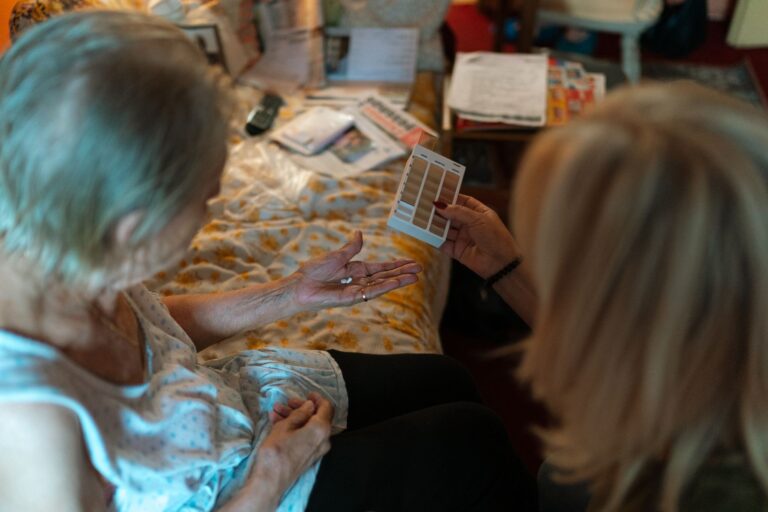
When dementia progresses, a person may struggle to recognize family members—including spouses, children, and grandchildren—even when those loved ones have been central to their entire lives. This happens because dementia damages the brain regions responsible for memory and facial recognition, making it increasingly difficult to match a familiar face with the emotions and relationships tied to it. It’s one of the most painful and disorienting symptoms for both the person with dementia and their loved ones, often arriving gradually over months or years, though the pace varies widely depending on the type of dementia and individual progression. A common scenario unfolds like this: an adult daughter visits her mother, who has mid-stage Alzheimer’s disease, and her mother looks up with a polite but blank expression.
“Have we met?” she asks. The daughter has visited twice a week for months, yet her mother’s brain no longer reliably connects the face before her to decades of shared history. The mother isn’t being cruel or rejecting—her brain simply cannot retrieve or process the information needed to recognize her own child. This loss of recognition rarely means the person with dementia has lost all feeling toward that person. Research shows that emotional memory sometimes persists even after factual memory fades, which is why a person might not remember someone’s name but still respond with warmth, comfort, or agitation depending on the emotional tone of the interaction.
Table of Contents
- How Does Dementia Affect Recognition of Loved Ones?
- The Emotional and Psychological Impact on Families
- Changes in How Emotional Connection Persists
- Communication Strategies When Recognition Is Lost
- Behavioral Changes Associated with Loss of Recognition
- Special Circumstances and Exceptions
- Moving Forward: Redefining Relationship After Loss of Recognition
- Conclusion
- Frequently Asked Questions
How Does Dementia Affect Recognition of Loved Ones?
The ability to recognize faces depends on multiple brain systems working together: visual processing in the occipital lobe, facial recognition in the temporal lobe, and memory storage throughout the cortex and hippocampus. dementia attacks all three. As disease progresses, the brain’s connections weaken, and cells die. The person may see their spouse’s face clearly but cannot reliably connect that visual information to the stored memory of who that person is or why they matter. The timeline varies significantly. In early-stage dementia, recognition problems might be subtle—a parent forgets a grandchild’s name but still knows it’s someone important. In middle stages, recognition becomes inconsistent: the person recognizes some visitors some days but not others.
By late-stage dementia, recognition of anyone outside the immediate caregiving environment often disappears entirely. However, some people retain the ability to recognize one specific person (often a primary caregiver) long after forgetting everyone else—a phenomenon that reflects how personalized, repeated contact may strengthen certain neural pathways even as others deteriorate. Different types of dementia progress differently. Alzheimer’s disease typically affects memory early and extensively, making unrecognition a prominent symptom. Frontotemporal dementia may spare memory longer but damage personality and judgment first. Lewy body dementia can cause sudden fluctuations in recognition—someone the person didn’t recognize an hour ago might be recognized again later. Understanding the specific type of dementia helps families anticipate when recognition problems might worsen.
The Emotional and Psychological Impact on Families
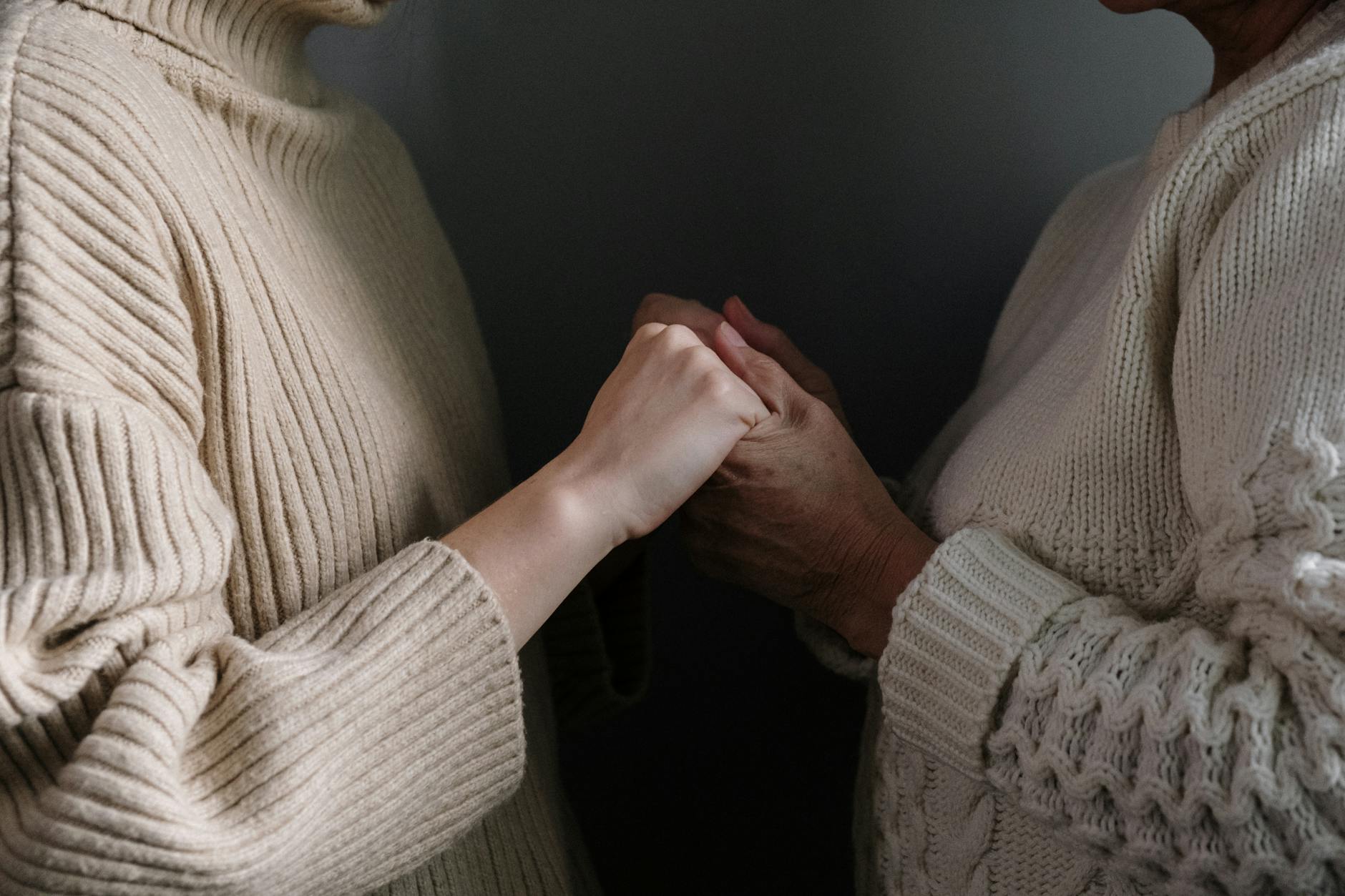
Being unrecognized by a parent, partner, or adult child creates a profound grief that is distinct from other losses. You’re not mourning someone who is gone; you’re grieving someone who is present but absent, someone physically there but no longer able to know you. This “ambiguous loss,” as experts call it, lacks closure and can trigger feelings of rejection, anger, guilt, and deep loneliness. Many adult children report that the moment their parent stops recognizing them is when dementia becomes truly real—no longer something happening in the background but a concrete, painful daily experience.
Some describe it as losing their parent twice: first to the disease’s progression, and second to the loss of being known. Spouses of people with dementia often describe the unrecognition as a particular wound, as they have been that person’s primary relationship, sometimes for decades, only to become a stranger in their partner’s eyes. A significant limitation of well-meaning advice is that people often suggest “just remind them who you are” or “help them remember.” In reality, external reminders alone rarely restore recognition in progressive dementia—if the brain no longer reliably stores or retrieves that information, telling the person “I’m your daughter, I visit you every Tuesday” does not typically reignite the memory or emotional connection. This can lead to frustration on both sides when families spend energy on unsuccessful “reality orientation,” not understanding that the neurological damage isn’t something willpower or information can fix.
Changes in How Emotional Connection Persists
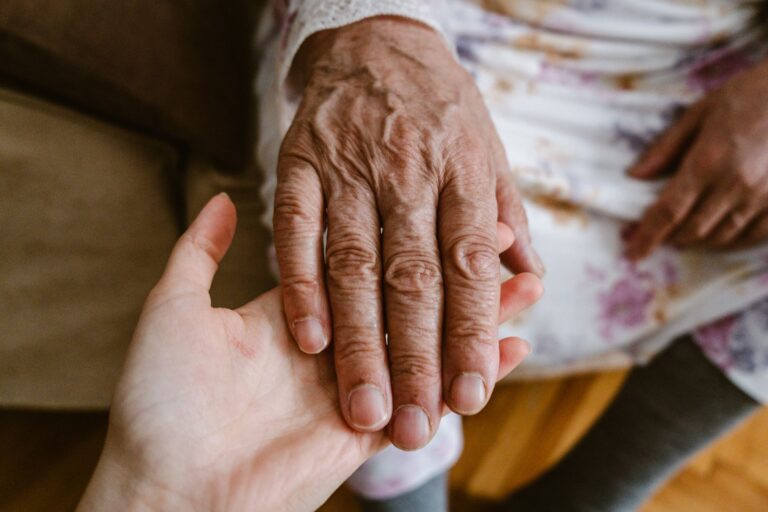
Even when factual recognition fades, many people with dementia retain an emotional or intuitive sense of safety around familiar people, and this emotional connection can remain a powerful tool for caregivers. A person who does not consciously recognize their adult daughter might still calm down in her presence, smile at her approach, or seek comfort from her touch. This isn’t the same as recognition, but it is a form of relationship that persists at a different level. A caregiver named James described visiting his father, who had advanced Alzheimer’s disease and did not recognize him by face or name. Yet when James held his father’s hand and spoke in a calm voice, his father’s breathing would slow, his agitation would settle, and he would lean into the physical contact.
His father couldn’t remember who James was, but something in his tone of voice, his presence, his way of being triggered a response of trust and comfort. James learned to treasure this form of connection rather than struggle against the loss of explicit recognition. This persistence of emotional responsiveness is not universal, and this is an important limitation to acknowledge. Some people with advanced dementia show reduced emotional responsiveness to anyone, regardless of past relationships. Others may respond with fear or agitation to visitors, particularly if they feel unsafe or if the dementia has damaged their ability to interpret social cues. The emotional connection that persists is a gift when it is there, but it cannot be assumed or guaranteed.

Communication Strategies When Recognition Is Lost
When someone does not recognize you, the goals shift from restoring memory to creating a calm, respectful interaction. Instead of beginning a visit with “I’m your daughter, I’ve visited you every week for a year,” many dementia care specialists recommend starting with warmth, introducing yourself simply, and allowing the person to determine the pace of the interaction. “Hello, my name is Sarah. I’d like to sit with you for a bit,” works better for many people than detailed explanations of past relationships. One useful comparison is the difference between insisting someone remember something and meeting them where they are cognitively.
A person who has advanced dementia is not capable of retrieving a complex lifetime of memories on demand—but they are often capable of responding to kindness, humor, sensory experience, and emotional tone. A visit that focuses on activities, music, nature, familiar foods, or gentle touch often goes better than a visit that centers on reminding the person of who you are. This trade-off means accepting that the visit will not restore memory or previous closeness, but it often creates a moment of genuine human connection nonetheless. Some families find it helpful to use photos, memory books, or written reminders about who they are to the person with dementia, not to restore recognition but to help themselves stay emotionally grounded. Reading aloud a few sentences about shared memories—”We went to the beach together many times, and you always loved the salt water”—can help the caregiver feel heard and seen, even if the person with dementia does not remember that beach trip.
Behavioral Changes Associated with Loss of Recognition
Unrecognition sometimes brings behavioral changes beyond simple inability to remember. Some people with dementia experience fear or suspicion when confronted with an unfamiliar face in a familiar setting (they may think a stranger has entered their home, even though the “stranger” is their spouse). Others experience agitation or withdrawal. A small percentage become combative, though this is often a response to feeling unsafe or confused rather than a reflection of their true feelings toward the person. One crucial warning: never take rejection or fear during this stage as personal rejection. A parent’s fear of you, or a partner’s hostility, does not mean they dislike you at baseline—it means their injured brain is processing you as an unknown entity in a way that triggers their fear or defensiveness.
Understanding this neurological basis, while emotionally difficult, can protect caregivers from internalizing the behavior as a reflection of true feeling. However, this understanding is often not enough to prevent emotional pain, and that pain is entirely valid. It is also important to recognize that not all behavioral changes are inevitable. Some people with dementia retain awareness that they cannot remember someone and feel genuine grief about it—they may apologize, ask the same questions repeatedly (trying to hold onto the information just given), or show sadness about their cognitive loss. Others become indifferent or unaware that they cannot recognize the person. The variation reflects differences in how dementia affects different individuals and different parts of the brain.

Special Circumstances and Exceptions
A well-documented phenomenon is that some people with advanced dementia recognize one specific person—often the primary caregiver who spends the most time with them—long after they’ve stopped recognizing others. This may reflect the strength of daily, repeated exposure; the emotional bonding that happens through hands-on caregiving; or something about how that particular person’s voice, touch, or presence registers with the remaining intact portions of the person’s brain. This is a mercy for that one caregiver, but it can also create grief for other family members, who lose recognition before that primary person does.
Another exception is music and long-term procedural memory. Some people with dementia who cannot recognize faces can still recall songs, play instruments, or remember dance steps from their younger years. These intact memories don’t restore recognition, but they offer windows into the person’s intact self and can create moments of joy and connection.
Moving Forward: Redefining Relationship After Loss of Recognition
The loss of recognition forces a reimagining of what family relationships and caregiving can be. Some families find that accepting the loss—rather than fighting it—paradoxically opens space for new forms of closeness. A grandparent who no longer recognizes a grandchild can still share laughter at a joke, enjoy sitting together, or respond to gentle care.
These interactions are real, even if they’re not rooted in shared history or factual memory. Looking forward, research into early detection, protective therapies, and care strategies continues to evolve. While there is no cure for advanced dementia, maintaining overall brain health, managing other chronic conditions, and providing emotionally supportive care may slow some aspects of cognitive decline in the earliest stages. For families currently navigating unrecognition, the most important finding is that the relationship doesn’t disappear with memory—it transforms, and it can still hold meaning.
Conclusion
When someone with dementia stops recognizing loved ones, it represents a deep neurological change in how the brain processes and stores identity and memory. The pain of this symptom is real and justified, and the grief families experience is a valid response to losing a crucial form of connection. At the same time, recognition is only one way humans relate to each other, and the loss of it doesn’t mean the loss of all relationship.
If you are caring for someone with dementia or preparing for the possibility of this symptom, consider seeking support from a therapist or support group that specializes in dementia care, connecting with others who understand this specific loss. Reframing visits around presence and emotional connection rather than memory restoration can help create meaningful moments even when recognition is no longer possible. Your relationship with this person doesn’t end when their brain can no longer hold the fact of your shared history—it transforms into something different, and that transformation can still be real and worth protecting.
Frequently Asked Questions
Will my parent ever recognize me again if they’ve stopped?
In progressive dementia, recognition rarely returns once lost. Some people have fluctuating good and bad days where recognition comes and goes, particularly in the middle stages of some types of dementia, but this is not restoration—it’s fluctuation. Once dementia advances significantly, the brain changes are typically permanent.
Is it okay to use photos or tell them who I am every time I visit?
Yes. If it helps you or creates a calm interaction, introductions and photos are fine. But recognize that you’re likely doing it for your own emotional needs rather than to restore their memory. Many people with dementia respond better to visitors who accept their current cognitive state rather than those who repeatedly try to “remind” them of the past.
My parent seems afraid of me now that they don’t recognize me. What should I do?
Approach gently, allow them to set the pace, and avoid insisting they should recognize you. If they remain fearful, consult their care team about whether your visits are causing more distress than comfort. Sometimes it’s more compassionate to reduce visits or change how you visit (perhaps attending group activities where recognition isn’t expected) rather than continuing one-on-one visits that trigger fear.
Can medication help someone recognize loved ones again?
No medication currently exists that can restore lost recognition in progressive dementia. Some medications slow cognitive decline in early stages of certain types of dementia, but they do not restore or retrieve lost memories. If recognition has already been lost, medication won’t bring it back.
Is it normal to feel angry or resentful toward someone with dementia for not recognizing me?
Yes, this is a common and understandable response. The unrecognition can feel like rejection, even though it’s a symptom of disease. Processing this anger—through a therapist, support group, or trusted confidant—is healthy and doesn’t mean you don’t love the person or are a bad caregiver.
Will my loved one’s entire personality change, or just their memory?
This depends on the type and stage of dementia. Memory loss alone doesn’t automatically change personality, but some types of dementia (like frontotemporal dementia) damage personality, judgment, and emotional regulation. Others (like Alzheimer’s) may preserve personality longer while destroying memory. Each person is different, and changes often happen gradually rather than all at once.