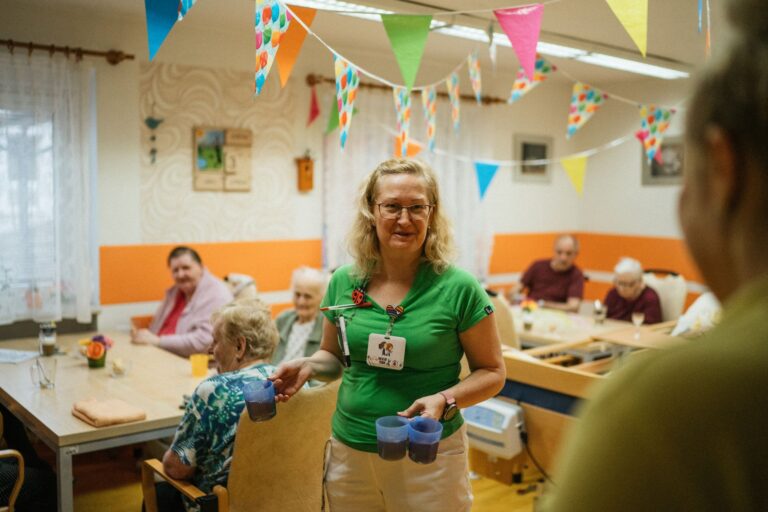
For someone with dementia who dislikes being entertained, skip spectator activities and offer purposeful tasks done side by side. Folding laundry, wiping counters, emptying wastebaskets, or sorting objects gives accomplishment and active involvement. Meaningful activity means making time live rather than killing time. It centers on stimulation, satisfaction, identity, and age-appropriate roles, with doing together valued over correct results.
Medical information disclaimer: This article is for general educational purposes only and does not provide medical advice, diagnosis, or treatment. Always consult a physician or other qualified health professional about symptoms, medications, tests, or treatment decisions.
Table of Contents
- Why doing beats watching
- How do you match the task to the person?
- What helps during agitation or sundowning?
- How do you build a lasting role?
Why doing beats watching
Many people resist bingo, shows, or sing-alongs because those place them in an audience role. A purposeful household contribution restores a working role instead. The Alzheimer's Association points to wiping countertops, emptying wastebaskets, folding laundry, and sorting objects as ways to provide accomplishment in its Activities at Home guide.
Side-by-side doing also calms better than passive distraction. Touch, movement, and music reduce agitation more reliably than medication for many people, Harvard Health Publishing reports in its review of agitation management. Work shoulder to shoulder rather than performing for the person.
How do you match the task to the person?
Start from past interests, daily routines, and current abilities. Then simplify steps, shorten the task, and remove complex tools. The U.S. National Institute on Aging advises caregivers to adapt familiar activities this way and favor doing together over performance in its guidance on adapting activities.
Offer one clear job at a time with materials ready. Stay flexible as initiation and task ability change. If a step frustrates, do that part yourself and leave a doable part. Praise effort and participation, not accuracy or speed.
- Fold only towels, not fitted sheets
- Sort socks by color, not small buttons
- Wipe one counter with one cloth
- Empty one small bin with you nearby
What helps during agitation or sundowning?
Choose a shared low-demand activity when restlessness rises. Walk together, listen to familiar music, watch a favorite show, read aloud, or fold laundry together. The National Institute on Aging lists these same calm joint options in its guide to coping with agitation and sundowning.
Keep your voice slow and your body relaxed. Reduce noise, clutter, and choices. Invite rather than instruct: "Help me with these towels" works better than "Time for an activity.".
How do you build a lasting role?
Give the person a regular job, not random tasks. Morning mail sorter, laundry helper, table wiper, or garden waterer preserves identity. Canada's Alzheimer Society defines this as supporting stimulation, enjoyment, satisfaction, and age-appropriate roles even as initiation declines.
Ability-matched roles build engagement over time. Montessori-based dementia programs assign purposeful tasks and social roles, with higher constructive engagement than standard activities. Keep the routine basic, meaningful, and connected to others. Hand them the towels and fold the pile together.