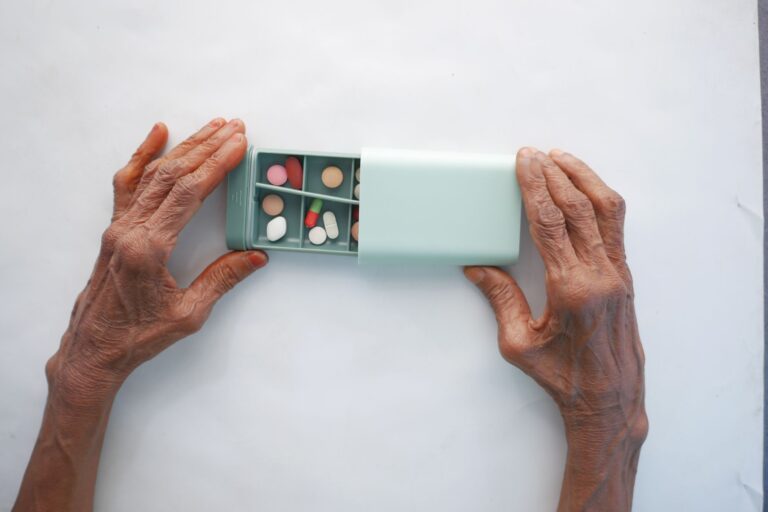
Day-one subcutaneous Leqembi IQLIK, an anti-amyloid drug for early Alzheimer's, lets families start treatment at home. Eligibility and brain-swelling monitoring did not change for adult children coordinating care.
On July 13, 2026, the FDA approved LEQEMBI IQLIK (lecanemab-irmb) as an initiation dose, as Eisai and Biogen reported in the approval announcement. It is the first anti-amyloid drug that can be started subcutaneously. Early Alzheimer's here means mild cognitive impairment or mild dementia due to Alzheimer's.
Medical information disclaimer: This article is for general educational purposes only and does not provide medical advice, diagnosis, or treatment. Always consult a physician or other qualified health professional about symptoms, medications, tests, or treatment decisions.
Table of Contents
- How home initiation works
- Who remains eligible
- Why monitoring still matters
- What changes week to week for adult children
- What cost and access still limit
How home initiation works
Families no longer must complete 18 months of biweekly IV infusions before home dosing. NeurologyLive described that shift in its approval summary.
Subcutaneous maintenance alone had been approved in August 2025. The initiation regimen is 500 mg once weekly. According to Eisai in the availability update, it is given as two consecutive 250-mg autoinjector injections, each delivered in about 15 seconds.
Who remains eligible
Eligibility did not change. The Alzheimer's Association states treatment remains limited to adults with mild cognitive impairment or mild dementia due to Alzheimer's with confirmed amyloid-beta pathology.
In practice, check these three points before calling a clinic: Bring recent cognitive testing, medication lists, and amyloid results to the visit. A parent without confirmed amyloid pathology does not move forward.
- adult with mild cognitive impairment due to Alzheimer's
- adult with mild dementia due to Alzheimer's
- confirmed amyloid-beta pathology in the medical record
Why monitoring still matters
Safety monitoring did not change. NeurologyLive summarized that lecanemab carries ARIA risk of brain swelling (ARIA-E) and microbleeds (ARIA-H), requiring recent baseline MRI and periodic MRI surveillance plus ApoE e4 testing discussion.
The FDA added earlier MRI surveillance during initiation. Its drug safety communication recommends an additional scan before the 3rd dose to detect ARIA-E sooner. Plan for this schedule:.
- recent baseline MRI before starting
- periodic MRI surveillance during treatment
- extra scan before the 3rd initiation dose
- ApoE e4 testing discussion with the prescriber
What changes week to week for adult children
The practical change is home administration by the patient or a care partner instead of biweekly infusion-center visits. Managed Healthcare Executive noted IV Leqembi remains available for families who prefer clinic monitoring.
That means fewer rides, waiting rooms, and infusion appointments. It also means more home responsibility for storage, timing the weekly doses, watching recovery after injections, and keeping MRI and follow-up visits on track.
What cost and access still limit
According to Managed Healthcare Executive in its access report, initiation costs $385 per autoinjector, or $770 weekly. It is dispensed via specialty pharmacy starting late August 2026.
The same report lists Eisai $10,000 yearly copay help and a free-drug program for eligible uninsured. Ask the specialty pharmacy what insurance covers, what prior authorization requires, and how to apply for copay help before the first shipment.