Yes, eligible adults with early Alzheimer's can now start Leqembi with once-weekly shots under the skin instead of IV infusions. For adult children, home dosing removes infusion-center trips but keeps MRI monitoring and fast action on warning signs. Leqembi Iqlik is lecanemab-irmb, an antibody drug that targets amyloid-beta protein linked to Alzheimer's. According to the Eisai/Biogen announcement, FDA approved it as a day-one starting dose on July 13, 2026 Eisai/Biogen announcement.
Medical information disclaimer: This article is for general educational purposes only and does not provide medical advice, diagnosis, or treatment. Always consult a physician or other qualified health professional about symptoms, medications, tests, or treatment decisions.
Table of Contents
- Who qualifies for the day-one shots?
- What does home dosing look like?
- What is ARIA and who faces higher risk?
- What scans and symptoms need a plan?
Who qualifies for the day-one shots?
Treatment is only for adults with early Alzheimer's. That means mild cognitive impairment or mild dementia with high amyloid confirmed by PET scan or spinal-fluid test. The Alzheimer's Association lists this amyloid proof as required before starting. The 2026 approval widened use beyond maintenance.
Drugs.com notes FDA had allowed the same shot in August 2025 only after 18 months of IV Leqembi. Now eligible patients can begin directly with shots. Adult children can help by gathering records. Bring the dementia stage, PET or spinal-fluid result, and medication list to the visit. Clinics will turn away patients without amyloid proof.
What does home dosing look like?
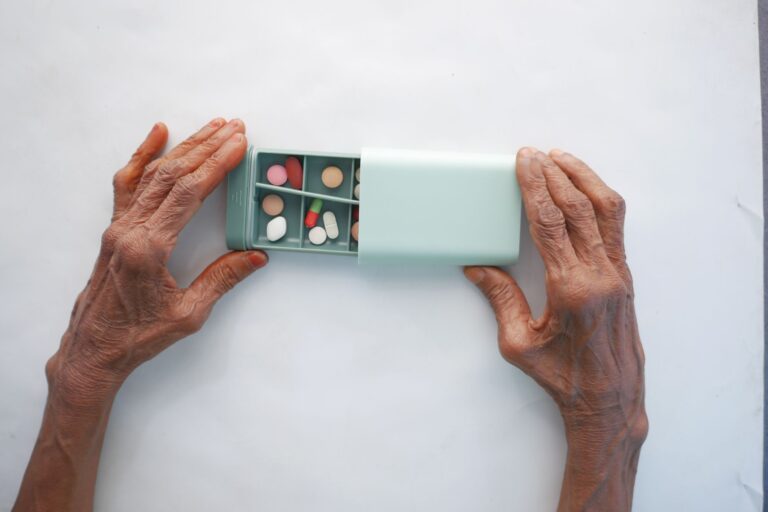
The starter dose is 500 mg once a week. According to the Eisai dosing announcement, it uses two back-to-back 250-mg autoinjectors, each lasting about 15 seconds Eisai dosing announcement. Eisai said the product would reach the U.S. in late August 2026. Shots happen at home after training.
No IV line and no hours-long infusion chair time are needed. Storage, handling, and shot-day routine follow clinic teaching. A family member can help track adherence. Note the date, injection sites, and any fever, rash, or injection-site pain. Bring that log to each follow-up.
What is ARIA and who faces higher risk?
ARIA means amyloid-related imaging abnormalities seen on brain scans. ARIA-E is swelling with fluid buildup. ARIA-H is bleeding with iron deposits. The FDA prescribing information carries a boxed warning that these events can be serious and sometimes fatal, including bleeding in the brain over 1 cm FDA prescribing information.
Symptoms may be absent, so scans matter more than how a person feels. Risk rises sharply with the ApoE e4 gene form. About 15% of Alzheimer's patients carry two copies. In those homozygotes, symptomatic swelling occurred in about 9%, versus 2% with one copy and 1% with none. FDA calls for ApoE testing before starting, according to the FDA safety labeling update FDA safety labeling update.
What scans and symptoms need a plan?
Expect a recent baseline brain MRI plus planned follow-up MRIs. The Medical Letter, summarizing an FDA safety notice, stresses extra watchfulness in the first 14 weeks. ARIA often causes no symptoms and usually appears early. The Alzheimer's Association statement urges caregivers to report these changes at once.
Do not wait to see if they fade. Call the prescribing clinic the same day. Keep a one-page plan on the fridge. List MRI dates, clinic phone, ApoE result, and last shot date. Bring it to every visit and emergency trip.
- headache
- confusion
- vision change
- dizziness
- gait difficulty
You Might Also Like
- The $100 Million PROTECT-Cog Alzheimer’s Study Announced in 2026: Questions Spouses and Partners Can Ask About the Research
- Why the AAIC 2026 Soccer Study Does Not Prove Dementia: Research Participation Questions for Adult Children
- Serious Illness and End-of-Life Dementia Research Priorities in 2026: Care-Planning Implications for Adult Children