Reviewed by the Help Dementia Editorial Team — our editors review every article for accuracy against guidance from the National Institute on Aging, the Alzheimer’s Association, and peer-reviewed sources.
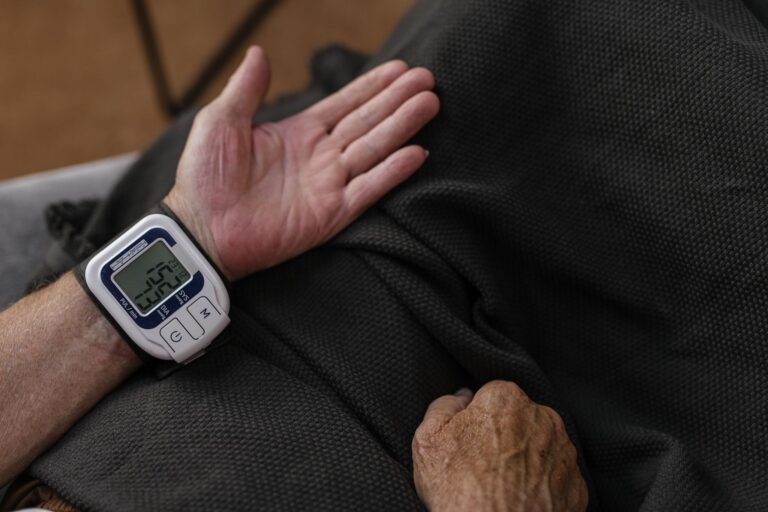
Researchers increasingly believe wearables detect early dementia patterns years before symptoms become obvious, by tracking subtle changes in movement, sleep, and daily routines.
Yes, wearables can detect patterns associated with early dementia, though they cannot diagnose the disease itself. Research over the past decade has shown that consumer devices like smartwatches and fitness trackers pick up subtle changes in gait speed, sleep architecture, heart rate variability, and daily activity rhythms that often shift years before memory symptoms become obvious. A 2023 analysis of UK Biobank accelerometer data found that disrupted circadian activity patterns predicted dementia diagnoses up to seven years in advance, with researchers able to distinguish future patients from healthy controls based on movement data alone. The distinction matters: a wearable flags a pattern, not a disease.
Slower walking speed, for example, is one of the most reliable early markers researchers have found, but it can also stem from arthritis, depression, or a new medication. What wearables offer is continuous, objective measurement in a person’s real environment, something a 20-minute clinic visit cannot capture. For families watching an aging parent, that continuous record can be the difference between noticing a decline in month two versus year two. The technology is moving from research labs into clinical pilots. Several memory clinics in the United States and Europe now incorporate actigraphy data, which tracks movement and rest cycles, into cognitive assessments, and pharmaceutical companies running Alzheimer’s drug trials increasingly use wearables to measure whether treatments actually change daily function.
Table of Contents
- How Could Wearables Detect Early Dementia Patterns Before Symptoms Appear?
- What the Research Actually Shows About Accuracy and Reliability
- Which Signals Matter Most: Gait, Sleep, Heart, and Routine
- How Families Can Use Wearables Today Without Overreaching
- The Pitfalls: False Alarms, Privacy, and Data That Misleads
- Wearables in Clinical Trials and Memory Clinics
- What Devices Are Researchers Actually Using?
- Frequently Asked Questions
How Could Wearables Detect Early Dementia Patterns Before Symptoms Appear?
The brain changes of Alzheimer’s disease begin 15 to 20 years before diagnosis, and some of those changes affect measurable behavior long before anyone notices memory loss. Gait is the clearest example. Walking requires constant coordination between motor planning, spatial awareness, and attention, all of which degrade early in many dementias. Studies using wearable sensors have found that people who later developed dementia walked measurably slower and with more stride-to-stride variability years before diagnosis. A decline of even 0.05 meters per second per year in walking speed has been linked to elevated dementia risk. Sleep is the second major signal.
The brain clears amyloid and other metabolic waste during deep slow-wave sleep, and people in the earliest stages of Alzheimer’s often show fragmented sleep, reduced deep sleep, and shifted circadian timing. Devices like the Oura ring and Apple Watch estimate sleep stages from heart rate and movement. They are less accurate than a sleep lab, but they capture every single night rather than one observed night, which makes gradual trends visible. Compare this to the standard screening pathway: most people are not given a cognitive test until they or a family member report a problem, by which point substantial brain change has already occurred. A wearable does not wait for a complaint. It records a baseline and quietly measures drift away from it.
What the Research Actually Shows About Accuracy and Reliability
The strongest evidence comes from actigraphy studies. In the UK Biobank study mentioned above, machine learning models trained on one week of wrist accelerometer data from roughly 100,000 participants identified individuals at significantly higher risk of future dementia diagnosis. Other work, including studies from the Rush Memory and Aging Project, found that fragmented daily activity rhythms in older adults predicted both cognitive decline and Alzheimer’s pathology found at autopsy. Smartphone and watch-based typing studies have added another layer: changes in typing speed, error rates, and pause patterns correlate with early cognitive impairment. The limitation is significant, and anyone considering these tools should understand it. These are population-level statistical associations, not individual diagnostic tests.
A model that performs well across 100,000 people can still be wrong about any single person. Sensitivity and specificity in most published studies fall well short of what would be required for clinical diagnosis, and false positives are common. An older adult whose watch shows declining activity may simply have had a hard winter, a hip problem, or a depressive episode. There is also a validation gap between research-grade devices and consumer products. Studies often use medical actigraphs like the ActiGraph or GENEActiv, which are calibrated and validated differently than a Fitbit. Algorithms in consumer wearables change with software updates, sometimes silently, which can make a long-term trend line unreliable in ways the user never sees.
Which Signals Matter Most: Gait, Sleep, Heart, and Routine
Not all wearable data carries equal weight. Gait speed and gait variability sit at the top of the evidence hierarchy, followed closely by circadian rest-activity rhythm. A weakening rhythm, meaning the difference between daytime activity and nighttime rest becomes less distinct, has repeatedly predicted cognitive decline. Heart rate variability, a measure of autonomic nervous system function, is a newer candidate; lower HRV has been associated with worse cognitive outcomes, though the evidence is less mature.
Routine disruption is perhaps the most intuitive signal for families. A 2021 study using in-home sensors and wearables from the Oregon Health & Science University ORCATECH program tracked older adults living independently and found that people developing mild cognitive impairment showed more day-to-day variability in when they got up, left the house, and went to bed. One participant’s data showed her weekly grocery trip, stable for two years, becoming erratic months before her family noticed anything wrong. GPS-derived “life space,” the geographic area a person covers in daily life, is another emerging measure. Shrinking life space, such as a driver who once ranged across town now staying within a few blocks, has been linked to cognitive decline and can be passively measured by any phone or LTE-enabled watch.
How Families Can Use Wearables Today Without Overreaching
For a family worried about a parent, the practical approach is to use a wearable as a trend recorder, not a diagnostic device. Establish a baseline over two to three months, then watch for sustained changes: average daily steps dropping 20 to 30 percent without an obvious cause, sleep becoming consistently fragmented, or wake times drifting later and later. Sustained means weeks, not days. Bring the actual data to a physician appointment; a graph of six months of declining activity is far more actionable for a doctor than “Mom seems slower.” There is a real tradeoff between device capability and the likelihood an older adult will actually wear it. An Apple Watch captures the richest data, including gait metrics, sleep stages, and heart measures, but requires daily charging, which many people with early cognitive changes forget.
A simpler tracker like a Withings hybrid watch or an Oura ring runs for days or weeks per charge and demands almost nothing from the wearer. For monitoring purposes, the device that stays on the wrist beats the device with better sensors sitting dead in a drawer. Consent is non-negotiable. Monitoring a cognitively healthy adult without their knowledge and agreement is a violation of their autonomy, and most older adults, when asked, are willing to share data with family if the purpose is explained honestly. Set up sharing through built-in features like Apple Health sharing or Fitbit family accounts rather than workarounds.
The Pitfalls: False Alarms, Privacy, and Data That Misleads
The biggest practical problem is the false alarm. Activity and sleep data are noisy, and almost everything in an older adult’s life can move them: a urinary tract infection, a new blood pressure medication, grief after losing a friend, a cold snap that keeps them indoors. Families who treat every dip in the step count as a dementia signal will exhaust themselves and alienate the person they are trying to help. The signal researchers care about is a slow, sustained, multi-month trend across several measures at once, not any single bad week. Privacy deserves more attention than it usually gets.
Continuous behavioral data is intimate, revealing when someone sleeps, where they go, and how their body is functioning. Most consumer wearable data is held by private companies under terms of service that permit broad use, and health data collected by a consumer device generally falls outside HIPAA protection in the United States. Before enrolling a parent in long-term monitoring, families should know who can access the data and whether it could ever surface in insurance or care decisions. A final warning: wearable data can create false reassurance just as easily as false alarm. Some forms of dementia, particularly those beginning with language or personality changes such as frontotemporal dementia, may leave activity and sleep patterns intact for a long time. A normal-looking dashboard is not evidence of a healthy brain.
Wearables in Clinical Trials and Memory Clinics
Pharmaceutical companies have become some of the heaviest users of dementia-related wearable monitoring. Trials of anti-amyloid drugs like lecanemab and donanemab increasingly include digital endpoints, with actigraphy and smartphone-based cognitive tasks used to measure whether a drug changes real-world function rather than just test scores.
The European RADAR-AD project, a consortium of academic centers and companies, spent several years specifically validating which wearable and smartphone measures track Alzheimer’s progression, identifying gait, sleep, and app-usage patterns among the most promising. Some memory clinics now send patients home with a research-grade actigraph for one to two weeks before an assessment. The week of objective rest-activity data helps clinicians separate true cognitive decline from sleep disorders such as sleep apnea, which can mimic dementia symptoms and is treatable.
What Devices Are Researchers Actually Using?
The workhorse devices in published dementia research are the ActiGraph GT9X and the GENEActiv wrist accelerometer, both research-grade actigraphs costing several hundred dollars and lacking any consumer display. Among consumer devices, the Apple Watch has appeared in the most studies, partly because Apple’s ResearchKit makes data collection straightforward; its gait metrics, including walking speed, step length, and double-support time, are derived from the paired iPhone and have been validated against laboratory gait mats with reasonable accuracy for people walking at normal speeds.
The Oura ring features in sleep-focused studies because its multi-day battery suits older users, and Fitbit devices supplied the data for several large-scale circadian rhythm analyses through the company’s research partnerships. In the ORCATECH studies, wearables were combined with passive in-home sensors on doors, beds, and pill boxes, and the combination consistently outperformed either data source alone.
Frequently Asked Questions
Can a smartwatch diagnose dementia?
No. Wearables detect behavioral patterns statistically associated with dementia risk, but diagnosis requires clinical evaluation, cognitive testing, and often brain imaging or biomarker tests.
Which wearable measurement is the strongest early dementia signal?
Gait speed and gait variability have the strongest evidence, followed by disrupted circadian rest-activity rhythms and fragmented sleep.
How early can these patterns appear?
Studies have detected predictive activity and gait changes up to seven years before diagnosis, and brain changes begin even earlier.
Should I monitor my parent’s wearable data without telling them?
No. Monitoring a cognitively capable adult requires their informed consent, and most consumer platforms offer built-in sharing features designed for exactly this purpose.
Can normal wearable data rule out dementia?
No. Some dementias, especially those starting with language or behavior changes, leave activity and sleep patterns intact for years.
What should I do if I see a sustained decline in the data?
Bring the data to a physician. Many causes of declining activity, including sleep apnea, depression, and medication side effects, are treatable.
You Might Also Like
- Could Testing Tools Miss Dementia in Some Communities?
- What Families Should Know About AI Dementia Tools
- Could Movement Slow Early Cognitive Symptoms?
Related reading
For more on this topic, see National Institute on Aging research on dementia detection.