Reviewed by the Help Dementia Editorial Team — our editors review every article for accuracy against guidance from the National Institute on Aging, the Alzheimer’s Association, and peer-reviewed sources.
New diagnostics sits at the center of this dementia and brain health question.
Yes, emerging diagnostic tools are beginning to expand access to dementia treatment, though significant barriers remain. Recent breakthroughs in blood-based biomarkers and AI-powered imaging are making early detection faster, less invasive, and more accessible than traditional methods. In May 2025, the FDA approved the first blood test to diagnose Alzheimer’s disease—a milestone that fundamentally changes how patients can be identified and enrolled in treatment programs.
A fingerprick test measuring p-tau217 levels, for example, can predict symptom onset within three to four years, opening windows for intervention before cognitive decline becomes severe. However, the expansion of diagnostic capacity is only part of the story. While these new tools enable earlier identification, accessing treatments and clinical trials remains challenging for many people, particularly those in rural areas, low-income communities, and racial and ethnic minority populations. The real measure of diagnostic advancement lies not just in the technology itself, but in whether patients can actually reach treatment once they are diagnosed.
Table of Contents
- How Blood Tests and Biomarkers Are Changing Early Detection
- The Role of AI and Advanced Imaging in Diagnostic Precision
- Blood Tests as Clinical Trial Accelerators
- How Expanded Diagnostics Can Overcome Traditional Access Barriers
- The Persistent Barriers That Diagnostics Alone Cannot Fix
- The Emerging Role of At-Home and Distributed Testing
- Real-World Examples of Diagnostic-Driven Treatment Models
How Blood Tests and Biomarkers Are Changing Early Detection
Blood-based biomarkers have fundamentally transformed the speed and feasibility of dementia diagnosis. Instead of relying on cognitive testing, brain imaging, or cerebrospinal fluid samples obtained through lumbar puncture, doctors can now order a simple blood test to measure phosphorylated tau proteins (p-tau217 and p-tau181) and other markers of neurodegeneration. These proteins accumulate in the blood when Alzheimer’s pathology begins to develop in the brain, sometimes a decade or more before memory problems appear.
Capillary blood sampling—using a fingerprick—has proven just as reliable as traditional venipuncture. Research published in 2026 confirmed that home-based fingerprick testing for Alzheimer’s biomarkers correlates strongly with cognitive performance and can identify people at highest risk of developing dementia. This shift matters because it removes barriers like transportation, scheduling office visits, and needle anxiety. A patient in a rural community without access to a neurologist can now get tested at a primary care office, or even at home with a mail-in kit.
The Role of AI and Advanced Imaging in Diagnostic Precision
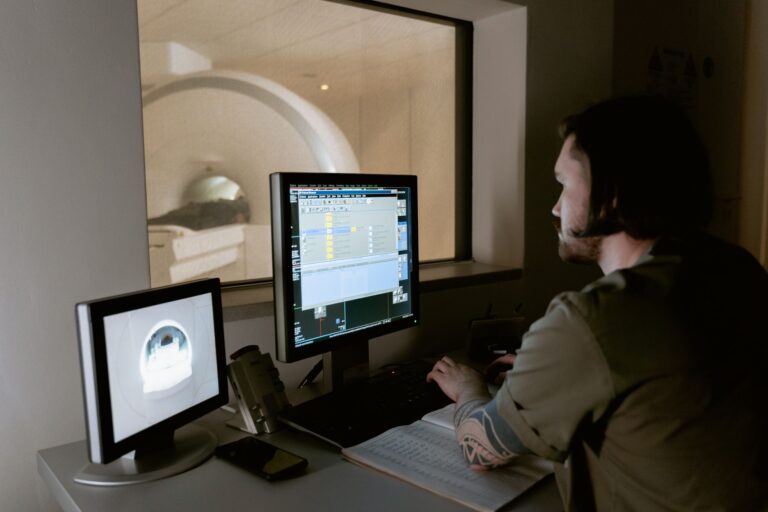
Alongside blood tests, artificial intelligence is enhancing the interpretation of PET and mri brain scans, the gold-standard imaging tools for detecting Alzheimer’s pathology. Machine learning algorithms trained on thousands of scans have achieved 95% accuracy in classifying whether amyloid protein has accumulated in the brain—a key indicator of Alzheimer’s disease. These AI systems can identify subtle changes in brain structure and metabolism that human radiologists might miss, particularly in early stages when changes are minimal.
However, AI-enhanced imaging comes with a major limitation: cost and availability. PET scans and advanced MRI studies are expensive and concentrated in academic medical centers and well-resourced health systems. A 3D PET scan with AI analysis might cost $3,000 to $5,000, and many insurance plans, including Medicare, do not automatically cover them for cognitive screening outside of specific clinical protocols. This means that while the technology works, most patients cannot access it—a troubling gap between diagnostic capability and diagnostic reality.
Blood Tests as Clinical Trial Accelerators
One of the most immediate impacts of new diagnostics is their effect on clinical trial recruitment. Currently, 138 drugs are being tested in 182 trials worldwide for Alzheimer’s disease and related dementias. Blood biomarkers speed up trial enrollment because researchers can quickly screen candidates and identify those with the specific pathology required for a given study. Before these tests existed, trial recruitment could take years; now it takes weeks or months.
This acceleration has direct consequences for patients. When clinical trials can recruit faster, they reach completion sooner, meaning new treatments reach patients more quickly. It also lowers the barrier for trial participation—a patient who learns they have preclinical Alzheimer’s pathology from a blood test might seek out a nearby trial where they can potentially receive an experimental therapy unavailable through standard care. The National Institute on Aging and NIH are currently funding trials of combination therapies, including anti-amyloid drugs paired with tau-targeting treatments, and blood-based diagnostics make it feasible to test these combinations in larger, more diverse populations.
How Expanded Diagnostics Can Overcome Traditional Access Barriers
New diagnostics offer a pathway to address the equity problem in dementia care, though they are not a complete solution. Blood tests are cheaper to perform than PET imaging (typically $200 to $800 per test), require minimal infrastructure, and can be conducted in primary care settings that serve underserved communities. This is particularly important because primary care physicians see the majority of older adults, especially in rural and low-income areas where neurology specialists are scarce.
When a primary care doctor can diagnose Alzheimer’s disease with a blood test and immediately link a patient to treatment or trial options, entire populations previously locked out of specialty care gain access. The comparison is striking: ten years ago, a patient in a remote county might wait months for a neurology appointment only to be told that a definitive diagnosis required a $3,000 PET scan they could not afford. Today, that same patient can receive a diagnosis within days from their family doctor. This shift is particularly meaningful for older adults on Medicare or Medicaid who face transportation challenges.
The Persistent Barriers That Diagnostics Alone Cannot Fix
Despite their promise, new diagnostic tools have exposed—and in some cases widened—existing inequities in dementia care. Insurance coverage remains inconsistent: while the FDA-approved p-tau217 blood test is beginning to be reimbursed by Medicare and some private insurers, many newer tests and advanced imaging procedures are not yet covered. Patients without insurance or with high-deductible plans often cannot afford them, even at the lower end of the cost spectrum. Racial and ethnic minority populations face compounded barriers.
Beyond insurance coverage gaps, they navigate discrimination, cultural beliefs that normalize cognitive decline, and a historical mistrust of medical institutions. A study of Latino communities found that even when diagnostic capacity exists, patients and providers often lack awareness of dementia services, and cultural factors influence whether families seek diagnosis at all. Additionally, clinical trials have historically recruited white, educated, English-speaking participants, so diagnostic criteria and treatments may not perform equally across different populations. A blood test that works well in the majority may have different accuracy rates in people of African or Latino descent, yet few studies have examined this question.
The Emerging Role of At-Home and Distributed Testing
One of the most significant developments is the push toward home-based and distributed testing models. Several research initiatives have begun mailing biomarker testing kits to older adults, allowing them to provide a fingerprick sample at home and mail it back for analysis. Initial studies show that remote capillary sampling correlates strongly with lab-drawn blood and produces reliable biomarker results.
This approach has profound implications for early detection at the population level. Rather than waiting for patients to develop symptoms and seek care, health systems could proactively screen older adults for preclinical Alzheimer’s pathology. A 70-year-old with no cognitive complaints but a family history of dementia could discover their biomarker status and begin preventive interventions years before memory problems arise. The Alzheimer’s Association’s 2025 clinical practice guideline explicitly recommends biomarker-based screening in specialty and primary care settings, signaling that this approach is no longer experimental but standard practice.
Real-World Examples of Diagnostic-Driven Treatment Models
Several academic health systems have begun implementing integrated diagnostic and treatment pathways that demonstrate how new tools can expand access. Ohio State’s memory disorders program combines blood biomarker screening with AI-enhanced imaging interpretation and direct linkage to clinical trials. Patients receive a diagnosis within weeks rather than months and are immediately informed of trial opportunities matching their biomarker profile.
Similar models are emerging at Mayo Clinic, Johns Hopkins, and several other major centers. However, scaling these models to the community level remains a work in progress. A rural health clinic in Kentucky, for example, can now order p-tau217 tests from its local laboratory, but it lacks the expertise to interpret results, counsel patients on preclinical findings, or connect them to prevention programs or trials. The diagnostic capability exists, but the infrastructure to deliver care based on that diagnosis remains fragmented, particularly outside of major urban centers.
- —
You Might Also Like
- Could Real-World Data Improve Dementia Treatment Research?
- Why Treatment Eligibility Can Be Narrow
- How Drug Companies Measure Alzheimer’s Treatment Success
For more, see CDC — Alzheimer’s and Dementia.