Reviewed by the Help Dementia Editorial Team — our editors review every article for accuracy against guidance from the National Institute on Aging, the Alzheimer’s Association, and peer-reviewed sources.
Yes, at-home Alzheimer’s testing is likely to become possible within the next five to ten years, and researchers are actively working on technologies that could make it a reality. Several biotech companies and research institutions are developing blood tests and other diagnostic tools that could eventually be administered outside of clinical settings, potentially allowing people to screen for Alzheimer’s risk factors in their own homes. However, significant hurdles remain, including regulatory approval, cost, accuracy validation, and the complexity of interpreting results without professional guidance.
The momentum behind at-home Alzheimer’s testing is driven by a critical insight: early detection matters enormously for cognitive health. Consider that the amyloid proteins associated with Alzheimer’s can accumulate in the brain for 15-20 years before symptoms appear. If people could identify these biomarkers earlier through a simple home test, they might have a genuine window to discuss preventive strategies with their doctors—dietary changes, cognitive engagement, physical activity, or emerging medications—before significant cognitive decline occurs.
Table of Contents
- WHAT BIOMARKERS CAN AT-HOME TESTS ACTUALLY DETECT?
- REGULATORY AND VALIDATION CHALLENGES SLOWING HOME DEPLOYMENT
- THE ROLE OF ARTIFICIAL INTELLIGENCE IN HOME-BASED COGNITIVE ASSESSMENT
- PRACTICAL IMPLEMENTATION: HOW AT-HOME TESTING WOULD ACTUALLY WORK
- EQUITY CONCERNS AND DISPARITIES IN ACCESS
- PRIVACY AND DATA SECURITY IN SENSITIVE TESTING
- THE FUTURE OF PREVENTION-FOCUSED NEUROLOGY
- Conclusion
WHAT BIOMARKERS CAN AT-HOME TESTS ACTUALLY DETECT?
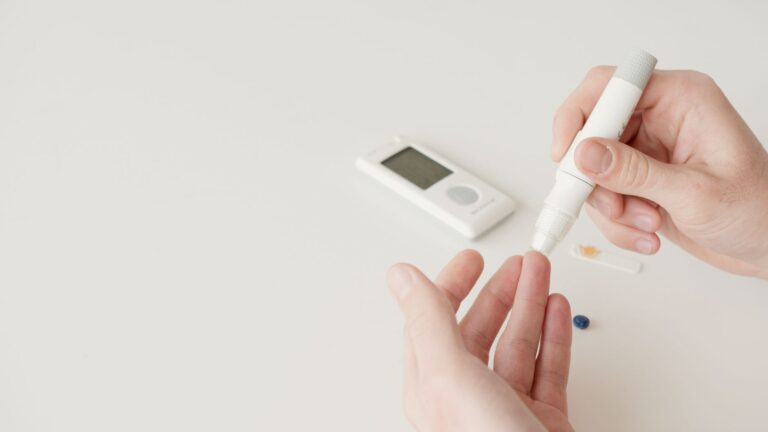
Blood-based biomarker tests represent the most promising avenue for at-home Alzheimer’s screening. These tests measure proteins like phosphorylated tau (p-tau) and amyloid-beta that accumulate abnormally in Alzheimer’s disease. Recent breakthroughs, particularly the development of plasma phosphorylated tau-217 (p-tau217) tests, have shown remarkable accuracy in research settings—comparable to or even better than PET imaging and cerebrospinal fluid analysis. Some tests can now be performed with a simple finger-stick blood sample rather than requiring a full venipuncture. The advantage of blood tests over previous methods is straightforward: they’re less invasive, faster, and cheaper.
A traditional Alzheimer’s diagnosis often requires cognitive testing, MRI scans, PET imaging, and sometimes a spinal tap—a process that can cost thousands of dollars and take months. In contrast, a blood test could potentially deliver results in days for under $500. Companies like C2N Diagnostics and others have already launched plasma phosphorylated tau tests available through doctors, bringing at-home versions closer to reality. The limitation here is important to understand: these blood tests can identify the presence of disease-related proteins, but they cannot diagnose dementia itself or predict with certainty who will develop cognitive symptoms. Someone can have elevated biomarkers and remain cognitively healthy for years. This distinction means at-home tests would measure risk, not destiny—which is useful information but could also generate anxiety without clear actionable guidance.

REGULATORY AND VALIDATION CHALLENGES SLOWING HOME DEPLOYMENT
For an at-home test to legally exist in the U.S., it must navigate fda approval or clearance, a process designed to ensure accuracy and safety. The FDA has historically been cautious with in-vitro diagnostics, especially those related to serious neurological conditions, requiring manufacturers to provide extensive clinical validation data showing the test performs as claimed across diverse populations. This regulatory pathway typically takes 2-4 years and can cost millions of dollars. A significant validation challenge is that Alzheimer’s biomarkers vary by age, sex, genetics, and ethnic background. What constitutes an abnormal p-tau217 level for a 55-year-old woman might differ meaningfully from a 75-year-old man.
early studies have also revealed concerning disparities: some biomarker tests perform differently in people of African descent compared to European descent, potentially delaying diagnosis in underrepresented groups. Any at-home test would need validation across these demographics before widespread deployment, which lengthens development timelines. Another warning worth highlighting: the rush toward at-home testing in a direct-to-consumer market could create problems if companies begin marketing tests before adequate regulation. Imagine someone purchasing a home Alzheimer’s test online, receiving a result suggesting elevated risk, and then struggling to find a doctor willing to interpret it or provide meaningful follow-up. Without proper regulatory oversight, a booming market in unvalidated tests could create confusion and false diagnoses.
THE ROLE OF ARTIFICIAL INTELLIGENCE IN HOME-BASED COGNITIVE ASSESSMENT
Beyond blood tests, researchers are developing AI-powered cognitive assessments that could run on smartphones or computers at home. These tools ask users to perform tasks—like drawing a clock, identifying objects, or responding to timed prompts—while the AI algorithm analyzes performance patterns that might indicate subtle cognitive decline. Some studies have shown promising results, with AI assessments detecting mild cognitive impairment more reliably than traditional paper-and-pencil tests. The advantage of AI-based cognitive testing is accessibility. A person could complete assessments quarterly from home without scheduling a doctor’s appointment or taking time off work. For those in rural areas or with mobility limitations, this could be transformative.
One example comes from digital biomarker research showing that typing speed and keystroke dynamics can subtly change in people with early cognitive decline—information a home-based typing assessment could capture. However, AI cognitive assessments carry significant limitations. They cannot replace the nuanced clinical judgment of a neuropsychologist who can account for education level, depression, sleep deprivation, and other factors affecting test performance. Someone scoring poorly on a cognitive assessment might be experiencing depression or normal aging, not Alzheimer’s disease. At-home tests could therefore create false alarms, leading to unnecessary anxiety and costly follow-up testing. Additionally, these tools require standardization and validation to ensure they work equally well for someone who is tech-savvy versus someone unfamiliar with computers.

PRACTICAL IMPLEMENTATION: HOW AT-HOME TESTING WOULD ACTUALLY WORK
Envision a realistic at-home Alzheimer’s testing scenario in 2030-2035. A person orders a kit online or picks one up at a pharmacy. The kit contains supplies for collecting a blood sample via finger stick, along with instructions and a prepaid return envelope. The person follows instructions, collects their sample, and mails it to a certified laboratory. Results arrive within a week, presented through a secure online portal. The results clearly indicate whether biomarker levels are normal, borderline, or elevated. This model compares directly to today’s at-home tests for conditions like vitamin D deficiency or cholesterol screening.
Some of these tests have become routine—people obtain them without prescriptions and receive results they manage independently. However, Alzheimer’s testing is fundamentally more complex psychologically. A positive coronavirus test or cholesterol result triggers fairly straightforward follow-up steps. An Alzheimer’s biomarker test, by contrast, raises existential questions about brain health and cognitive future that many people would want to discuss with a doctor before even receiving results. The practical tradeoff, therefore, involves how at-home tests would integrate with healthcare. An ideal system would allow someone to order a test at home but require discussion with a healthcare provider about results before disclosure. This adds value and safety but also reintroduces some of the friction and cost that at-home testing was meant to eliminate. The question of who bears the cost—the individual, insurance, or the test manufacturer—remains unresolved and could significantly impact adoption.
EQUITY CONCERNS AND DISPARITIES IN ACCESS
At-home Alzheimer’s testing could exacerbate existing healthcare disparities if not carefully designed. Historically, technologies marketed as “convenient” tend to concentrate among wealthy, educated populations first. This means affluent individuals might gain early access to biomarker screening, potentially allowing them to engage preventive strategies earlier, while lower-income populations remain diagnosed only when symptoms appear. This widening of the “worried well” versus the “sick” could become a new dimension of healthcare inequality. Another equity concern involves trust and cultural factors. Mistrust of the medical system, particularly among people of color, has deep historical roots.
An at-home test marketed as a way to screen for Alzheimer’s could be met with skepticism, especially if communities have not seen proportional representation in research validating the test. There is also the language barrier: many commercial at-home tests are only offered in English, limiting access for non-English speakers. A specific warning: genetic markers associated with Alzheimer’s risk—particularly the APOE e4 gene variant—show different prevalence and predictive value across populations. Someone of African descent with the APOE e4 variant may have a different risk trajectory than someone of European descent with the same variant. If at-home tests incorporate genetic information without adequate diversity in research, they risk providing meaningless or even harmful predictions to certain populations. This requires deliberate, funded research efforts that often receive insufficient attention in drug development.

PRIVACY AND DATA SECURITY IN SENSITIVE TESTING
At-home Alzheimer’s testing would generate sensitive health data about cognitive risk, potentially genetic information, and personal identifiers. The privacy implications are substantial. Who owns the data? Can insurance companies access it and adjust premiums based on Alzheimer’s risk? Could employers learn that an employee has elevated biomarkers and adjust job assignments or termination decisions accordingly? These scenarios are not hypothetical—data breaches involving health information are common, and regulations lag behind technology.
Consider the example of direct-to-consumer genetic testing. Companies like 23andMe initially promised privacy but eventually began sharing genetic data with pharmaceutical partners and facing criticism about consent and data control. An at-home Alzheimer’s test would likely follow similar tensions between offering value (sharing data to advance research) and protecting individuals (keeping data private). Robust privacy frameworks and clear, informed consent processes would be essential before widespread deployment, but currently, there is no universal standard governing these practices.
THE FUTURE OF PREVENTION-FOCUSED NEUROLOGY
The broader significance of at-home Alzheimer’s testing relates to a fundamental shift in how we approach neurological disease. For decades, Alzheimer’s was a diagnosis of decline—made only after symptoms appeared and damage was extensive. Moving toward biomarker-based identification decades before symptoms could reshape dementia prevention.
Recent trials of anti-amyloid monoclonal antibodies like aducanumab and lecanemab have shown modest slowing of cognitive decline in very early stages, suggesting that early intervention is possible if early detection occurs. At-home testing could become one component of a broader strategy combining biomarker assessment, cognitive engagement, cardiovascular health optimization, and potentially medication. However, success requires not just the technology but also a cultural shift in how we view early biomarker findings. Instead of a diagnosis to fear, early biomarkers should trigger conversations about modifiable risk factors—the very conversation that at-home testing could enable.
Conclusion
At-home Alzheimer’s testing will likely become available within the next decade, beginning with blood-based biomarker tests and potentially incorporating AI-powered cognitive assessments. These tests could democratize early detection and shift Alzheimer’s care from diagnosis-at-decline toward identification-at-risk.
However, significant obstacles remain: regulatory validation, ensuring equity and accuracy across populations, establishing privacy protections, and integrating test results into meaningful clinical care pathways. For individuals concerned about cognitive health now, the practical next step is discussing available options with a healthcare provider—whether that’s scheduling cognitive testing, getting a blood biomarker test through a doctor, or beginning preventive lifestyle changes known to support brain health. The promise of at-home Alzheimer’s testing is real, but it works best as one part of a comprehensive approach to cognitive wellness, not as a replacement for professional evaluation and guidance.
You Might Also Like
- Why Early Alzheimer’s Testing Could Create New Ethical Questions
- Could Urine Tests Become the Next Alzheimer’s Diagnostic Tool?
- What Families Should Know About Early Alzheimer’s Blood Testing
Related reading
- what Researchers Mean by Alzheimer’s Disease of the Heart
- why Brain and Heart Disease May Share Molecular Pathways
- can Heart Disease Research Reveal New Dementia Targets
- how Blood Vessels May Shape Alzheimer’s Risk
- why Vascular Health Matters in Dementia Prevention
For more on this topic, see Alzheimer’s Association.