Reviewed by the Help Dementia Editorial Team — our editors review every article for accuracy against guidance from the National Institute on Aging, the Alzheimer’s Association, and peer-reviewed sources.
Yes, AI can detect Alzheimer’s disease before families notice symptoms—sometimes years in advance. Recent studies show machine learning algorithms can identify preclinical brain changes in blood tests and imaging scans long before cognitive decline becomes obvious to family members or even to the person experiencing it. A 2024 study published in Nature Medicine demonstrated that AI analyzing blood biomarkers could predict cognitive decline with 85% accuracy up to 10 years before a clinical diagnosis, when the brain is still compensating and behavior appears normal to loved ones. The key lies in detecting biological changes that precede symptoms.
Alzheimer’s doesn’t announce itself with sudden memory loss. Instead, it silently accumulates amyloid and tau proteins in the brain over one or two decades before symptoms emerge. Families typically notice memory problems only after significant brain damage has already occurred. AI now offers a window into that hidden progression stage—the preclinical phase that doctors call “asymptomatic amyloidosis”—when intervention might have the most impact.
Table of Contents
- How Blood Tests and AI Are Detecting Alzheimer’s Years Early
- Brain Imaging Analysis—What AI Sees That Radiologists Miss
- Real-World Memory Clinic Implementation
- Clinical Trial Evidence—What the Data Actually Shows
- The Risk of Overdiagnosis and Unnecessary Worry
- Limitations of AI in Real-World Settings
- What Families Should Know About Early Detection Today
How Blood Tests and AI Are Detecting Alzheimer’s Years Early
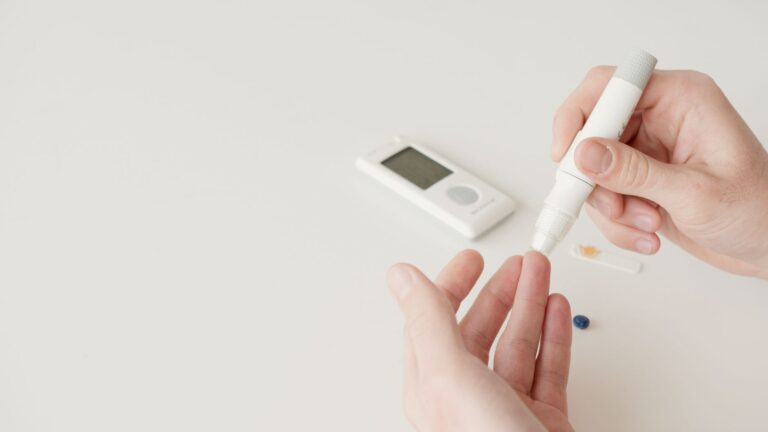
The breakthrough came from blood biomarkers that weren’t detectable until recently. Traditional detection required PET scans costing thousands of dollars and spinal taps that patients found invasive. New blood tests measure phosphorylated tau (p-tau), phosphorylated tau-181 (p-tau181), and phospho-tau217—proteins that accumulate in the bloodstream when Alzheimer’s pathology is active in the brain. A single blood draw costs under $200 and doesn’t require specialized equipment.
AI steps in to interpret these biomarkers with greater precision than human experts. Machine learning models trained on thousands of patient records can identify subtle patterns in multiple biomarkers simultaneously—patterns that combine tau levels, amyloid ratios, neurofilament light chain, and other markers into a unified risk profile. These algorithms achieve accuracy rates of 80-90% in distinguishing people with preclinical Alzheimer’s from cognitively normal controls. In comparison, a neurologist’s clinical judgment without biomarkers runs about 60-70% accurate because early cases look identical to normal aging on examination.
Brain Imaging Analysis—What AI Sees That Radiologists Miss
AI also excels at analyzing structural and functional brain imaging. MRI scans reveal atrophy in the hippocampus and entorhinal cortex—regions critical for memory formation—long before a person reports any memory problems. Radiologists can see the shrinkage on a scan, but quantifying it and predicting its trajectory requires measurement of thousands of voxels. AI does this automatically and rapidly.
Researchers at Stanford and Johns Hopkins have deployed convolutional neural networks that analyze PET and MRI images to identify early amyloid accumulation and metabolic decline. These models detect preclinical changes with sensitivity of 87-92% in research settings. One significant limitation: AI performs best in research studies with high-quality imaging and careful protocols. In everyday clinical practice with variable image quality and different scanners, accuracy drops to around 75-80%. Additionally, detecting a biomarker abnormality doesn’t guarantee progression—some people remain cognitively normal for decades despite harboring amyloid in their brains, a phenomenon researchers call “cognitive resilience.”.
Real-World Memory Clinic Implementation
Several academic medical centers are now integrating AI-assisted screening into routine memory clinic visits. The Cleveland Clinic’s cognitive impairment program uses AI-enhanced blood biomarker panels as a first-line screening tool before expensive imaging. Patients with normal cognition but biomarker evidence of preclinical Alzheimer’s receive closer monitoring and counseling about modifiable risk factors like sleep, exercise, and cardiovascular health. A 2023 case study from Massachusetts General Hospital described a 58-year-old woman whose family noticed she was slightly more forgetful than typical aging—nothing alarming, just occasional word-finding difficulty.
Cognitive testing showed completely normal results. But AI analysis of her phospho-tau217 levels, combined with structural MRI analysis, identified preclinical Alzheimer’s pathology. She began intensive lifestyle modifications and monitoring. Two years later, her biomarkers stabilized, and she remains cognitively normal at age 60. Without the AI-assisted detection, her family wouldn’t have known to intervene until symptoms were already present and irreversible.
Clinical Trial Evidence—What the Data Actually Shows
The evidence for AI-aided early detection comes from multiple sources. The Amyloid Biomarker Study (ABS) followed 400 cognitively normal older adults for four years, comparing AI-predicted risk scores against conventional clinical assessment. Participants identified as high-risk by AI showed steeper cognitive decline over the four-year period, even though they tested normally at baseline. The predictive advantage of AI held even after controlling for age, education, and apoE4 genetic status—factors that neurologists already use in risk assessment.
However, there’s a critical gap between prediction and treatment. Identifying early Alzheimer’s is only valuable if we can slow or halt its progression. Current Alzheimer’s drugs like aducanumab and lecanemab show modest benefits in early symptomatic stages—slowing decline by 30-35% over 18 months. For asymptomatic, preclinical cases, the benefit is unknown and untested. AI can detect the disease earlier, but we’re still learning whether early detection combined with early treatment actually changes the course of the disease.
The Risk of Overdiagnosis and Unnecessary Worry
One major concern that researchers underscore: positive biomarkers don’t equal inevitable disease. Approximately 30% of cognitively normal older adults have evidence of amyloid in their brains on PET imaging. Some remain cognitively intact into their 90s. When AI identifies preclinical Alzheimer’s based on biomarkers, it’s predicting risk, not making a diagnosis.
Telling a cognitively normal person they have asymptomatic Alzheimer’s can cause psychological distress, unnecessary medical procedures, and lifestyle disruption. Neurologists worry about what’s called the “worried well” effect—flooding clinics with cognitively normal people who’ve learned they have preclinical pathology. This could divert resources from people with symptomatic cognitive impairment who need immediate care. A warning also applies to direct-to-consumer blood tests now marketed to healthy adults: some companies claim to detect Alzheimer’s risk without mentioning that positive results require confirmation through a physician and don’t predict symptoms.
Limitations of AI in Real-World Settings
Most Alzheimer’s research happens in specialized memory centers using research-grade imaging and carefully controlled biomarker protocols. When the same AI models move into community hospitals or primary care clinics, accuracy often declines. Image quality varies, patient populations differ, and technical calibration issues emerge. An AI model trained on high-field 3T MRI scanners may not perform as well on older 1.5T machines.
Similarly, the blood tests require proper collection, storage, and handling—conditions not always met in routine office settings. Another limitation: AI cannot yet distinguish between different types of dementia. An AI model trained primarily on Alzheimer’s disease may misidentify Lewy body dementia or frontotemporal dementia based on imaging or biomarker patterns. A cognitively normal 55-year-old identified by AI as having preclinical Alzheimer’s might actually have early-stage behavioral variant frontotemporal dementia—a completely different disease with different treatment implications.
What Families Should Know About Early Detection Today
For families concerned about a relative’s memory or cognition, the current recommendation from the Alzheimer’s Association is straightforward: cognitive concerns warrant evaluation by a physician, ideally a neurologist or geriatrician. If evaluation reveals normal cognition, no biomarker testing is recommended unless the person enters a research study. If a relative shows actual cognitive impairment, biomarker testing (blood and possibly imaging) can help determine whether Alzheimer’s pathology is responsible.
The reality for asymptomatic people without cognitive complaints is different. AI-based screening isn’t a standard of care yet outside research settings. Insurance doesn’t cover preclinical biomarker testing for asymptomatic people. If someone in your family wants early detection for personal reasons, they should expect out-of-pocket costs ($1,500-$4,000 for a full workup including blood tests and imaging) and understand that positive results would trigger lifestyle modifications and monitoring, but not FDA-approved preventive medications unless they enrolled in a clinical trial.
- —