Reviewed by the Help Dementia Editorial Team — our editors review every article for accuracy against guidance from the National Institute on Aging, the Alzheimer’s Association, and peer-reviewed sources.
President hide sits at the center of this dementia and brain health question.
Yes, a president could potentially hide or minimize signs of dementia, and Ronald Reagan’s presidency provides a sobering historical case study of how this might occur. Reagan, who was diagnosed with Alzheimer’s disease in 1994—a decade after leaving office—exhibited what some observers and later historians described as signs of cognitive decline during his second term, particularly in his final years (1985-1989), yet the American public and much of the media did not recognize these as potential warnings of dementia. The question of whether his staff deliberately concealed concerns, overlooked them, or simply misattributed them to normal aging remains contested among historians and medical observers, but the case demonstrates significant vulnerabilities in how we monitor and assess presidential fitness.
This article examines the Reagan precedent, the medical and institutional factors that could enable such concealment, the safeguards that exist to prevent it, and what we’ve learned about transparency in presidential health since then. Reagan’s situation was uniquely complicated because Alzheimer’s disease develops insidiously over years or decades, often beginning with subtle memory lapses or word-finding difficulties that can easily be dismissed as stress, fatigue, or simply getting older. In his second term, observers noted instances where Reagan appeared to lose his train of thought during public appearances, made unusual factual errors, or seemed less engaged in briefings—but these incidents were often explained away by aides, the press, or the public as isolated gaffes rather than signs of systemic cognitive decline. No one at that time understood that early Alzheimer’s could be developing silently in his brain, a reality we now know from neuroscience and autopsy studies.
Table of Contents
- What Was Actually Observed During Reagan’s Presidency and How It Was Interpreted?
- The Medical Reality of Concealing Early Dementia in a Powerful Position
- Documentation, Medical Access, and the Presidential Secrecy Problem
- The 25th Amendment and Why It Didn’t (and Couldn’t) Catch This Problem
- The Challenge of Distinguishing Normal Aging From Dementia in a President
- Modern Safeguards and What Has Changed Since Reagan?
- What the Reagan Precedent Means for Presidential Transparency and Democratic Governance
- Conclusion
What Was Actually Observed During Reagan’s Presidency and How It Was Interpreted?
During reagan‘s second term, multiple observers noted concerning patterns. In 1986, the president confused Libya and Liberia during a public address. In 1987, he told a radio audience he had “signed legislation that will outlaw Russia forever” while apparently forgetting he was still on air. He had incidents where he seemed confused about details of his own administration’s policies, and some aides reported that he became more dependent on note cards and scripted remarks. However, rather than raising red flags about potential dementia, these incidents were typically attributed to Reagan’s well-established communication style (which had always been somewhat casual and anecdote-driven), his aging, or simply presidential stress.
The media and political observers largely normalized these moments as typical Reagan quirks rather than investigating whether they signaled something more serious. Critically, dementia in its early stages looks a lot like normal aging, distraction, or stress. Most people in their 70s and 80s occasionally forget names, misplace words, or make factual errors—these are not diagnostic of disease. This is why spotting early Alzheimer’s disease is so difficult, even for medical professionals. The Reagan case illustrates how easily these early signs can be explained away, especially when the person in question is powerful, well-supported by staff who manage his schedule and supplement his memory, and when there’s no clear mechanism for independent medical oversight of the president’s cognitive function. Unlike a corporate CEO or general, who might face cognitive screening or independent medical review, the president’s health is largely monitored by his chosen physician and reported on by the patient himself.

The Medical Reality of Concealing Early Dementia in a Powerful Position
from a neuroscience perspective, early-stage dementia is extraordinarily difficult to detect without formal cognitive testing, and this difficulty favors concealment—either intentional or unintentional. A person with very mild cognitive impairment (the stage just before mild dementia) may function completely normally in structured environments where they have notes, staff support, and carefully prepared briefings. They may excel at responding to prepared remarks or reading from a teleprompter, but struggle when required to spontaneously recall details, think on their feet, or manage unfamiliar situations. Reagan, as president, operated in a highly controlled environment where everything was scripted and staffed—he rarely faced truly spontaneous situations, and when he did stumble, the moment could be quickly moved past. This structural protection made it easier for both him and those around him to remain unaware of whether genuine cognitive decline was occurring.
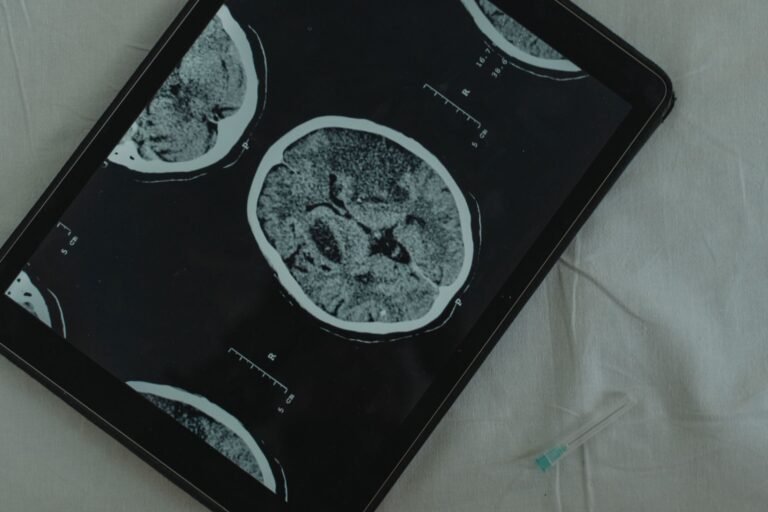
However, if someone actively wished to conceal dementia in a president, they would face significant medical and logistical obstacles. A true dementia diagnosis requires formal cognitive testing (such as the Montreal Cognitive Assessment or Mini-Cog), neuroimaging (MRI or PET scan to look for brain atrophy or amyloid), and ideally biomarker testing. This kind of testing would be hard to hide—it requires a patient to undergo scans and tests that would be obvious to anyone monitoring the president’s medical appointments. Moreover, dementia eventually becomes impossible to hide as it progresses; eventually, the person becomes unable to function in complex roles. Reagan did eventually step down after his second term, though there’s no evidence that cognitive concerns were the reason. The point is that while early dementia might be overlooked, advanced dementia would be unmistakable, and a president in advanced stages would be unable to effectively govern—the system would eventually catch the problem through crisis rather than prevention.
Documentation, Medical Access, and the Presidential Secrecy Problem
One major factor that enabled potential concealment of Reagan’s condition is the limited transparency surrounding presidential health. Presidents are required to undergo annual medical examinations, but the results are not independently verified or publicly detailed in any rigorous way. The president’s physician reports on the president’s health, but there is no requirement for independent neurological or cognitive assessment, no requirement to share raw test data, and no oversight mechanism comparable to what would exist for, say, a commercial airline pilot (who must pass rigorous medical exams) or a nuclear power plant operator (who faces cognitive and health screening). This asymmetry is remarkable: we have strict medical certification standards for people operating heavy machinery, but we have minimal standards for the person commanding nuclear weapons.
Furthermore, presidential medical records are protected by privacy law and executive privilege, making it difficult for the public, Congress, or the press to learn about any health concerns until the president chooses to disclose them or until the situation becomes undeniable. If Reagan’s physician (or if Reagan himself) had concerns about early cognitive decline, there was no mechanism requiring that those concerns be reported to Congress, shared with the cabinet, or independently verified. Reagan could have simply refused cognitive testing, and there would have been little recourse short of invoking the 25th Amendment—a drastic step that would require his cabinet to move against him. The privacy and privilege protections that protect legitimate presidential interests also create space for concealment of health problems that affect presidential fitness.

The 25th Amendment and Why It Didn’t (and Couldn’t) Catch This Problem
The 25th Amendment, ratified in 1967 in the wake of President Kennedy’s assassination and concerns about presidential succession, includes provisions for removing a president deemed unfit due to “inability to discharge the powers and duties of his office.” Section 4 of the amendment allows the Vice President and a majority of the Cabinet to declare the president unfit. However, this mechanism has never been successfully invoked because it is extraordinarily blunt and politically explosive—cabinet members who voted to remove the president would be voting to overthrow the president, effectively. There is no middle ground where cognitive concerns can be quietly monitored and addressed; the only option is open conflict and removal. This all-or-nothing approach means that unless and until a president is obviously and severely incapacitated, the 25th Amendment will not be invoked, particularly if the president commands political loyalty from his cabinet. In Reagan’s case, even if his cabinet had harbored cognitive concerns, invoking the 25th Amendment against a popular two-term president would have been politically unthinkable.
The practical effect is that the 25th Amendment operates as a safeguard only in cases of severe, acute incapacity (like a president’s death or sudden major illness), not for slowly developing cognitive decline. It is a mechanism designed to handle emergencies, not to monitor long-term fitness. The parallel drawn to airline pilots or surgeons is instructive: in those professions, cognitive decline is caught through regular testing and assessment before it reaches crisis levels. The presidency lacks this intermediate layer of oversight. It is worth noting that we still lack such a system; there have been proposals to establish independent cognitive screening for presidents, but no formal requirement exists.
The Challenge of Distinguishing Normal Aging From Dementia in a President
A critical challenge in detecting dementia in any individual—but especially in a powerful person with staff support—is that the early stages of cognitive decline can genuinely be indistinguishable from normal aging, stress, or distraction. Everyone over 60 occasionally forgets names or words; everyone becomes less sharp under extreme stress. Reagan was 73 years old when he left office in 1989, was under enormous pressure running a superpower, and was working in a role with significant physical and mental demands. It is entirely possible that some of the incidents observers noted were exactly what they appeared to be: normal aging and occasional lapses under stress, not early dementia. However, this very difficulty—that early dementia looks like normal aging—is precisely why the Reagan case matters.
It reveals that we have no reliable system for distinguishing between the two in a president. A high-functioning person with very mild cognitive decline can function well in highly structured environments, and a president’s environment is about as structured as it gets. If Reagan had mild Alzheimer’s beginning in his mid-80s (he was 83 when he was diagnosed in 1994, just five years after leaving office), the disease might have been entirely subclinical and undetectable during his presidency, even through retrospective analysis. Alternatively, subtle signs that were noticed might have been misinterpreted or normalized. We simply cannot know with certainty whether genuine disease was present and concealed, or whether observers were simply seeing normal aging. This uncertainty itself is a problem: it means we cannot learn precise lessons from the Reagan case except the broad lesson that our mechanisms for detecting presidential cognitive decline are inadequate.
Modern Safeguards and What Has Changed Since Reagan?
In the decades since Reagan’s presidency, awareness of Alzheimer’s disease and early cognitive decline has increased significantly, and there has been some movement toward more rigorous presidential health disclosure. After Reagan’s diagnosis, there was increased attention to Alzheimer’s disease in public discourse, and several subsequent presidents have undergone slightly more detailed cognitive assessments as part of their annual physical exams. President Biden, notably, has undergone cognitive screening exams (though detailed results are not publicly available), and there has been public discussion about the appropriateness of cognitive testing for aging presidents. Despite these incremental improvements, the fundamental system remains largely unchanged.
Presidents still choose their own physicians, still benefit from privacy protections over medical information, and still face no mandatory independent cognitive assessment. Congress has not established a requirement for cognitive screening as part of the annual presidential physical exam, nor has there been any significant movement toward creating an independent medical board to oversee presidential fitness. Some experts and commentators have proposed such measures—for example, establishing a committee of independent neurologists and neuropsychologists to conduct regular cognitive assessments—but these proposals have not been formalized into law or procedure. The Reagan case remains the most instructive historical example we have of how dementia in a powerful person can develop undetected or unacknowledged, and the safeguards to prevent such concealment remain weaker than many public health experts believe they should be.
What the Reagan Precedent Means for Presidential Transparency and Democratic Governance
The Reagan case, whether dementia was present and hidden or whether observers were simply misinterpreting normal aging, raises fundamental questions about the relationship between presidential fitness and democratic accountability. In a democracy, the public has a legitimate interest in knowing whether the person commanding the military and controlling nuclear weapons can reliably understand complex information and make sound decisions. This interest arguably outweighs the president’s personal privacy interest in medical information. Unlike a private citizen, a president’s medical fitness is not a personal matter; it is a matter of national security and constitutional importance. Moving forward, there is a strong argument for establishing more transparent and rigorous cognitive assessment as a normal part of presidential medical evaluation, particularly for presidents over 75 years of age or when concerns are raised by medical professionals.
This could include regular brief cognitive screening exams (such as the Montreal Cognitive Assessment), with results disclosed to Congress in sanitized form that preserves medical privacy but confirms fitness. Some countries’ constitutions and legal systems already require medical fitness assessments for high-ranking officials; the United States could consider similar mechanisms. The Reagan precedent shows us that relying on a president’s self-report and his chosen physician’s assessment is insufficient when cognitive disease might be slowly developing. However, any such system must be carefully designed to avoid either false negatives (missing real problems) or false positives (incorrectly declaring someone unfit). The goal should be to add a layer of independent, professional assessment—neither a rubber stamp nor a political weapon, but a genuine safeguard.
Conclusion
Ronald Reagan’s case demonstrates that yes, a president could hide, or more likely unknowingly harbor and fail to disclose, signs of dementia. The combination of Alzheimer’s disease’s insidious early presentation, the deliberate structure of the presidency that minimizes spontaneous decision-making, the privacy protections afforded to presidential health information, and the absence of independent cognitive oversight created circumstances in which early cognitive decline could go undetected. While we cannot definitively know whether Reagan actually had undetected dementia during his presidency (he was diagnosed five years after leaving office, so the disease was clearly developing during his later years in office, but whether it was clinically significant then is unclear), the historical record shows that he exhibited some concerning cognitive moments that were normalized and explained away rather than rigorously investigated. The broader lesson is clear: our current system for assessing and monitoring presidential fitness is inadequate. The path forward requires a thoughtful balance between respecting presidential privacy and ensuring democratic accountability.
Establishing independent, regular cognitive screening as part of the presidential medical evaluation—particularly for older presidents—could provide early warning of cognitive decline without creating a mechanism that becomes purely political. Congress could consider legislation requiring disclosure of basic cognitive assessment results, similar to how pilot and commercial driver fitness is verified. Most importantly, the Reagan precedent should prompt us to move beyond relying on a president’s self-assessment and physician’s report alone. In a democracy, the fitness of those wielding executive power is ultimately the public’s concern, and safeguards should reflect that fundamental principle. The stakes are too high for cognitive decline in the presidency to remain in the realm of speculation and historical retrospective analysis.
You Might Also Like
- The Elder Law Attorney Consultation That Could Save Dementia Families Up to $100,000
- Why Women With the APOE4 Gene Have a Higher Dementia Risk Than Men With the Same Gene
- Why Power of Attorney Must Be Set Up Before a Dementia Diagnosis and Not After
For more, see NIH MedlinePlus — cognitive testing.